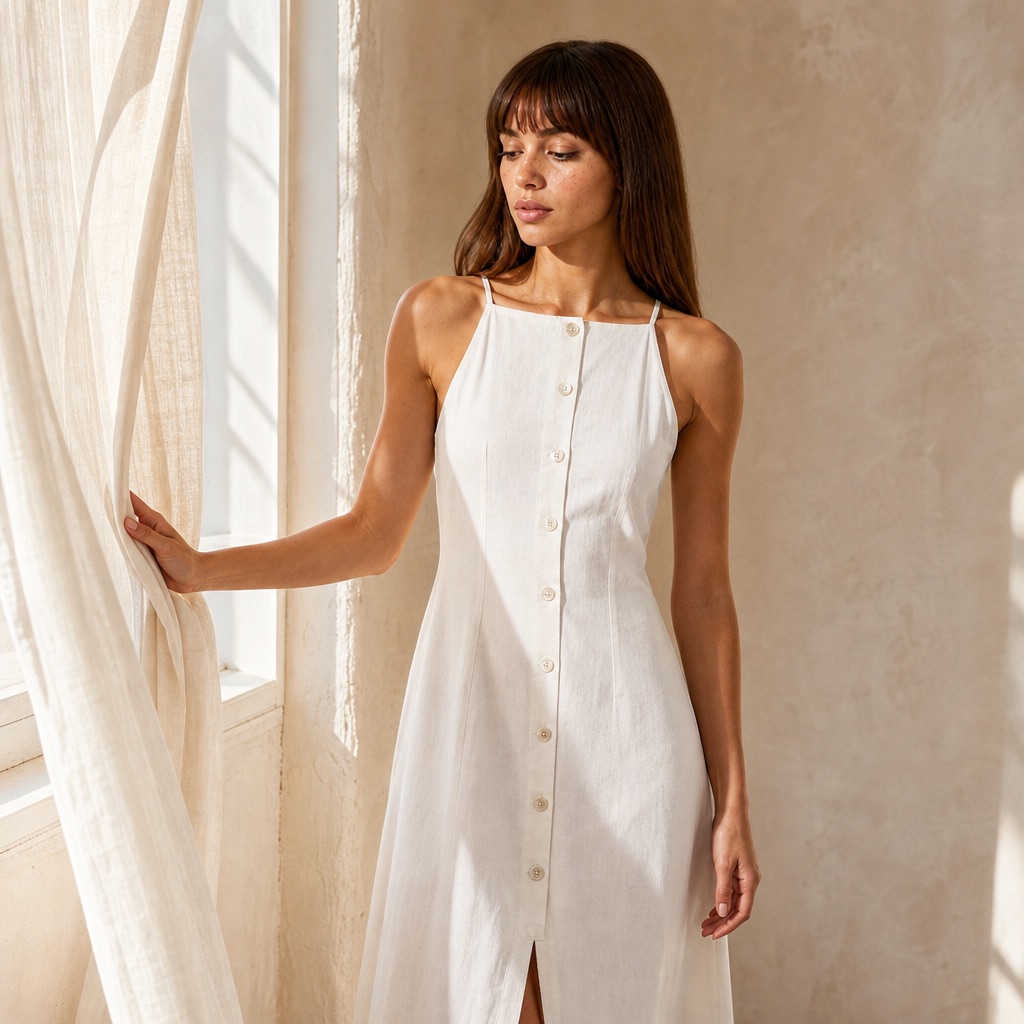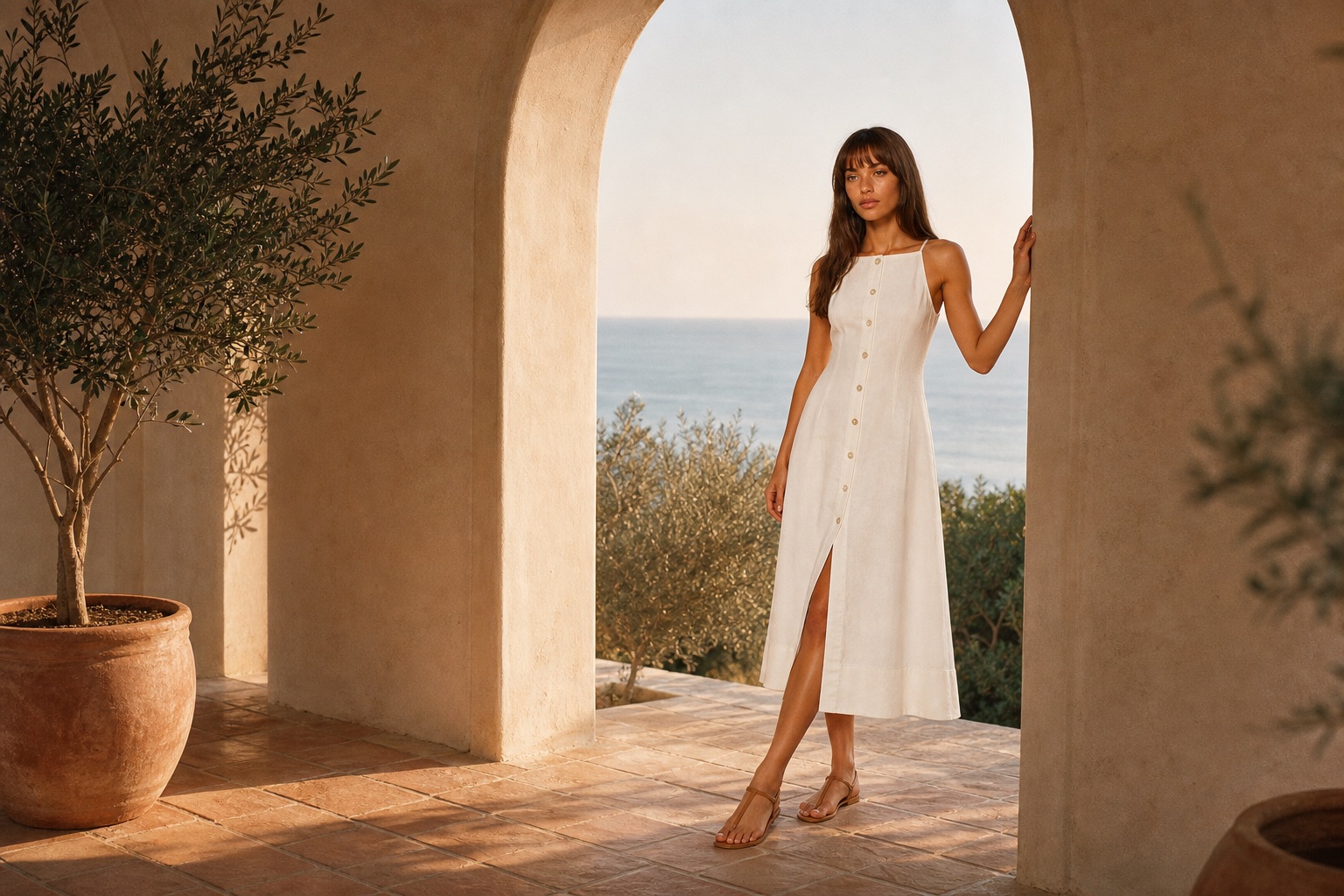
It is Monday morning at 9:14am at a twenty-two-million-dollar DTC contemporary American women's apparel brand at the Veronica Beard Dickey-jacket / Cinq à Sept editorial / A.L.C. tailoring / Anine Bing leather / ME+EM English-tailoring / Sezane editorial-Parisian tier. The founder opens the Slack thread with the AI fashion photo vendor and the 240-frame deliverable from Friday is finally there. Eighteen working days late. The engagement was sold off the LinkedIn pitch from the AI photo platform's growth lead in February — a thirty-minute call, a Notion brief on the AW27 line list, a $36k purchase order issued against a six-week turnaround. The product was an end-to-end on-model production for the AW27 hero plus lookbook plus lifestyle plus wholesale-deck plus dot-com PDP plus Klaviyo refresh against the Net-a-Porter, Saks, Nordstrom, Shopbop and MATCHESFASHION partner-portal composition spec. The 240 frames are now in Frame.io across the four sub-folders — eighty-eight hero-and-tentpole, fifty-six lookbook, forty lifestyle, thirty-two wholesale-deck and twenty-four dot-com PDP.
The founder runs through the eighty-eight hero-and-tentpole frames first. The campaign hero — the Dickey jacket signature silhouette against an editorial register — has the model's face rendered three different ways across frames one through twelve. Frame three reads as a twenty-eight-year-old at the Lower East Side. Frame seven reads as a thirty-four-year-old at the Marais. Frame ten reads as someone else entirely. The face drifts across the hero pack. The hand position on the lapel break at frame eight has six fingers visible. The wool drape on the Dickey jacket at frame fifteen falls upward against gravity at the front placket. The shoes on frame twenty-two are not in the line list. The handbag on frame twenty-eight is from a competitor brand. The lookbook pack — fifty-six frames composed at the layered-styling register — has the cuff break impossible on the silk blouse at twelve frames, the lapel break wrong on the wool jacket at sixteen frames, and the model identity shifting between frame eighteen and frame thirty-one across the four supporting silhouettes. The lifestyle pack has the model's body proportion shifting at the hip and the shoulder across frames thirty-six through forty-eight. The wholesale-deck cover — the highest-leverage frame in the entire engagement, the one the Net-a-Porter buyer will see on Friday before reading a single SKU — is composed against a flat-grey wall at off-axis lens with a desaturated retouch curve that reads as a Shopify product page rather than as the editorial register the Net-a-Porter buyer expects from the Veronica Beard Dickey jacket and signature tailoring register. The dot-com PDP pack at twenty-four frames has the silhouette cropped wrong against the founder's own Shopify Image Carousel spec at fifteen frames.
The founder runs a quick triage. Of 240 frames, sixty-two percent fail at first read against the wholesale buyer composition test. The Net-a-Porter buyer-review meeting is Friday at 11am ET. The Mr Porter buyer-review window opens the following Wednesday. The Saks Designer Floor buyer-review opens two weeks out. The Shopbop premium buyer-review opens three weeks out. The CFO meeting is Wednesday at 4pm and the agenda already has the line item "AI photo vendor — what did the $36k get us." The Klaviyo AW welcome flow refresh is locked for the week of August 19. The Manhattan and Los Angeles OOH placement for the late-August commute window is contracted with KBS at $42k for the eight-week placement and the asset deadline is August 9. The 240-frame deliverable that was supposed to feed the partner-portal review window, the OOH placement, the Klaviyo flow and the September-through-February engagement window has produced a forensic problem rather than a campaign.
If you are reading this from inside the founder, CMO or brand-director seat at a four-to-forty-million-dollar DTC apparel brand whose first AI fashion photo vendor returned a deliverable that fails the wholesale buyer composition test — this page is what the brand-spine recovery contract looks like in practice. The full capsule gets rebuilt inside eight-to-ten weeks against a brand-spine document the original vendor never wrote. The wholesale-deck cover lands on the Net-a-Porter buyer's desk inside the first ten working days. The audit of the 240-frame deliverable salvages roughly thirty-to-forty-five percent of the frames at the retouch pass into supporting roles. The hero gets recomposed at the brand-archive register the founder originally inherited from the SS24 campaign book. The cast holds frame to frame across the rebuild. The math, the mechanism and the eight-to-ten-week sprint calendar are below.