Apparel · heritage archive-spine relaunch

Heritage apparel relaunch that uses the archive as the campaign's spine.

Heritage apparel brand campaign photography is the production discipline a thirty-to-ninety-year-old apparel or fashion label uses to ship a modern campaign world that reads as the same brand the archive already established — same silhouette family, same named-photographer pedigree, same named-environment register, same cloth library, same finishing register — composed at contemporary resolution and partner-portal spec without the four-hundred-and-eighty-to-six-hundred-and-eighty-thousand-dollar named-photographer revival shoot. The brand's own archive is decoded into a brand-spine document, and every new frame the studio composes signs against that spine. The relaunch reads as evolution, not erasure. The Bruce Weber-tier hero gets replaced by the brand world the archive already paid for — rendered at contemporary resolution, against contemporary casting, against the partner-portal composition spec each retailer ships into.

By Abhi Chawla, founder · Last updated: 2026-06-21

The archive becomes the spine

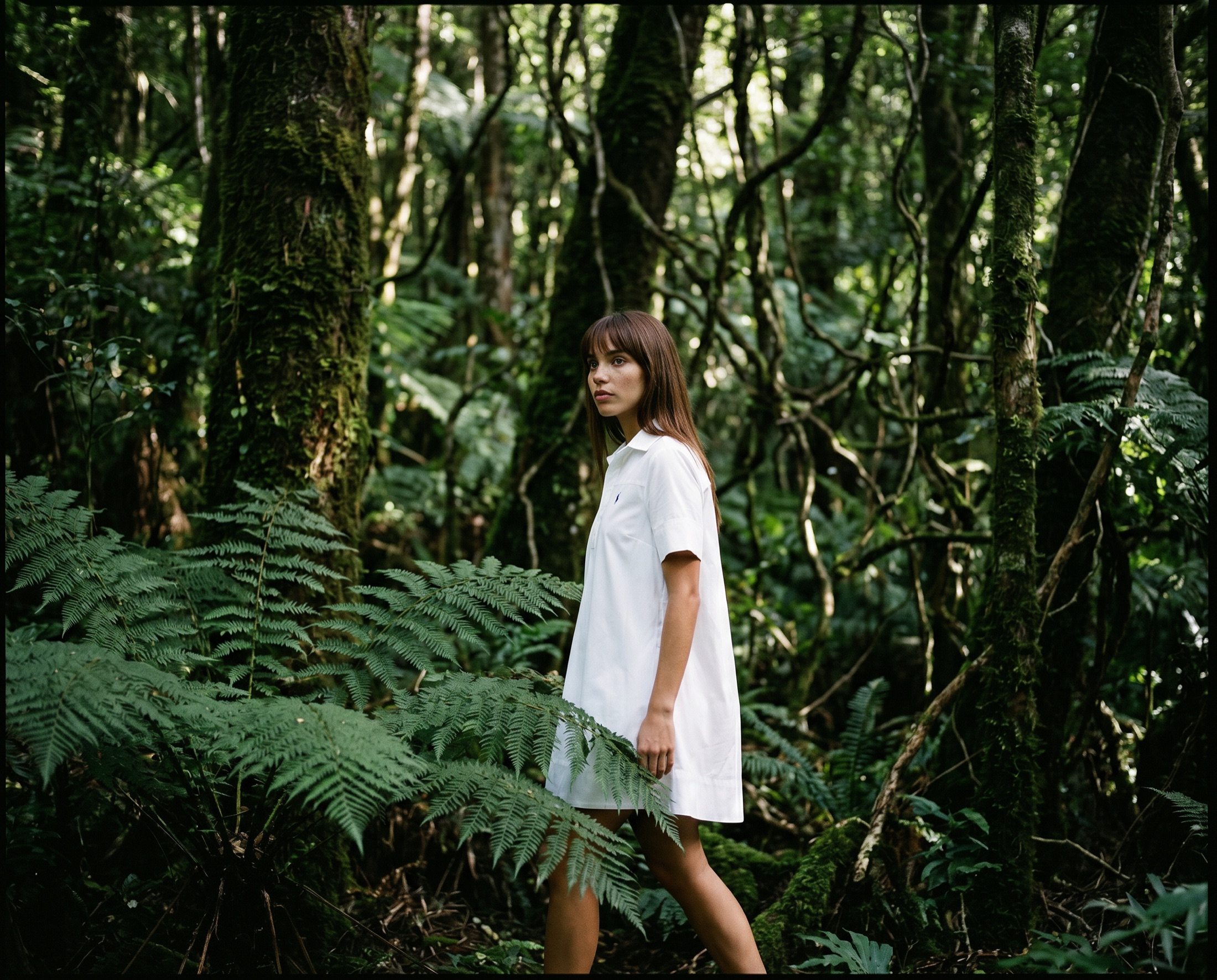
Heritage Americana rendered against the archive's own editorial pedigree — produced as heritage apparel brand campaign photography.

The Tuesday after the brand-strategy offsite at a fifty-three-year-old American heritage apparel house

It is the Tuesday after a brand-strategy offsite at a fifty-three-year-old American heritage apparel house at the Brooks Brothers / J.Crew at the Mickey Drexler era / Filson / Pendleton / Eddie Bauer Premier / Lands' End Canvas / Schott NYC tier — eighty-six million in DTC plus wholesale revenue, three thousand four hundred active SKUs across menswear and womenswear and accessories, twenty-three years of catalog imagery shot by nine different vendors and three named-photographer engagements between 2003 and 2019. The VP of marketing inherited the brand world six months ago. She just got back from the offsite. The creative director pulled the SS24 campaign card and the SS04 archive frames and placed them next to each other on the conference-room wall in two columns. The SS04 frames read as the brand — Bruce Davidson lineage, working-light, real American locality, drape on the body that the wholesale buyer at Bergdorf still references in conversation. The SS24 frames read as Shopify product photography with a wash of "modern" applied at the finishing stage. The room went silent for two minutes.

The CMO has greenlit a twelve-month brand-world relaunch. The Q4 of FY27 commitment to the board is the first new campaign world live in-market across hero, lookbook, lifestyle, wholesale-deck against Mr Porter and Net-a-Porter and Saks and Bergdorf and Nordstrom and Bloomingdale's and Browns and Selfridges, dot-com PDP at four-to-six angles per silhouette, the Klaviyo refresh, the OOH for Manhattan and Los Angeles, and a press-kit for the brand-relaunch wave at Vogue Business, The Business of Fashion, GQ Style, T Magazine, The New York Times Magazine and Permanent Style. The creative director has been talking to a Bruce Weber-tier revival shoot. The production company's bid for the hero alone — three days, one named photographer, two locations, ten silhouettes across eighteen frames — came in at four-hundred-and-eighty-thousand dollars and tracks toward six-hundred-and-eighty if the lookbook gets folded in.

If you are reading this from inside a heritage apparel or fashion label at the thirty-to-two-hundred-million revenue band, with a twenty-to-ninety-year archive, a Q4 board commitment to relaunch the brand world and a named-photographer-revival quote on your desk that has already consumed the brand-relaunch budget for the year — this page is what the archive-spine production contract looks like in practice. The brand world the catalog already paid for becomes the spine. The new campaign signs against that spine. The Bruce Weber-tier hero gets replaced by the same brand world rendered against the same editorial pedigree at contemporary resolution, contemporary casting and contemporary partner-portal spec, at one-fifth the cost of the revival route. The math, the mechanism and the twelve-to-sixteen-week sprint calendar are below.

The archive is an inheritance. The relaunch under-uses the inheritance every time.

The structural problem at a heritage apparel relaunch is not budget. It is the unit-economic mismatch between the named-photographer revival shoot and the surface area the brand actually ships across. The Bruce Weber-tier or Steven Meisel-tier revival shoot at four-hundred-and-eighty-to-six-hundred-and-eighty thousand dollars covers the campaign hero plus twelve-to-eighteen supporting frames at named-photographer register. Heritage register holds in those eighteen frames because the named photographer is composing against the editorial pedigree the brand was built on. The remaining one-hundred-to-two-hundred frames in the relaunch wave — the full lookbook at thirty-to-sixty frames, the lifestyle pack at forty-to-eighty frames, the wholesale-deck against partner-portal composition spec at Mr Porter and Net-a-Porter and Saks and Bergdorf and Nordstrom and Bloomingdale's and Browns and Selfridges at six-to-twelve covers, the dot-com PDP at four-to-six angles per silhouette, the press kit and the OOH adaptations — sit outside the named-photographer engagement. The remaining frames fall on a two-to-four-person in-house team composing against a brand world the head of brand has not yet documented as a spine. The hero reads heritage. The wholesale-deck cover reads off-register from the hero. The budget for the year is consumed.

Vogue Business has covered the failure mode at every heritage-brand-relaunch cycle through 2023 and into 2026, naming the same pattern at Brooks Brothers under the SPARC Group consolidation, at J.Crew under the post-Mickey-Drexler-era brand drift and partial recovery, at Aquascutum under the Bluestar Alliance license, at Mackintosh under the Yagi Tsusho ownership and at L.L.Bean's repositioning of the Signature collection. Business of Fashion has tracked the same pattern at Burberry's post-Christopher-Bailey relaunches, at Mulberry's brand-world resets and at Margaret Howell's documented continuity discipline as the counter-example. Permanent Style and The Rake have tracked it at Drake's evolution from the foulard-and-tie house to the full ready-to-wear range, at Sunspel's editorial pedigree from David Sims through Jamie Hawkesworth, and at Margaret Howell men's at the Iain McKell editorial lineage. Glossy has covered the failure mode at the American heritage tier — Filson, Pendleton, Woolrich, Schott NYC, Red Wing Heritage and Eddie Bauer Premier — through the rollup cycle of 2024 and 2025. The names change. The failure mode does not. The named photographer covers the hero. The brand world below the hero erodes.

The archive is the inheritance the brand has already paid for across twenty-to-ninety years of catalog work. The brand world the archive established is the brand world the wholesale buyer at Bergdorf already references, the brand world the press editor at GQ Style already cites, the brand world the customer who has been wearing the brand for twenty seasons already recognises. The relaunch under-uses the inheritance every time because the relaunch is treated as a green-field exercise — new photographer, new casting, new locality, new finishing — when the brand world is already documented in the archive. The discipline is to read the archive, decode the spine, document it as a brand-spine document the studio can compose against, and render the modern campaign against that spine at contemporary resolution. The same upstream identity contract that scales single-brand at our apparel brand identity and campaign system piece applies to heritage at the discipline layer — the document is the spine, the spine is the lineage, and the new frame signs against it. The split between production models is the same split tracked in our AI fashion photography vs traditional piece, scaled to the heritage relaunch surface area.

Six rules that turn the archive into a campaign spine the studio can compose against

01

The archive read is the first three weeks

Before the studio composes a single new frame, the archive is read end to end. The brand opens its catalog across the past twenty-to-fifty seasons — campaign hero plus lookbook plus lifestyle plus wholesale-deck cover plus the editorial covers at Vogue and Esquire and GQ and Town & Country and The Rake and Permanent Style across each decade — and the studio reads the through-line. The output is a brand-spine document that names the silhouette family, the named-photographer editorial pedigree, the casting frame at face count and posture register, the named-environment register at named locality plus named Kelvin plus named light angle, the cloth library at named mill and named book number, the styling vocabulary at named stylist tradition, the finishing register at named retouch curve and grain, and the in-frame branding policy. The brand-side CEO or head of brand countersigns the document. Three weeks. One signature. The relaunch has a spine.

02

The named-photographer pedigree is named, not implied

The brand-spine document names the editorial pedigree the archive composed against — Bruce Weber and Bruce Davidson for Ralph Lauren Polo across the 1980s and 1990s; Steven Meisel and Peter Lindbergh for J.Crew at the Mickey Drexler era through the 1990s and early 2000s; Norman Parkinson, Cecil Beaton and Albert Watson for Pendleton's Western-and-mid-century lineage; Patrick Demarchelier for Brooks Brothers at the Ridge Romulus era; Albert Watson for Barbour's English-country register; David Sims and Jamie Hawkesworth for Sunspel; Iain McKell and Jamie Hawkesworth for Margaret Howell; Bruce Weber and Glen Luchford for Sergio Tacchini at the heritage-Italian register. The new studio composes against the same pedigree at contemporary resolution. The pedigree is the through-line. The pedigree is the wall.

03

The named-environment register is locked at the brand's own locality lineage

Heritage brands are built against named localities the archive has already documented. Ralph Lauren Polo at the Long Island North Shore late-light register at 4400K. Ralph Lauren Purple Label at the Madison Avenue mid-afternoon register at 5200K. J.Crew at the Mickey Drexler era at the Hamptons summer-house register at 4500K. Pendleton at the Pacific Northwest mid-century lodge register at 4200K. Filson at the Cascades winter-light register at 4100K. Barbour at the English country house register at 4300K. Drake's at the British shop-floor register at 5100K. The named-environment register is locked at the brand's own locality lineage rather than at the studio's house style — the relaunch goes back to the brand's own locality vocabulary at contemporary resolution and contemporary cropping, never the agency's flat-grey wall.

04

The cloth library names mill and book number

Heritage apparel labels run on cloth libraries that read at handwork close-up. The brand-spine document names the cloth library at named mill and named book number — Loro Piana Pecora Nera book for the cashmere line, Holland & Sherry Crispaire book for the summer suiting, Fox Brothers Classic Worsted for the year-round flannel, Vitale Barberis Canonico Revenge book for the dress shirting, Harrisons of Edinburgh Premier Cru book for the dinner suit, Drago Super 130s for the tropical wool. The studio composes the cloth at three-hundred-percent close-up against the named book so the wholesale buyer reading the Mr Porter editorial recognises the cloth from the menswear-press archive. Cloth fidelity is the second through-line the heritage customer reads before they read the wordmark.

05

The casting frame holds across the relaunch wave

The casting frame is locked per brand in the brand-spine document at face count, posture register and signature face. Three-to-six faces across the entire relaunch wave — one anchor face that carries the hero campaign across two-to-three seasons, two supporting faces for the lookbook and lifestyle, one accent face for the editorial press kit, one heritage face that signals the lineage (a returning anchor from a previous campaign decade where the brand has the rights and the relationship), one new face that signals contemporary continuity. The casting frame is held across the entire relaunch wave the way Margaret Howell holds the Iain McKell-era casting against the contemporary Jamie Hawkesworth-era casting. Our AI fashion models vs real models piece walks the single-brand casting lock at full depth.

06

The finishing register reads as the archive at contemporary resolution

The finishing register is named per brand in the brand-spine document at named retouch curve, named grain register, named contrast value, named saturation register and named highlight roll-off. Ralph Lauren Polo at the Bruce Weber warm-saturation register with grain at ISO 400 equivalent. J.Crew at the Mickey Drexler era at the Demarchelier mid-saturation register with grain at ISO 800 equivalent. Barbour at the Albert Watson cool-saturation register with grain at ISO 800 equivalent. The new studio runs a finishing pipeline that reads as the archive at contemporary file resolution, contemporary color fidelity and contemporary partner-portal aspect ratios. The frame leaves the studio reading as the brand the archive already established, composed at 4800×6000 master resolution at Delta E under three, ready for OOH at sixteen-foot vinyl and dot-com PDP at 1500-pixel carousel.

How the archive read actually becomes a brand-spine document

The mechanics of the archive read run as a structured engagement across the first three weeks. Week one is the archive intake. The brand surfaces its catalog imagery across the past twenty-to-fifty seasons from the DAM — campaign hero, lookbook, lifestyle, wholesale-deck cover, editorial covers, press kit, OOH adaptations — and the studio opens them on a single timeline. The studio reads the through-line at the silhouette layer first. Polo's button-down oxford with the soft collar roll. Brooks Brothers' three-roll-two sack jacket with the natural shoulder. J.Crew at the Mickey Drexler era and the Dad Hat plus chino plus oxford triad. Pendleton's blanket-wool plaid at the Western-shirt cut. Filson's Mackinaw Cruiser at the heritage-twill cut. Barbour's Beaufort jacket at the waxed-cotton cut. The silhouette family is the first layer of the spine. It is what the brand has always been, the shape the customer recognises before they read the wordmark.

Week two is the pedigree decode. The studio reads the editorial register the archive composed against — the named-photographer pedigree, the named-stylist tradition, the named-environment register at locality plus Kelvin plus light angle, the casting frame at face count and posture register, the cloth library at named mill and book, the finishing register at retouch curve and grain. Bruce Weber for Ralph Lauren Polo across the Hampton Bays-and-Hyannis lineage at low-sun 4400K, the Aspen-and-Wyoming-ranch lineage at 4200K and the Madison Avenue-and-Polo Bar interior lineage at 5200K. Patrick Demarchelier for J.Crew at the Mickey Drexler era at the Mickey Drexler aesthetic register, mid-saturation, summer-house light, ISO 400 grain. Albert Watson for Barbour at the English-country register, cool light, ISO 800 grain. The pedigree is what the brand-spine document encodes as the editorial reference frame the new studio composes against frame by frame.

Week three is the brand-spine document ratification. The studio writes the document across the silhouette family, the named-photographer pedigree, the named-environment register, the casting frame, the cloth library, the styling vocabulary, the finishing register and the in-frame branding policy. The document also includes the partner-portal composition spec for each retailer the brand ships into — Mr Porter at editorial 3x4 plus carousel close-up at slot two, Net-a-Porter at darker editorial 3x4 plus lifestyle frame at fifty percent, Saks at Saks Magazine editorial cover plus wholesale-deck against Saks Apparel Buyer spec, Bergdorf at Bulletin editorial plus Designer Floor spec, Nordstrom at the Nordstrom Trunk Club and Nordstrom Made adjacency, Bloomingdale's at the Bloomingdale's Editorial register, Browns at the Browns Editorial register and Selfridges at the Selfridges Editorial register. The brand-side CEO or head of brand countersigns the document. The relaunch has a spine. The studio can compose against it. The new campaign signs against the archive.

The archive at contemporary resolution

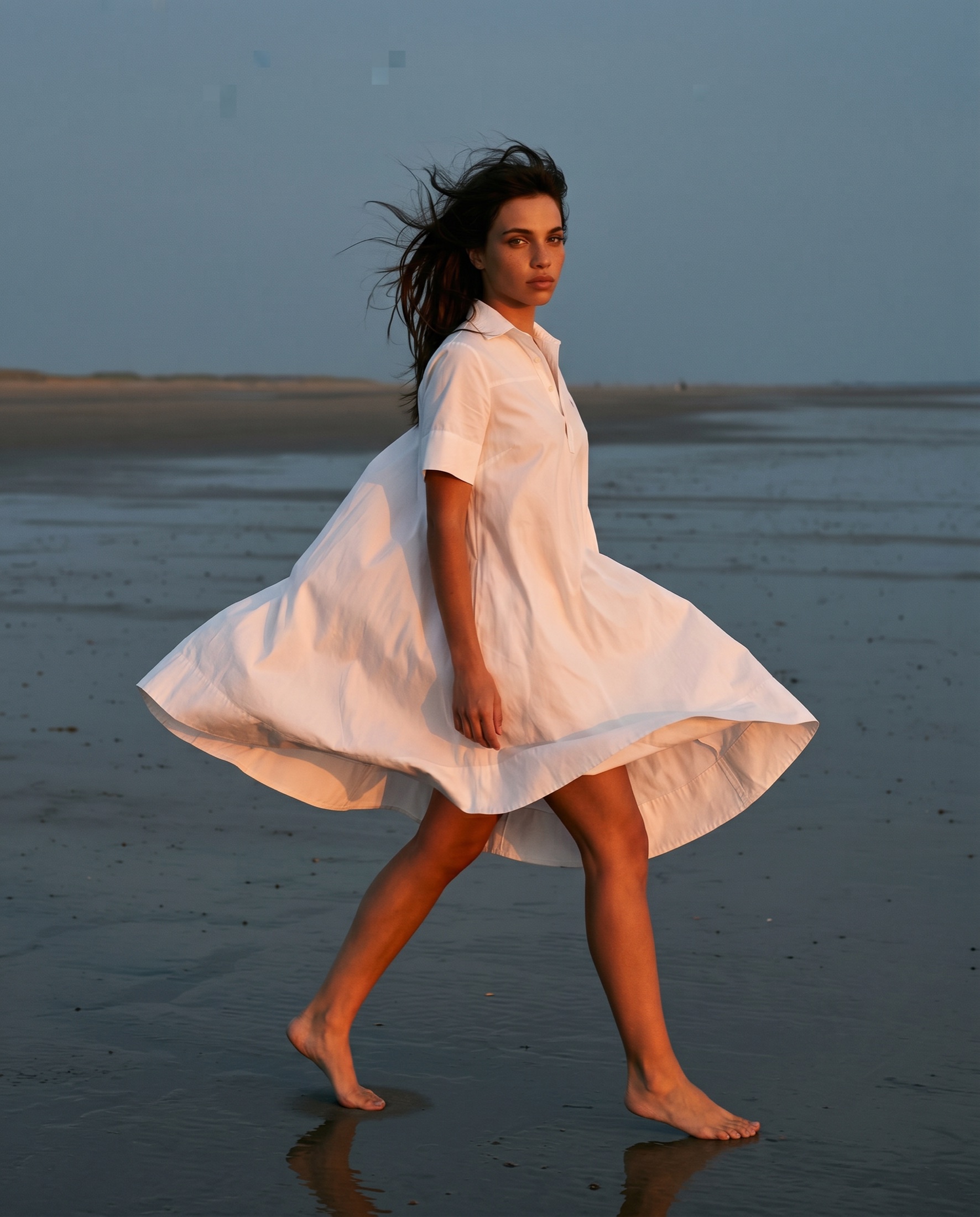
Two frames composed against the archive's editorial pedigree — produced as heritage apparel brand campaign photography.

The named-photographer revival is the wrong unit economics. The archive-spine contract is the right unit economics.

The named-photographer revival shoot at the Bruce Weber-tier, Steven Meisel-tier, Bruce Davidson-tier, Mario Sorrenti-tier, Patrick Demarchelier-tier or Annie Leibovitz-tier register quotes at four-hundred-and-eighty-thousand-to-six-hundred-and-eighty-thousand-dollars for the hero campaign and twelve-to-eighteen supporting frames. The price covers two-to-three shoot days, the named photographer's fee, the production company's day rate at fifty-to-eighty-five thousand dollars per day, the casting at fifteen-to-thirty-five thousand dollars, the location at twelve-to-forty thousand dollars per day, the styling at eight-to-eighteen thousand dollars per day, the hair and makeup at four-to-nine thousand dollars per day, the catering, the equipment, the travel, the post-production retouch at four-to-nine thousand dollars per frame for eighteen frames, and the agent's fee at fifteen-to-twenty-five percent. The brand gets eighteen frames at heritage register. Vogue Business covered the budget structure on the Calvin Klein-and-Glen-Luchford relaunch in 2023, the Burberry-and-Tyrone-Lebon collaboration in 2024 and the Gucci-and-David-Sims pivot in 2025 — and the price band has held across the three.

The volume DTC studio route extended into heritage covers the full brand world — hero, lookbook, lifestyle, wholesale-deck, dot-com — at one-hundred-and-twenty-thousand-to-two-hundred-and-twenty-thousand-dollars but breaks the editorial register because the studio composes against its own house style rather than against the archive's pedigree. The wholesale-deck cover ships looking like a Shopify product page next to the Ralph Lauren Magazine archive. The press editor at GQ Style or Permanent Style reads the relaunch against the archive and the read goes off-register inside the first two frames. The studio knows how to ship volume, not how to read the archive. The brand world below the named-photographer hero erodes regardless of price.

The archive-spine production contract covers the full brand world — hero, lookbook, lifestyle, wholesale-deck and dot-com — at eighty-four-thousand-to-one-hundred-and-sixty-eight-thousand-dollars for the SS or AW relaunch wave. The brand-spine document is the first deliverable. The named-photographer pedigree decoded from the archive is the editorial reference frame the studio composes against frame by frame. The named-environment register is locked at the brand's own locality lineage. The cloth library is named at mill and book number. The finishing register is named at retouch curve and grain. The full surface area — one-hundred-to-two-hundred frames — ships against the same spine. Per-frame economics land at one-hundred-and-forty-to-two-hundred-and-eighty dollars per frame against named-photographer eighteen-hundred-to-thirty-four-hundred per usable campaign-day frame. The per-frame economics walk lives in our AI photoshoot vs studio cost piece; the heritage overlay shifts the discount because the archive is doing structural work the new shoot does not need to redo.

Named-photographer revival vs volume DTC studio vs archive-spine production contract

Tier 1

Named-photographer revival

$480k–$680k against eighteen frames at heritage register. Hero holds because the photographer composes against the archive's editorial pedigree at the named-photographer day rate. The lookbook, lifestyle, wholesale-deck, dot-com and press kit fall outside the engagement onto a two-to-four-person in-house team composing against a brand world the head of brand has not documented as a spine. The hero reads heritage. The wholesale-deck cover reads off-register from the hero. The budget for the year is consumed. Vogue Business covered the Calvin Klein-and-Glen-Luchford 2023 relaunch, the Burberry-and-Tyrone-Lebon 2024 collaboration and the Gucci-and-David-Sims 2025 pivot at the same price band.

Tier 2

Volume DTC studio extended into heritage

$120k–$220k against one-hundred-to-two-hundred frames at the studio's own house style. The full brand world ships at price but the editorial register goes off-thesis frame by frame because the studio composes against the agency's flat-grey wall, the agency's off-axis lens choice and the agency's desaturated retouch curve rather than against the archive's pedigree. The wholesale-deck cover ships looking like a Shopify product page next to the Ralph Lauren Magazine archive. The press editor at GQ Style, Permanent Style or The Rake reads the relaunch against the archive and the read goes off-register inside the first two frames. The brand inherits volume without inheriting lineage.

Tier 3

Archive-spine production contract (us)

$84k–$168k against the full brand world — hero, lookbook, lifestyle, wholesale-deck and dot-com — with the brand-spine document decoded from the archive, the named-photographer pedigree locked at the editorial reference frame, the named-environment register locked at the brand's own locality lineage, the cloth library named at mill and book, the casting frame held across the relaunch wave, and the finishing register named at retouch curve and grain. The frame leaves the studio reading as the brand the archive already established. Per-frame economics land at $140–$280 against named-photographer $1,800–$3,400 per usable campaign-day frame. Twelve-to-sixteen weeks from offsite to in-market. The brand-relaunch budget covers the full brand world and the press tier reads the relaunch as evolution rather than erasure.

What the archive-spine contract looks like across the heritage-apparel landscape

American heritage Americana sits at the Ralph Lauren Polo plus Purple Label plus RRL register, Brooks Brothers, J.Crew at the post-Mickey-Drexler recovery, Filson, Pendleton, L.L.Bean Signature, Eddie Bauer Premier, Lands' End Canvas, Schott NYC, Levi's Vintage Clothing, Red Wing Heritage and Champion Reverse Weave Archive. The brand-spine pedigree decodes against Bruce Weber and Bruce Davidson for Polo; Steven Meisel and Patrick Demarchelier for J.Crew at the Mickey Drexler era; Norman Parkinson, Cecil Beaton and Albert Watson for Pendleton's Western-and-mid-century lineage; Bruce Davidson and Patrick Demarchelier for Brooks Brothers at the Ridge Romulus era. Named-environment register at the Long Island North Shore, the Hamptons summer house, the Pacific Northwest mid-century lodge, the Cascades winter light, the Adirondack lakeside and the Aspen-and-Wyoming-ranch lineage. Revenue band thirty-to-two-hundred million. Partner-portal set Mr Porter at the menswear register, Net-a-Porter at the contemporary-American register, Nordstrom at the Trunk Club register, Bergdorf at the Designer Floor spec.

British heritage sits at Barbour, Belstaff, Aquascutum, Mackintosh, Sunspel, John Smedley, Margaret Howell, Drake's, Crockett and Jones, Dunhill at the apparel register, Hackett, Hawkes of Savile Row and Cordings. The brand-spine pedigree decodes against Albert Watson and David Sims for Barbour; Jamie Hawkesworth and David Sims for Sunspel; Iain McKell and Jamie Hawkesworth for Margaret Howell; Alasdair McLellan and Glen Luchford for Drake's; Tim Walker for the Mackintosh editorial lineage at the British countryside register. Named-environment register at the English country house, the Scottish hunting estate, the London shop-floor at 5100K, the Lake District winter walk at 4100K, the West Country shoot at 4300K. Partner-portal set Mr Porter at the British heritage register, MATCHESFASHION at the editorial-British register, Selfridges at the editorial-cover register and Browns at the editorial-floor register. Revenue band forty-to-one-hundred-and-eighty million.

Italian heritage sits at Loro Piana, Brunello Cucinelli, Brioni, Boglioli, Lardini, Slowear, Boggi, Caruso, Ermenegildo Zegna at the Couture XXX line, Kiton at the bespoke-into-RTW register and Cesare Attolini at the Neapolitan-tailoring lineage. The brand-spine pedigree decodes against Glen Luchford and Daniel Riera for Loro Piana; Bruce Weber and Glen Luchford for Brunello Cucinelli; Helmut Newton-into-Steven-Meisel lineage for Brioni; Daniel Riera and Daniele Tomelleri for Boglioli; Daniel Riera and Glen Luchford for Caruso. Named-environment register at Lake Como at first light at 4200K, the Tuscan farmhouse at low-sun at 4400K, the Naples studio at 5500K, the Solomeo village at 4500K mid-afternoon. Cloth library at Loro Piana Pecora Nera book, Cariaggi Lanificio, Drago Super 130s, Vitale Barberis Canonico Revenge book, Holland & Sherry Crispaire book and Fox Brothers Classic Worsted. Revenue band fifty-to-three-hundred million. Partner-portal set Mr Porter at the editorial-Italian register, MATCHESFASHION at the Italian-tailoring register and Bergdorf at the Designer Floor spec for the menswear tailoring book.

French heritage sits at Lacoste, Hermès apparel, A.P.C., Saint James, Le Mont Saint Michel, Maison Kitsuné at the older-Parisian register and Sandro at the older-house register. The brand-spine pedigree decodes against Patrick Demarchelier and Inez & Vinoodh for Hermès; David Sims and Glen Luchford for A.P.C.; Mario Sorrenti for Saint James; Bruce Weber for Lacoste at the heritage Mediterranean register. Named-environment register at the Côte d'Azur at low-sun at 4400K, the Île de Ré at first light at 4200K, the Marais apartment at 5000K, the Provence farmhouse at 4500K. Revenue band fifty-to-two-hundred-and-fifty million. Partner-portal set Net-a-Porter at the French-Parisian register, MATCHESFASHION at the editorial-French register and Le Bon Marché at the editorial-Paris register.

Japanese heritage sits at Beams Plus, United Arrows, Onitsuka Tiger, Mihara Yasuhiro, Studious, Engineered Garments through the Nepenthes network and Visvim. The brand-spine pedigree decodes against Bruce Weber for Beams Plus at the heritage-Americana-into-Japanese-eye lineage; Daniel Riera for United Arrows; Glen Luchford for Onitsuka Tiger; Tyler Mitchell for Mihara Yasuhiro at the contemporary lineage; Alec Soth for Visvim at the heritage-rural-American register. Named-environment register at the Tokyo loft at 5500K, the Kyoto shrine grounds at 4300K, the Hokkaido farmhouse at 4100K, the Nepenthes archive at 5000K. Revenue band twenty-to-one-hundred-and-twenty million. Partner-portal set SSENSE at the editorial-Japanese register, MATCHESFASHION at the editorial-Asian register and Beams Plus's own dot-com.

South Asian heritage sits at Anita Dongre at the AND and House of Anita Dongre lines tier, Sabyasachi at the seventy-year archive lineage, Manish Malhotra at the couture-into-RTW lineage, Tarun Tahiliani at the contemporary couture lineage and Raghavendra Rathore at the menswear bandhgala lineage. The brand-spine pedigree decodes against Tarun Khiwal and Avinash Gowariker for Sabyasachi; Bharat Sikka for Anita Dongre at the contemporary register; Sushant Chhabria for the editorial South Asian register; Errikos Andreou for the contemporary Indian fashion register. Named-environment register at the Jaipur haveli at low-sun at 4400K, the Mumbai studio at 5500K, the Bangalore botanical-garden at first light at 4300K, the Rajasthan desert wash at mid-afternoon at 4800K. Cloth library at the gota patti plus zardozi plus dabka plus aari plus mukaish plus kamdani plus resham handwork vocabulary documented in the brand-spine document at the named-craftsman and named-workshop layer. Revenue band ten-to-eighty million. Partner-portal set Aza Fashions, Pernia's Pop-Up Shop, Ogaan and Mélange at the South Asian couture register, plus Net-a-Porter's South Asian Couture edit at the editorial register. The South Asian heritage tier is covered in our luxury apparel brand world and campaign piece at the upstream luxury-tier register.
Twelve to sixteen weeks from offsite to in-market

Week one through week three is the archive read. The brand surfaces twenty-to-fifty seasons of catalog imagery from the DAM. The studio reads the silhouette family, the named-photographer pedigree, the named-environment register, the casting frame, the cloth library, the styling vocabulary and the finishing register. The brand-spine document is written and the brand-side CEO or head of brand countersigns. The press editor at Vogue Business is briefed on the relaunch frame at the embargo deadline so the press kit can ship into the announcement window without an off-record leak ahead of the in-market day. The discipline at this stage is to read the archive as a continuous brand world rather than as twenty-three years of disconnected vendor outputs.

Week four through week six is the casting frame and named-environment slot allocation. The casting director runs the boards for the three-to-six faces locked across the relaunch wave at the brand-spine document's casting frame. The location producer locks the named-environment registers at the brand's own locality lineage — the Long Island North Shore, the English country house, the Lake Como villa, the Côte d'Azur, the Tokyo loft, the Jaipur haveli. The cloth library is ratified at the mill and the book number. The styling vocabulary is locked at the named stylist tradition. The finishing register is locked at the retouch curve and grain. The studio composes the first wave's pre-production frames against the brand-spine document at internal review and the brand-side head of brand signs off on the composition before wave one ships.

Week seven through week ten is wave one. The campaign hero plus eight-to-twelve tentpole frames plus the editorial press kit ship. The composition runs against the named-photographer pedigree, the named-environment register, the locked casting frame, the cloth library at named mill and book, the styling vocabulary at named tradition and the finishing register at named retouch curve and grain. The wave-one frames ship into Vogue Business, The Business of Fashion, GQ Style, T Magazine, The New York Times Magazine and Permanent Style at the embargo deadline. The wholesale press tier — Mr Porter editorial, Net-a-Porter editorial, MATCHESFASHION editorial and Selfridges editorial — gets the editorial deck at the same embargo window so the partner-portal composition spec for the buyer-review window can hold against the campaign hero.

Week eleven through week fourteen is wave two. The full lookbook at thirty-to-sixty frames, the lifestyle pack at forty-to-eighty frames, the wholesale-deck against partner-portal composition spec at Mr Porter and Net-a-Porter and Saks and Bergdorf and Nordstrom and Bloomingdale's and Browns and Selfridges, the dot-com PDP at four-to-six angles per silhouette across two-to-three-hundred SKUs, the Klaviyo refresh and the OOH adaptations for Manhattan and Los Angeles. The wave-two frames ship against the same brand-spine document, the same named-photographer pedigree, the same named-environment register, the same casting frame, the same cloth library and the same finishing register. The wholesale-deck cover reads as the campaign hero because it is composed inside the same locked frame. The wholesale-deck discipline at single-brand scale is documented in our wholesale lookbook and linesheet imagery piece, scaled to the heritage relaunch surface.

Week fifteen through week sixteen is partner-portal QC and DAM ingestion. The full asset pack is ingested into Frame.io for partner review and Bynder for the long-term DAM with locked per-spine metadata. The press kit ships to the editorial-tier titles at the embargo release. The OOH crops land at the Manhattan and Los Angeles placements. The brand goes live with the first new campaign of the modern era in week sixteen — and the press editor at Vogue Business reads the relaunch as evolution against the archive rather than erasure. The relaunch holds because the spine was the archive, not a green-field guess at what "modern heritage" looks like.

The named-photographer revival is the legacy unit. The archive-spine contract is the modern unit.

Heritage apparel relaunches default to the named-photographer revival shoot because the brand-strategy offsite produces a brand-relaunch narrative the marketing function does not yet know how to encode at the production layer. The named photographer is the cleanest answer at the offsite — book Bruce Weber for the Polo register, book Steven Meisel for the J.Crew Mickey Drexler register, book Albert Watson for the Barbour English-country register — and the offsite walks away with a budget the CFO signs. The unit economics break at the brand-world layer because the named-photographer engagement covers eighteen frames against a one-hundred-to-two-hundred-frame surface area. The hero holds. The brand world below the hero does not. The brand-relaunch budget for the year is consumed against eighteen frames.

The archive-spine contract is the modern unit because it works the inheritance the brand has already paid for. The Bruce Weber editorial pedigree on the Ralph Lauren Polo archive across the 1980s and 1990s is the inheritance. The Patrick Demarchelier editorial pedigree on Brooks Brothers across the Ridge Romulus era is the inheritance. The Norman Parkinson editorial pedigree on Pendleton across the Western-and-mid-century lineage is the inheritance. The Bruce Weber editorial pedigree on Lacoste at the heritage Mediterranean register is the inheritance. The inheritance is documented in the archive. The brand-spine document decodes it. The studio composes against it. The new campaign signs against it. The relaunch reads as continuity at the lineage layer because the editorial pedigree is the continuity. The contract that runs single-brand at our apparel rebrand and brand-world relaunch piece covers the green-field rebrand version of the same discipline — at heritage the spine is the archive, at rebrand the spine is the new identity deck.

The contract also replaces the volume DTC studio route. The volume studio ships frames but does not decode pedigree. The frames read at the studio's house style — flat-grey wall, off-axis lens choice, desaturated retouch curve — rather than at the brand's own lineage. The press editor at GQ Style reads the relaunch against the brand's own archive and the read goes off-register in the first two frames. The volume studio is the wrong unit because the volume studio composes against its own house style. The archive-spine contract composes against the brand's own pedigree at contemporary resolution. The pedigree is the editorial reference frame. The frame is the spine. The spine is the lineage. The lineage is the brand world the wholesale buyer at Bergdorf, the press editor at GQ Style and the customer who has been wearing the brand for twenty seasons already recognise. The relaunch is what the brand has always been, rendered at contemporary resolution. Our best AI product photography agency for DTC brands anchor piece covers the broader category positioning the heritage contract sits inside.

Heritage apparel relaunch — questions the brand-strategy offsite leaves open

What is heritage apparel brand campaign photography?

Heritage apparel brand campaign photography is the production discipline a thirty-to-ninety-year-old apparel or fashion label uses to ship a modern campaign world that reads as the same brand the archive already established — same silhouette family, same named-photographer pedigree, same named-environment register, same cloth library, same finishing register — composed at contemporary resolution and partner-portal spec without the named-photographer revival shoot. The brand's own archive is decoded into a brand-spine document and every new frame signs against that spine, so the relaunch reads as evolution rather than erasure. The contract replaces the $480k-$680k named-photographer revival hero with the same brand world rendered against the archive's editorial pedigree across hero, lookbook, lifestyle, wholesale-deck and dot-com.

How is the archive turned into a brand spine the new campaign can sign against?

The archive read is the first three weeks of the engagement. The studio opens the brand's catalog across the past twenty-to-fifty seasons, pulls the campaign hero plus the lookbook plus the lifestyle plus the wholesale-deck cover plus the editorial covers across each decade, and reads the through-line. The brand-spine document names the silhouette family, the named-photographer editorial pedigree, the casting frame at face count and posture register, the named-environment register at named locality plus named Kelvin plus named light angle, the cloth library at named mill and named book number, the styling vocabulary at named stylist tradition and the finishing register at named retouch curve and grain. The brand-side CEO, head of brand or creative director countersigns the document before any new campaign frame is composed.

Why is modernising a heritage catalog through a named-photographer revival shoot the wrong unit economics?

The Bruce Weber-tier or Steven Meisel-tier revival shoot at $480k-$680k covers the hero campaign and twelve-to-eighteen supporting frames but leaves the rest of the brand world — lookbook at thirty-to-sixty frames, lifestyle pack at forty-to-eighty frames, wholesale-deck against Mr Porter and Bergdorf and Saks and Nordstrom and Bloomingdale's and Browns and Selfridges house specs at six-to-twelve covers, dot-com PDP at four-to-six angles per silhouette and the press kit — sitting outside the named-photographer engagement. The remaining one-hundred-to-two-hundred frames fall on a two-to-four-person in-house team that composes against a brand world the head of brand has not yet documented as a spine. The result is a hero that reads heritage and a wholesale-deck cover that reads off-register from the hero, against a $480k-$680k budget that already consumed the brand-relaunch budget for the year.

What heritage apparel brands does the archive-spine contract apply to?

American heritage Americana at the Ralph Lauren Polo and Purple Label and RRL register, Brooks Brothers, J.Crew, Filson, Pendleton, L.L.Bean signature, Eddie Bauer Premier, Land's End, Woolrich, Lands' End Canvas, Levi's Vintage Clothing, Schott NYC, Red Wing Heritage and Champion archive. British heritage at Barbour, Belstaff, Aquascutum, Mackintosh, Sunspel, John Smedley, Margaret Howell, Drake's, Crockett and Jones and Dunhill at the apparel register. Italian heritage at Loro Piana, Brunello Cucinelli, Brioni, Boglioli, Lardini, Slowear and Boggi. French heritage at Lacoste, Hermès apparel, A.P.C. and Sandro at the older-house register. Japanese heritage at Onitsuka Tiger, Beams Plus, United Arrows and Mihara Yasuhiro. South Asian heritage at Anita Dongre AND, Sabyasachi at the seventy-year archive lineage and Manish Malhotra. Revenue band thirty-to-two-hundred million where the brand has a twenty-to-ninety-year archive and a Q4 board commitment to relaunch the brand world.

How long does an archive-spine relaunch take from offsite to in-market?

Twelve to sixteen weeks from offsite to first new campaign drop. Weeks one through three are the archive read — the studio opens the brand's catalog across the past twenty-to-fifty seasons, decodes the brand-spine document and the brand-side CEO or head of brand countersigns. Weeks four through six are the brand-spine ratification and the casting frame and named-environment slot allocation. Weeks seven through ten are wave one of the new campaign — hero plus eight-to-twelve tentpole frames plus the editorial press kit, composed against the archive's named-photographer pedigree at contemporary resolution. Weeks eleven through fourteen are wave two — the full lookbook at thirty-to-sixty frames, the wholesale-deck against partner-portal spec, the dot-com PDP and the lifestyle pack. Weeks fifteen and sixteen are partner-portal QC and DAM ingestion. The brand goes live with the first new campaign of the modern era in week sixteen.

What does the heritage archive-spine production contract cost against the named-photographer revival route?

The named-photographer revival route at Bruce Weber-tier, Steven Meisel-tier, Bruce Davidson-tier or Mario Sorrenti-tier covers the campaign hero plus twelve-to-eighteen frames at $480k-$680k. The volume DTC studio route extended into heritage covers the full brand world at $120k-$220k but breaks the editorial register because the studio composes against its own house style rather than the archive's pedigree, and the wholesale-deck cover ships looking like a Shopify product page next to the Ralph Lauren Magazine archive. The archive-spine production contract covers the full brand world — hero, lookbook, lifestyle, wholesale-deck and dot-com — at $84k-$168k for the SS or AW relaunch with the brand-spine document, the named-photographer pedigree decoded from the archive, the named-environment register locked at the brand's own locality lineage and the cloth library named. Per-frame economics land at $140-280 against named-photographer $1,800-3,400 per usable campaign-day frame.

Will the new imagery hold against the partner-portal spec at Mr Porter, Net-a-Porter, Bergdorf, Saks and Nordstrom?

Yes. The brand-spine document includes the partner-portal composition spec for each retailer the heritage brand ships into. Mr Porter takes the editorial 3x4 plus the carousel close-up at slot two plus the lifestyle frame at slot three at its tailored-editorial register. Net-a-Porter takes the darker editorial 3x4 plus the lifestyle frame at fifty percent of the carousel at its premium-contemporary register. Bergdorf Goodman takes the editorial cover at the Bergdorf Bulletin register plus the in-store lookbook at the Bergdorf Designer Floor spec. Saks takes the editorial cover at the Saks Magazine register plus the wholesale-deck against the Saks Apparel Buyer spec. Nordstrom takes the contemporary lifestyle register at the Nordstrom Trunk Club and Nordstrom Made adjacency. Each frame ships cropped at every partner-spec aspect ratio from the same locked composition so the partner deck does not require a re-shoot. The retailer house specs are documented in the brand-spine document at engagement.

How does the archive read keep the heritage register without making the brand look retro?

The archive read extracts pedigree, not period. The brand-spine document names the named-photographer editorial pedigree the archive composed against — Bruce Weber and Bruce Davidson for Ralph Lauren Polo, Steven Meisel and Peter Lindbergh for J.Crew at the Mickey Drexler era, Norman Parkinson and Cecil Beaton for Pendleton's Western-mid-century lineage, Albert Watson for Barbour's English-country register, Patrick Demarchelier for Brooks Brothers at the Ridge Romulus era. The studio composes the new campaign against the same pedigree at contemporary resolution, contemporary casting, contemporary partner-portal spec and contemporary finishing register rather than at archival period dress. The brand reads heritage in the editorial pedigree and contemporary in the silhouette, the casting and the partner-portal composition. The result is heritage that signs against the archive without looking like a museum reproduction.

How does the contract handle the brand's wholesale linesheet against the new campaign world?

The wholesale linesheet is composed inside the same locked composition that ships the campaign hero. The brand-spine document names the partner-portal composition spec for each wholesale account — Mr Porter at editorial 3x4 plus carousel close-up at slot two, Net-a-Porter at darker editorial 3x4 plus lifestyle frame at fifty percent, Saks at editorial cover plus wholesale-deck cover, Bergdorf at Bulletin editorial plus Designer Floor spec, Nordstrom at contemporary lifestyle, Bloomingdale's at the Bloomingdale's Editorial register, Browns at the Browns Editorial register, Selfridges at the Selfridges Editorial register and the brand's own dot-com PDP. The wholesale-deck cover ships looking like the campaign hero because it is composed from the same locked frame against the same spine. The wholesale-deck discipline at single-brand scale is documented in our wholesale lookbook and linesheet imagery piece.

Decode the archive

Bring the SS04 and SS24 brand cards to a heritage relaunch call.

A thirty-minute conversation on the archive read, the brand-spine document, the named-photographer pedigree the new campaign signs against, the named-environment register at the brand's own locality lineage, the cloth library at named mill and book and the twelve-to-sixteen-week sprint calendar from offsite to in-market. Bring the brand cards. We will read them against the archive the way the press editor at Vogue Business or Permanent Style will at the relaunch wave.

Book a heritage relaunch call