Apparel · outerwear capsule production

Cold-weather outerwear photography that holds the down loft, the wool drape and the layering hierarchy.

Outerwear apparel campaign photography is the production discipline a fifty-to-three-hundred-million-dollar DTC apparel brand uses to ship the autumn-and-winter outerwear capsule across hero, lookbook, lifestyle, wholesale-deck and dot-com without losing the down loft, the wool drape, the leather break or the layering hierarchy frame to frame. The outerwear-category brand-spine document names the fill specification at 700-to-900 fill-power down or PrimaLoft Gold Insulation Eco at named gram weight, the baffle architecture at sewn-through or box-baffle or H-baffle or chevron, the wool register at melton or double-face or boiled at named mill and book, the leather-and-shearling surface, the technical-shell membrane at Gore-Tex Pro 3L or eVent or 3L Pertex Shield, the layering hierarchy from base to mid to shell, and the named-environment register at locality plus Kelvin plus light angle. Every frame signs against the six-layer outerwear spine. The puffer hero, the wool-overcoat lookbook frame and the technical-shell lifestyle frame ship as one capsule rather than three jobs. The location-led AW shoot at $380k-$640k for eighteen frames gets replaced by the full capsule rendered against the same spine at one-fifth the cost.

By Abhi Chawla, founder · Last updated: 2026-06-27

The outerwear capsule against the spine

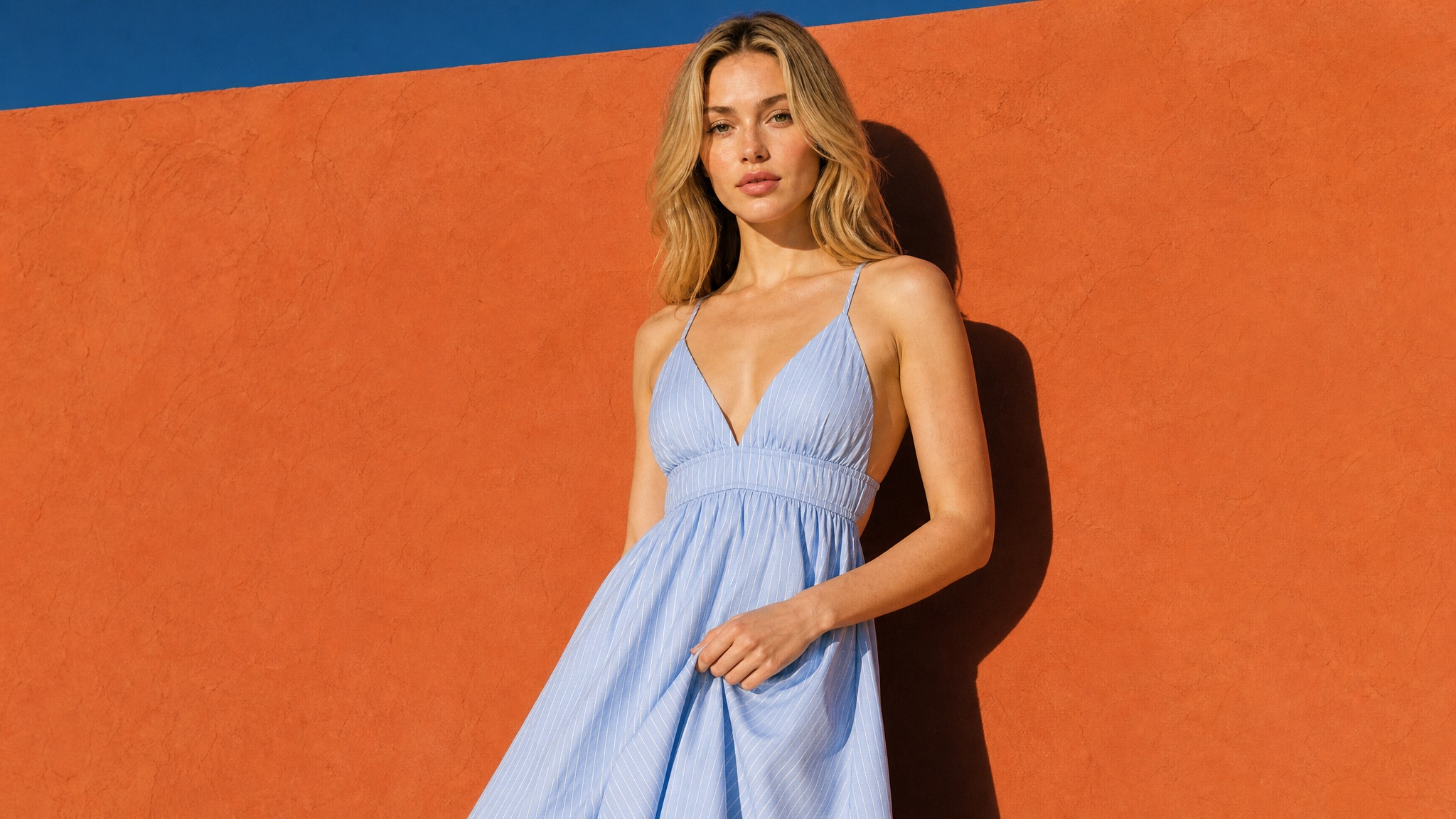
Contemporary AW outerwear composed against the locked brand-spine document — produced as outerwear apparel campaign photography.

Mid-July email at 11:47am — the AW27 outerwear capsule line list landed and the location-led quote is on the desk

It is the third Thursday of July at a one-hundred-and-thirty-million-dollar DTC contemporary women's apparel brand at the Aritzia / Vince / Reformation outerwear / Sezane wool / Anine Bing tier, or a one-hundred-and-eighty-million-dollar DTC contemporary men's brand at the Vuori puffer / Buck Mason wool / John Elliott outerwear / Todd Snyder overcoat / Aimé Leon Dore tier. The in-house Creative Director inherited the brand world fourteen months ago. The VP of merchandising sent the AW27 outerwear capsule line-list at 11:47am — fourteen silhouettes across three sub-categories. Six puffer-and-down at the Cloud Puffer at three-hundred-gram fill weight, the Super Puff at five-hundred-gram fill weight, the cropped down vest at two-hundred-and-eighty-gram fill weight, the expedition parka at seven-hundred-gram fill weight in 800-fill-power down at a seventy-thirty cluster ratio, the puffer-shacket at three-fifty-gram fill weight at PrimaLoft Gold Insulation Eco, the editorial puffer at chevron baffle. Four wool-and-cashmere at the long melton overcoat at Lardini Drapers double-face, the cashmere blanket coat at Loro Piana Pecora Nera, the double-breasted peacoat at melton at Harrisons of Edinburgh and the cropped wool moto. Two leather-and-shearling at the shearling-collar leather moto and the suede-shearling bomber. Two technical-shell at the three-layer Gore-Tex Pro shell and the eVent-membrane parka with synthetic insulation.

The agency that shipped the SS27 campaign hero in March has come back with the AW outerwear quote. Five-hundred-and-sixty thousand dollars for the campaign hero plus twelve supporting frames across two weather windows. Window one is the Canadian Rockies first week of September for the technical-shell and the expedition parka — three days at Banff at the Moraine Lake locality at a 4200K Kelvin against the cold morning light, plus one back-up day at Lake Louise. Window two is North Yorkshire third week of September for the wool overcoat and the cashmere blanket coat — three days at the Yorkshire Dales National Park at 4300K against the English-country register, plus one back-up day at the Bolton Abbey ruin. A Hudson Valley layered-lifestyle pack is being held as a third window if the first two finish under budget. The quote does not include the lookbook, the lifestyle, the wholesale-deck against Nordstrom and Bergdorf and Saks and REI and Backcountry, the dot-com PDP, the Klaviyo refresh or the OOH. Those sit on a twenty-six-person in-house creative team running against a five-week post-window window before late-September Klaviyo welcome flow refresh and the Manhattan and Los Angeles OOH placements lock for the first cold-snap engagement window.

If you are reading this from inside the in-house Creative Director role at a fifty-to-three-hundred-million-dollar DTC apparel brand with the AW outerwear capsule on a Q3 line-list lock — this page is what the outerwear-category production contract looks like in practice. The location-led AW shoot at $380k-$640k for eighteen frames gets replaced by the full capsule — hero, lookbook, lifestyle, wholesale-deck against partner-portal spec, dot-com PDP at six angles per silhouette across forty-to-eighty SKUs, Klaviyo refresh and OOH adaptations — rendered against the same spine at one-fifth the cost. The down loft holds at the baffle break. The wool drape holds at the lapel roll. The leather grain holds at the shearling-collar break. The technical membrane reads at the seam-tape close-up. The layering hierarchy reads in one frame rather than three. The math, the mechanism and the eight-to-twelve-week sprint calendar are below.

Outerwear breaks studio production because the cloth behaviour is harder than any other category in the calendar

Outerwear is the apparel category with the highest variance in cloth behaviour, layering depth, environmental cueing and silhouette read. A puffer reads only if the down loft is visible at the baffle break and the model's posture loads the shoulder seam without crushing the chest panel. A wool overcoat reads only if the drape falls past the knee with the lapel roll holding and the back vent staying closed at gesture. A shearling-collar moto reads only if the collar break catches light along the wool fibre and the leather grain holds at the elbow. A technical-shell reads only if the membrane sheen registers without going synthetic and the seam taping is visible at three-hundred-percent close-up. The volume DTC studio composes outerwear like a tee — flat-grey wall, off-axis lens, desaturated retouch curve — and the down compresses, the wool flattens, the shearling reads matte and the membrane goes plastic. Andrew Foxwell's apparel-vertical operator panels through 2025 and 2026 tracked the same failure mode at the outerwear-capsule tier across thirty-eight DTC brands in the $40M-$220M revenue band — the studio that ships the SS dropped-shoulder tee at $80 per frame cannot ship the AW puffer at the loft tolerance the wholesale buyer at Nordstrom or Bergdorf will accept.

The agency-led location route corrects the cloth behaviour but blows the unit economics. The Bruce Weber-tier or Cass Bird-tier or Glen Luchford-tier or Alasdair McLellan-tier or Annemarieke van Drimmelen-tier location shoot at the Canadian Rockies, the Norwegian fjords, the North Yorkshire moors, the Hudson Valley fire-roads or the Hokkaido farmhouse covers the campaign hero plus twelve-to-twenty supporting frames at $380k-$640k. The unit economics break at the surface area. The full AW outerwear capsule is one-hundred-to-two-hundred-and-forty frames — the lookbook at thirty-to-fifty, the lifestyle pack at thirty-to-sixty, the wholesale-deck against Nordstrom and Bergdorf and Saks and Mr Porter and Net-a-Porter and REI and Backcountry at six-to-twelve covers, the dot-com PDP at six angles per silhouette across forty-to-eighty SKUs, the Klaviyo refresh at twelve-to-twenty frames, the OOH at four-to-eight placements. Eighteen of those frames hold heritage location register. The remaining one-hundred-to-two-hundred-and-twenty frames fall on the in-house team composing against a capsule the spine was never written for. The hero reads cold-weather location. The wholesale-deck cover reads off-register from the hero. The budget for the AW wave is consumed.

Common Thread Collective's 2025 AW outerwear audit across forty-one DTC apparel brands in the $50M-$300M band found a one-hundred-and-eighty-percent variance in the cost-per-usable-frame number between the location-led route and the in-house team picking up the surface — and a forty-to-sixty-percent gap in the wholesale-buyer-acceptance rate between the hero frames and the wholesale-deck cover frames inside the same capsule. The press editor at Outside, Field Mag, Gear Patrol, The Strategist or Highsnobiety reads the brand's AW outerwear coverage against the same wholesale-deck cover and the read goes off-thesis frame by frame. The diagnosis is structural — outerwear demands category-specific production discipline that names the fill spec, the baffle architecture, the wool register, the leather grain, the membrane spec and the layering hierarchy in the brand-spine document the same way bridal demands the handwork vocabulary or denim demands the wash library. The production discipline the contract scales single-brand at our apparel brand identity and campaign system piece covers the broader spine layer; this page covers the outerwear-category overlay. The split between production models is the same split tracked in our AI fashion photography vs traditional piece, scaled to the AW outerwear surface area.

Six rules that turn the AW outerwear capsule into one brand world rather than three jobs

01

Fill specification is named at fill-power and cluster ratio

The brand-spine document names the fill specification for every down-and-puffer silhouette in the capsule at fill-power and cluster ratio — 700 fill-power at sixty-forty cluster-to-feather for the Cloud Puffer at three-hundred-gram fill weight, 800 fill-power at seventy-thirty for the Super Puff at five-hundred-gram fill weight, 900 fill-power at ninety-ten for the expedition parka at seven-hundred-gram fill weight, PrimaLoft Gold Insulation Eco at three-hundred-and-sixty-gram per square metre for the synthetic-insulation puffer-shacket. The loft target is encoded numerically before the studio composes a single frame. The composition checks the loft at the chest panel, the shoulder seam and the hip break before the frame leaves the pipeline. A puffer that ships with crushed loft on dot-com PDP returns at twelve-to-eighteen percent against the brand's wider apparel return rate of four-to-six. The spec is the production contract.

02

Baffle architecture is locked per silhouette

Baffle architecture defines silhouette read at the puffer category. The brand-spine document locks the baffle per silhouette — sewn-through for the lighter Cloud Puffer where loft is moderate and the silhouette wants to read clean, box-baffle for the medium Super Puff where loft volume is the brand signature, H-baffle for the expedition parka where cold-rated insulation needs the highest loft retention, chevron baffle for the editorial puffer where the diagonal direction sets the brand-world frame, trapunto for the heritage puffer where the quilted register sits closer to the wool-overcoat tradition. The studio composes each silhouette against its named baffle at a three-quarter portrait so the baffle direction and break read at the chest, the shoulder and the hip. The dot-com PDP carousel adds a back-three-quarter angle and a detail close-up at the baffle stitching at three-hundred-percent. The wholesale buyer at Nordstrom or Bergdorf reads the baffle as architecturally intentional rather than as construction default.

03

Wool register is named at mill and book

Wool-and-cashmere outerwear runs on cloth libraries the wholesale buyer reads on contact. The brand-spine document names the wool register at named mill and named book number — Lardini Drapers double-face for the long melton overcoat, Loro Piana Pecora Nera for the cashmere blanket coat, Harrisons of Edinburgh Premier Cru for the double-breasted peacoat at heavier melton, Fox Brothers Classic Worsted for the year-round wool topcoat, Drago Super 130s for the lighter mid-season unstructured overcoat, Holland & Sherry Crispaire for the trans-seasonal trench. The wool register is composed at three-hundred-percent close-up against the named book so the cloth fidelity reads at the lapel roll, the drape, the back vent and the cuff turn-back. The styling vocabulary at the named stylist tradition — Karen Langley, Camilla Nickerson, Vanessa Reid or Lotta Volkova as the brand-spine document specifies — holds the wool drape across the lookbook. The press editor at Permanent Style, The Rake or T Magazine reads the wool against the menswear-press archive and reads it on-thesis.

04

Leather-and-shearling surface is named at grain and finish

Leather-and-shearling outerwear sits between the wool category and the technical-shell category in the capsule and needs its own spec layer. The brand-spine document names the leather surface at named grain and finish — full-grain calf at Horween Chromexcel for the shearling-collar moto, vegetable-tanned saddle leather at Wickett & Craig for the heritage flight jacket, lambskin nappa at Italian tannery named for the elevated bomber, shearling-on at the collar and shearling-off at the body for the moto, suede nubuck for the elevated bomber. The composition holds the leather break at the elbow, the shearling collar light at the wool fibre and the seam stitching at the contrast thread without going leather-cosplay or shearling-Halloween. The shearling collar is composed at a three-quarter portrait with the model's chin angled into the wool so the collar break catches light along the fibre and the leather grain holds at the chest panel. Schott NYC, Belstaff, Stutterheim outerwear, Acne Studios leather and Stoffa leather sit at the heritage register the spec is calibrated against.

05

Technical-shell membrane is named at spec and seam tape

Technical-shell outerwear lives in the brand-spine document at the membrane spec layer — Gore-Tex Pro 3L at named denier (40D for the lightweight, 70D for the standard, 200D for the expedition), eVent at the more breathable register, 3L Pertex Shield at the contemporary register, Polartec NeoShell at the softshell register, the synthetic insulation paired with the shell at PrimaLoft Gold Insulation Eco at named gram weight. The membrane sheen is composed at the three-quarter portrait with rain or snow on the shell so the surface reads waterproof without going plastic. The seam taping is composed at three-hundred-percent close-up at the shoulder seam and the underarm gusset so the technical construction reads to the wholesale buyer at REI, Backcountry or Outdoor Voices marketplace as the build-quality the brand specifies. The Arc'teryx Veilance, Norrøna Lofoten, Patagonia DAS Parka and Norse Projects Arktisk register sits at the technical reference frame the spec calibrates against. Single-brand casting discipline against the technical environment is documented in our AI fashion models vs real models piece.

06

Layering hierarchy holds in one frame, not three

Outerwear sells inside a layering hierarchy — base layer at merino at 180-to-260 gram weight at Smartwool Intraknit or Icebreaker 260 Tech, mid layer at down vest at 800 fill-power or fleece at Polartec 100 or Polartec Power Grid, shell at the puffer or overcoat or parka or shearling-collar moto or technical-shell. The brand-spine document names the layering hierarchy and the studio composes the model in full layering inside one frame — base visible at the collar, mid visible at the cuff and the open shell, shell as the silhouette anchor. The customer reads the layering in one frame rather than across three frames. The wholesale buyer at REI, Backcountry, Nordstrom or Bergdorf confirms the silhouette layers as the brand intended. The dot-com PDP carousel walks the same three layers across slot one through slot six so the carousel reads as the layering story the brand sells rather than as six product angles. The lifestyle pack and the feed-depth surface composed against the same hierarchy is documented in our fashion lifestyle campaign imagery piece.

How the six-layer outerwear spine becomes one production contract

The mechanics of the outerwear-category production contract run as a structured engagement across eight-to-twelve weeks from line-list lock to first AW campaign drop. Weeks one and two are the outerwear-spine document. The studio reads the AW27 line-list end to end across the three sub-categories — puffer-and-down at six silhouettes, wool-and-cashmere at four silhouettes, leather-and-shearling at two silhouettes, technical-shell at two silhouettes. The studio names the fill specification per puffer silhouette at fill-power and cluster ratio, the baffle architecture per silhouette at sewn-through or box-baffle or H-baffle or chevron or trapunto, the wool register per overcoat at named mill and book, the leather grain per moto at named tannery and finish, the technical-shell membrane per shell at Gore-Tex Pro 3L or eVent or 3L Pertex Shield or Polartec NeoShell at named denier and seam-tape spec, the layering hierarchy at base layer through mid layer through shell at named gram weight per layer, and the named-environment register per outerwear category at locality plus Kelvin plus light angle. The in-house head of brand or VP of brand countersigns the document on Friday of week two.

Weeks three and four are the casting frame and the named-environment slot allocation. The casting director runs the boards for the three-to-six faces locked across the capsule at the brand-spine document's casting frame — one anchor face at three-quarter portrait for the puffer hero, one anchor face at full-figure for the wool overcoat lookbook, one accent face for the shearling-collar moto and the leather bomber, one technical face for the Gore-Tex shell and the expedition parka. The named-environment registers are locked at the brand-spine document's locality lineage — the Canadian Rockies at the Banff or Lake Louise locality at 4200K for the expedition parka and the technical-shell, the North Yorkshire Dales at Bolton Abbey at 4300K for the wool overcoat, Madison Avenue mid-afternoon at 5200K for the long melton overcoat at the urban-dressed-cold register, the Marais apartment at 5000K for the cashmere blanket coat at the editorial-Paris register, the Hudson Valley fire-road first light at 4400K for the layered-lifestyle pack, the Hokkaido farmhouse at 4100K for the heritage-shearling moto. The cloth library is ratified at the mill and the book number. The styling vocabulary is locked at the named stylist tradition. The finishing register is locked at the retouch curve and grain.

Weeks five and six are wave one. The campaign hero at the anchor silhouette plus eight-to-twelve tentpole frames plus the editorial press kit ship. The composition runs against the outerwear-spine document — the fill specification at the named fill-power, the baffle architecture at the named direction, the wool register at the named book, the leather grain at the named tannery, the technical-shell membrane at the named spec, the layering hierarchy at the named gram weight, the casting frame at the named anchor face and the named-environment register at the named locality plus Kelvin plus light angle. The wave-one frames ship into Outside, Field Mag, Gear Patrol, The Strategist, Highsnobiety, Permanent Style, GQ Style and T Magazine at the embargo deadline. The wholesale press tier — Mr Porter editorial, Net-a-Porter editorial, MATCHESFASHION editorial, Selfridges editorial — gets the editorial deck at the same embargo window so the partner-portal composition spec for the buyer-review window can hold against the campaign hero into the late-August buy lock.

Weeks seven and eight are wave two. The full lookbook at thirty-to-fifty frames, the lifestyle pack at thirty-to-sixty frames, the wholesale-deck against partner-portal composition spec at Nordstrom and Bergdorf and Saks and Mr Porter and Net-a-Porter and REI and Backcountry, the dot-com PDP at six angles per silhouette across forty-to-eighty SKUs, the Klaviyo AW refresh at twelve-to-twenty frames and the OOH adaptations for Manhattan and Los Angeles and London and Toronto. The wave-two frames ship against the same outerwear-spine document, the same baffle direction per silhouette, the same wool register per overcoat, the same leather grain per moto, the same membrane spec per shell, the same layering hierarchy, the same casting frame and the same named-environment register. The wholesale-deck cover reads as the campaign hero because it is composed inside the same locked frame. The wholesale-deck discipline at single-brand scale is documented in our wholesale lookbook and linesheet imagery piece, scaled to the AW outerwear surface.

Weeks nine through twelve are partner-portal QC and DAM ingestion. The full asset pack is ingested into Frame.io for partner review and Bynder for the long-term DAM with locked per-spine metadata that names the fill-power, the baffle direction, the wool book, the leather tannery, the shell membrane and the layering layer per frame. The press kit ships to Outside, Field Mag, Gear Patrol, The Strategist, Highsnobiety, Permanent Style, GQ Style, T Magazine and Vogue Business at the embargo release. The OOH crops land at the Manhattan and Los Angeles and London and Toronto placements. The AW outerwear capsule goes live from late August into the September-through-February engagement window — and the press editor at Outside reads the capsule on-thesis, the wholesale buyer at Nordstrom places the buy, and the Klaviyo AW welcome flow holds the capsule across the first cold-snap traffic window.

The capsule rendered against the spine

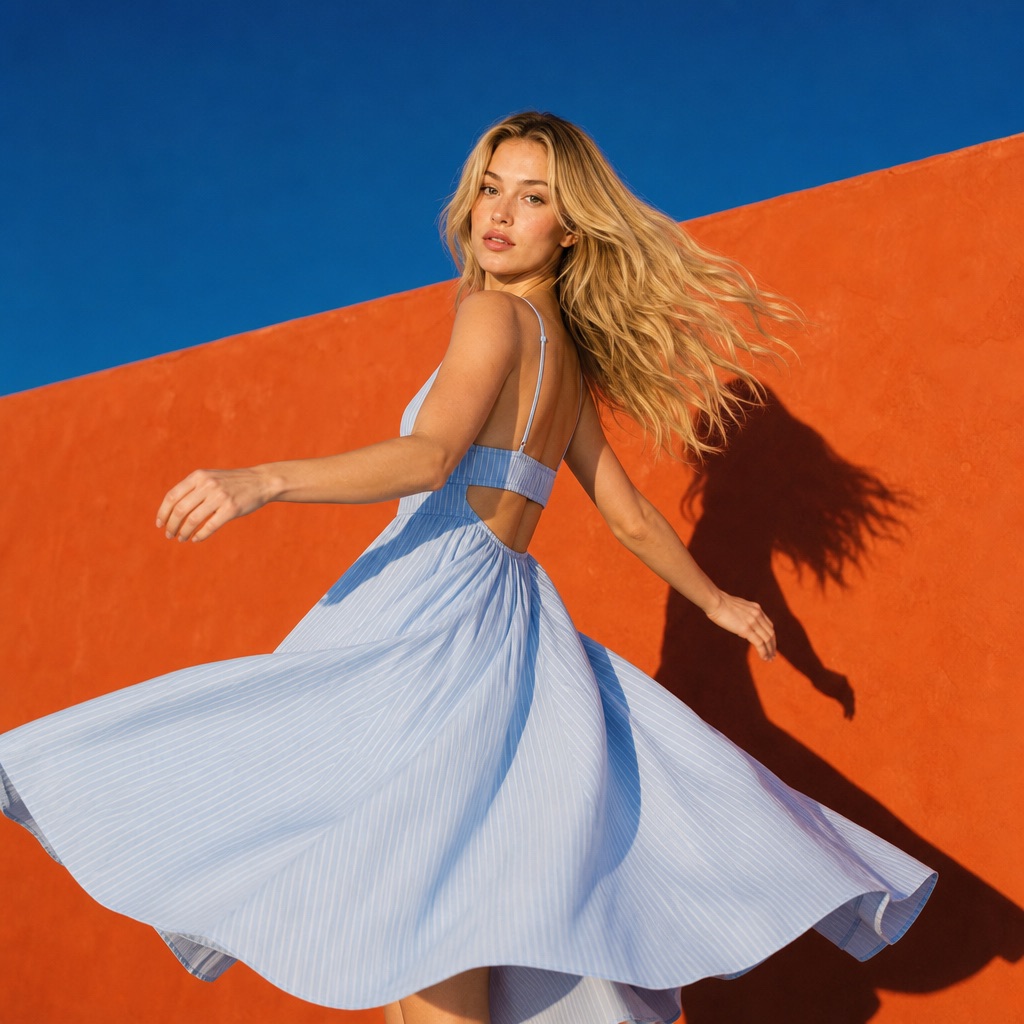
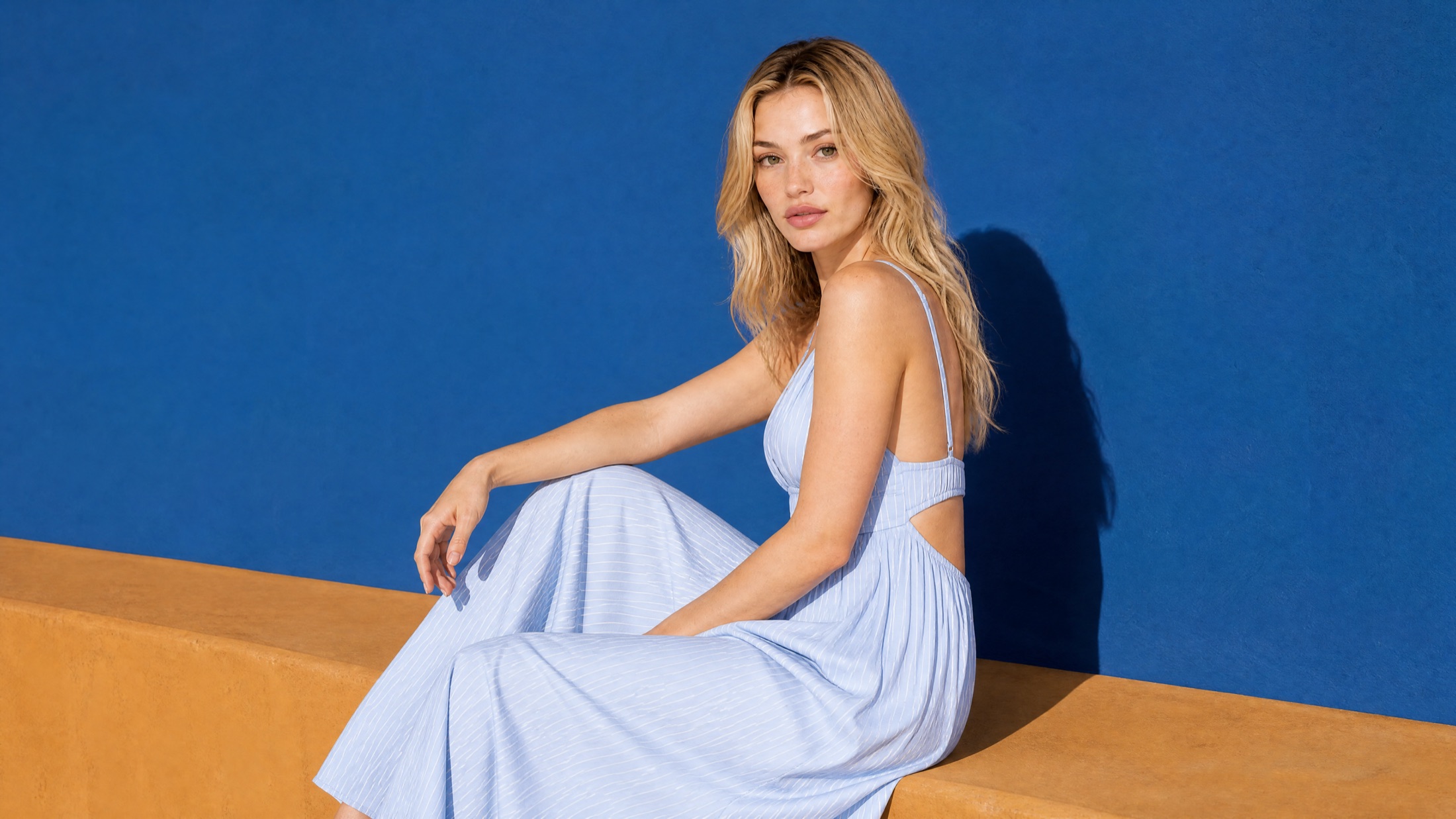
Two frames composed against the outerwear-spine document — produced as outerwear apparel campaign photography.

The location-led AW shoot is the wrong unit economics. The outerwear-spine contract is the right unit economics.

The named-photographer location-led AW outerwear shoot at the Bruce Weber-tier, Cass Bird-tier, Glen Luchford-tier, Alasdair McLellan-tier, Annemarieke van Drimmelen-tier or Tim Walker-tier register quotes at $380k-$640k for the campaign hero plus twelve-to-twenty supporting frames across two weather windows. The price covers two-to-three shoot days per window, the named photographer's fee, the production company's day rate at $55k-$95k per day at the cold-weather location uplift, the casting at $18k-$40k, the location at $14k-$48k per day at the Canadian Rockies or North Yorkshire premium, the styling at $9k-$22k per day at the layering complexity uplift, the hair and makeup at $5k-$11k per day at the cold-weather posture-management uplift, the catering at the location-camp rate, the equipment at the cold-rated kit uplift, the travel and accommodation across the two-window pack, the post-production retouch at $4k-$10k per frame for eighteen frames and the agent's fee at fifteen-to-twenty-five percent. The brand gets eighteen frames at heritage-location register. The remaining one-hundred-to-two-hundred-and-twenty frames fall outside the engagement.

The volume DTC studio route extended into outerwear covers the full capsule — hero, lookbook, lifestyle, wholesale-deck, dot-com — at $90k-$160k but compresses down loft at the baffle break, flattens wool drape at the lapel roll, reads shearling matte at the collar fibre and ships membrane sheen synthetic at the shell surface. The wholesale-deck cover ships looking like a Shopify product page next to the Patagonia or Arc'teryx Veilance editorial archive. The press editor at Outside, Field Mag, Gear Patrol or Highsnobiety reads the AW capsule against the technical-outerwear archive and the read goes off-thesis frame by frame. The studio knows how to ship volume, not how to compose against the six-layer outerwear spine. The brand world below the named-photographer hero erodes regardless of the volume-studio price.

The outerwear-spine production contract covers the full AW capsule — hero, lookbook at thirty-to-fifty frames, lifestyle pack at thirty-to-sixty frames, wholesale-deck against partner-portal spec at Nordstrom and Bergdorf and Saks and Mr Porter and Net-a-Porter and REI and Backcountry, dot-com PDP at six angles per silhouette across forty-to-eighty SKUs, Klaviyo refresh at twelve-to-twenty frames and OOH adaptations at four-to-eight placements — at $72k-$148k for the AW wave. The outerwear-spine document is the first deliverable. The fill specification at named fill-power and cluster ratio holds the down loft. The baffle architecture per silhouette holds the puffer silhouette. The wool register at named mill and book holds the overcoat drape. The leather grain at named tannery holds the moto. The membrane spec at Gore-Tex Pro 3L or eVent holds the technical-shell. The layering hierarchy at named gram weight per layer holds the lookbook composition. Per-frame economics land at $160-$320 per frame against named-photographer $2,200-$3,800 per usable weather-window frame. The per-frame economics walk lives in our AI photoshoot vs studio cost piece; the outerwear overlay shifts the discount because the cold-weather location stack is the costliest production envelope in the apparel calendar.

Named-photographer location-led AW shoot vs volume DTC studio extended into outerwear vs outerwear-spine production contract

Tier 1

Named-photographer location-led AW shoot

$380k–$640k against eighteen frames at heritage-location register. Hero holds because the photographer composes against the cold-weather environment at the named-photographer day rate. The lookbook, lifestyle, wholesale-deck, dot-com PDP, Klaviyo refresh and OOH fall outside the engagement onto a twenty-six-person in-house team composing against a capsule the spine was never written for. The hero reads cold-weather location. The wholesale-deck cover reads off-register from the hero. The budget for the AW wave is consumed against eighteen frames. Vogue Business covered the same budget structure on the Burberry-and-Tyrone-Lebon AW collaboration in 2024 and the Moncler Genius-and-Jamie-Hawkesworth AW collaboration in 2025 at the same price band; Common Thread Collective's 2025 audit confirms the band at the $50M-$300M DTC tier.

Tier 2

Volume DTC studio extended into outerwear

$90k–$160k against the full capsule at the studio's own house style. The full surface area ships at price but the cloth behaviour goes off-thesis frame by frame because the studio composes against the agency's flat-grey wall, the agency's off-axis lens choice and the agency's desaturated retouch curve rather than against the outerwear-spine document. The down compresses at the baffle break. The wool drape flattens at the lapel roll. The shearling reads matte at the collar fibre. The membrane sheen ships synthetic. The wholesale-deck cover ships looking like a Shopify product page next to the Patagonia DAS Parka or Arc'teryx Veilance archive. The press editor at Outside or Field Mag reads the capsule against the technical-outerwear archive and the read goes off-thesis inside the first three frames. The brand inherits volume without inheriting category discipline.

Tier 3

Outerwear-spine production contract (us)

$72k–$148k against the full AW capsule — hero, lookbook at 30–50 frames, lifestyle pack at 30–60 frames, wholesale-deck against partner-portal spec, dot-com PDP at six angles per silhouette across 40–80 SKUs, Klaviyo refresh and OOH adaptations. The outerwear-spine document names the fill specification at fill-power and cluster ratio, the baffle architecture per silhouette, the wool register at mill and book, the leather grain at tannery and finish, the technical-shell membrane at Gore-Tex Pro 3L or eVent or 3L Pertex Shield at named denier, the layering hierarchy at named gram weight per layer and the named-environment register at locality plus Kelvin plus light angle. The frame leaves the studio with down loft holding at the baffle break, wool drape holding at the lapel roll, leather grain holding at the shearling-collar break and membrane sheen reading at the seam-tape close-up. Per-frame economics land at $160–$320 per frame against named-photographer $2,200–$3,800 per usable weather-window frame. Eight to twelve weeks from line-list lock to in-market.

What the outerwear-spine contract looks like across the outerwear landscape

Contemporary women's outerwear sits at Aritzia at the Super Puff and the Babaton long melton overcoat tier, Sezane at the wool topcoat tier, Reformation outerwear, Anine Bing, Vince, Theory, Frame, Khaite at the contemporary register, Toteme at the editorial-Scandinavian register, Anine Bing leather and shearling, Mango Premium outerwear, Massimo Dutti outerwear at the contemporary-European register. The brand-spine pedigree decodes against Cass Bird and Annemarieke van Drimmelen for Aritzia at the contemporary-North-American register, Daniel Riera and Carlijn Jacobs for Reformation outerwear, Glen Luchford for Sezane at the editorial-Parisian register, Tyler Mitchell for Anine Bing leather. Named-environment register at the Hudson Valley fire-road first light at 4400K, the Brooklyn loft north light at 5200K, the Yorkshire moor at 4300K, the Mont-Tremblant cold-morning at 4200K, the Brooklyn townhouse stairwell at 5000K, the Pacific Northwest fire-trail at 4100K. Revenue band fifty-to-two-hundred-and-fifty million. Partner-portal set Nordstrom contemporary, Net-a-Porter contemporary, Saks contemporary, Shopbop premium, Revolve premium, MATCHESFASHION outerwear edit and the brand's own dot-com PDP.

Contemporary men's outerwear sits at Vuori at the puffer and the wool overshirt tier, John Elliott at the outerwear-into-tailoring lineage, Buck Mason at the wool topcoat tier, Todd Snyder at the overcoat-and-tailoring lineage, Aimé Leon Dore at the heritage-Americana-into-streetwear register, Sid Mashburn at the menswear-tailoring-into-outerwear lineage, Bonobos outerwear at the post-Walmart pivot, J.Crew at the post-Drexler outerwear, Velva Sheen heritage outerwear, Save Khaki United at the Americana register. The brand-spine pedigree decodes against Glen Luchford for John Elliott at the editorial-American register, Cass Bird for Vuori at the active-lifestyle register, Daniel Riera for Buck Mason at the heritage-American register, Ari Marcopoulos for Aimé Leon Dore at the New-York-heritage register. Named-environment register at the Long Island North Shore at 4400K, the Brooklyn loft north light at 5200K, the Hudson Valley fire-road first light at 4400K, the West Coast canyon road at 4500K, the Vermont farmhouse at 4100K, the New Hampshire White Mountains at 4200K. Revenue band fifty-to-two-hundred-and-fifty million. Partner-portal set Nordstrom contemporary men's, Mr Porter contemporary, Bergdorf contemporary men's, END., MATCHESFASHION men's contemporary and the brand's own dot-com PDP.

Performance technical outerwear sits at Arc'teryx Veilance at the urban-technical register, Patagonia at the DAS Parka and the Nano Puff tier, Norrøna at the Lofoten tier, Norse Projects at the Arktisk register, Houdini Swedish technical, Black Diamond softshell, Outdoor Voices Outerwear at the contemporary-active register, Tracksmith Bislett at the cold-weather running register, Bandit at the cold-weather running register, On Running outerwear, Cotopaxi at the recycled-fill register. The brand-spine pedigree decodes against Alec Soth for Patagonia at the documentary-American register, Jamie Hawkesworth for Norse Projects at the editorial-Nordic register, Glen Luchford for Arc'teryx Veilance at the editorial-urban-technical register, Cass Bird for Tracksmith at the running-editorial register. Named-environment register at the Canadian Rockies at 4200K, the Norwegian fjord at 4000K, the Pacific Northwest Cascades winter light at 4100K, the Hudson Valley fire-trail first light at 4400K, the British Columbia coastal range at 4200K, the Wyoming back-country at 4300K. Membrane spec layer — Gore-Tex Pro 3L at named denier, eVent, 3L Pertex Shield, Polartec NeoShell, with the synthetic insulation at PrimaLoft Gold Insulation Eco at named gram weight. Revenue band sixty-to-three-hundred million. Partner-portal set REI, Backcountry, Patagonia Direct, Arc'teryx Direct, Outside Magazine editorial and the brand's own dot-com PDP. The activewear-into-cold-weather adjacency is covered in our activewear campaign imagery piece at the upstream activewear contract.

Heritage technical outerwear sits at Canada Goose at the Expedition and the Snow Mantra tier, Moncler at the Maya and the Genius tier, Stone Island at the Shadow Project and the Garment Dyed tier, Mackintosh at the Storm System tier, Barbour at the Beaufort and the Bedale tier, Filson at the Mackinaw Cruiser and the Tin Cloth tier, Schott NYC at the Perfecto tier, Belstaff at the Trialmaster tier, Sandqvist outerwear, Stutterheim at the rubberised raincoat tier. The brand-spine pedigree decodes against Bruce Weber and Alasdair McLellan for Belstaff, Albert Watson and David Sims for Barbour at the English-country register, Jamie Hawkesworth for Margaret Howell outerwear, Glen Luchford for Mackintosh, Tim Walker for the editorial-British heritage lineage. Named-environment register at the English country house at 4300K, the Scottish hunting estate at 4100K, the North Yorkshire Dales at 4300K, the Lake District winter walk at 4100K, the New York Lower East Side warehouse at 5500K for the Schott Perfecto, the Cascades winter light at 4100K for the Filson Mackinaw Cruiser. Revenue band one-hundred-to-six-hundred million. Partner-portal set Mr Porter heritage menswear, Net-a-Porter heritage outerwear, MATCHESFASHION heritage outerwear, Selfridges editorial, Browns editorial, Nordstrom heritage and the brand's own dot-com PDP. The heritage-archive-spine contract that sits upstream of this category is covered in our heritage apparel brand archive campaign and modern relaunch piece.

Designer outerwear sits at Burberry at the trench and the heritage tier, Max Mara at the Teddy Bear and the camel-cashmere tier, The Row at the mohair-and-cashmere outerwear lineage, Toteme at the wool-and-overshirt tier, Brunello Cucinelli at the cashmere outerwear lineage, Loro Piana at the Storm System and Pecora Nera cashmere outerwear tier, Khaite at the wool and shearling tier, Co at the wool-and-cashmere tier, Lemaire at the editorial-French outerwear lineage, Jil Sander at the Lucie-and-Luke-Meier outerwear register. The brand-spine pedigree decodes against Steven Meisel and Inez & Vinoodh for The Row, Glen Luchford for Brunello Cucinelli, Daniel Riera for Loro Piana, Tyler Mitchell for Khaite, David Sims for Lemaire at the editorial-French register. Named-environment register at Madison Avenue mid-afternoon at 5200K, Lake Como first light at 4200K, the Solomeo village at 4500K mid-afternoon, the Marais apartment at 5000K, the Belgravia townhouse at 4900K, the Tuscan farmhouse at low-sun at 4400K. Cloth library at Loro Piana Pecora Nera, Cariaggi Lanificio, Drago Super 130s, Vitale Barberis Canonico Revenge book, Holland & Sherry Crispaire book and Fox Brothers Classic Worsted. Revenue band one-hundred-to-eight-hundred million. Partner-portal set Mr Porter editorial, Net-a-Porter editorial, MATCHESFASHION editorial, Bergdorf Designer Floor, Saks Designer Floor and the brand's own dot-com PDP. The luxury upstream parent is covered in our luxury apparel brand world and campaign piece.

Streetwear outerwear sits at Stüssy at the puffer and the wool-tailored outerwear tier, Carhartt WIP at the Detroit Jacket and the OG Chore Coat lineage, Aimé Leon Dore × Woolrich at the collaboration register, Awake NY at the puffer tier, Stutterheim outerwear at the rubberised-shell register, Rains at the contemporary-shell register, Norse Projects Arktisk at the contemporary-Nordic register, A Cold Wall at the editorial-technical register, ERL outerwear at the editorial-Americana register. The brand-spine pedigree decodes against Ari Marcopoulos for Stüssy and ALD adjacencies, Cian Moore for Carhartt WIP collaborations, Dan Regan for ERL outerwear, Tyrone Lebon for streetwear adjacency. Named-environment register at the Lower East Side warehouse at 5500K, the Brooklyn loft north light at 5200K, the LA Eastside at high-noon at 5400K, the Tokyo loft at 5500K, the Stockholm winter-light at 4000K. Revenue band twenty-to-one-hundred-and-fifty million. Partner-portal set Dover Street Market, END., SSENSE, Slam Jam, Notre, KM20 and the brand's own dot-com PDP. The streetwear sub-segment is covered in our editorial campaign imagery for streetwear brands piece; the outerwear overlay sits inside the same drop calendar at the AW drop-pack register.
Eight to twelve weeks from line-list lock to in-market AW

Weeks one and two are the outerwear-spine document. The studio reads the AW27 outerwear capsule line-list end to end across the three sub-categories — puffer-and-down at the named fill-power and cluster ratio, wool-and-cashmere at the named mill and book, leather-and-shearling at the named tannery and finish, technical-shell at the named membrane and seam-tape spec. The studio names the fill specification per silhouette, the baffle architecture per silhouette, the wool register per overcoat, the leather grain per moto, the membrane spec per shell, the layering hierarchy per outfit at base mid shell at named gram weight per layer, and the named-environment register per outerwear category at locality plus Kelvin plus light angle. The in-house head of brand or VP of brand countersigns the document on Friday of week two. The discipline at this stage is to read the AW capsule as one brand world with three sub-categories rather than as three jobs across three studios.

Weeks three and four are the casting frame and the named-environment slot allocation. Three-to-six faces locked across the capsule at the brand-spine document's casting frame, with the anchor face holding the puffer hero across one-to-two AW seasons, the supporting face holding the wool overcoat lookbook, the accent face holding the shearling-collar moto and the leather bomber, the technical face holding the Gore-Tex shell and the expedition parka. Named-environment registers locked at the brand-spine document's locality lineage. Cloth library ratified at the mill and book. Styling vocabulary locked at the named stylist tradition. Finishing register locked at the retouch curve and grain. Pre-production frames composed against the spine at internal review and the in-house head of brand signs off on the composition before wave one ships in week five.

Weeks five and six are wave one. The campaign hero at the anchor silhouette — Cloud Puffer or Super Puff or expedition parka or long melton overcoat depending on the brand-world frame — plus eight-to-twelve tentpole frames plus the editorial press kit. The composition runs against the outerwear-spine document at the fill-power, the baffle direction, the wool book, the leather tannery, the membrane spec, the layering hierarchy, the casting frame and the named-environment register. The wave-one frames ship into Outside, Field Mag, Gear Patrol, The Strategist, Highsnobiety, Permanent Style, GQ Style and T Magazine at the embargo deadline. The wholesale press tier — Mr Porter editorial, Net-a-Porter editorial, MATCHESFASHION editorial, Selfridges editorial — gets the editorial deck at the same embargo window so the partner-portal composition spec for the buyer-review window can hold against the campaign hero into the late-August buy lock.

Weeks seven and eight are wave two. The full lookbook at thirty-to-fifty frames, the lifestyle pack at thirty-to-sixty frames composed at the layered-lifestyle register with the base, the mid and the shell visible in one frame, the wholesale-deck against partner-portal composition spec at Nordstrom contemporary, Bergdorf Designer Floor, Saks contemporary, Mr Porter editorial, Net-a-Porter editorial, REI house spec and Backcountry house spec, the dot-com PDP at six angles per silhouette across forty-to-eighty SKUs with the loft-and-drape detail close-up at slot four, the Klaviyo AW refresh at twelve-to-twenty frames against the September-through-February engagement window, and the OOH adaptations for Manhattan and Los Angeles and London and Toronto. The wave-two frames ship against the same outerwear-spine document so the wholesale-deck cover reads as the campaign hero rather than as off-register from the hero.

Weeks nine through twelve are partner-portal QC, DAM ingestion at Frame.io for partner review and Bynder for the long-term DAM with locked per-spine metadata, OOH placement delivery and the AW outerwear capsule going live from late August into the September-through-February engagement window. The press editor at Outside reads the capsule on-thesis. The wholesale buyer at Nordstrom places the buy on the puffer and the wool overcoat. The wholesale buyer at REI places the buy on the Gore-Tex shell and the expedition parka. The Klaviyo AW welcome flow holds the capsule across the first cold-snap traffic window. The Manhattan and Los Angeles OOH placements catch the late-August commute and the early-September cool-snap walking traffic. The cadence the wave hands off into is documented in our seasonal drop photography workflow piece; the AW outerwear capsule is the highest-leverage drop in the apparel calendar because the engagement window runs five months.

The location-led AW shoot is the legacy unit. The outerwear-spine contract is the modern unit.

AW outerwear campaigns default to the location-led shoot because cold-weather location reads as cold-weather brand world at the offsite. The agency that shipped the SS campaign hero comes back in mid-July with the AW outerwear quote and the in-house Creative Director signs the brief because the location-led route is the production model the apparel calendar has trained on. The Canadian Rockies for the puffer hero, the North Yorkshire moors for the wool overcoat, the Hudson Valley fire-roads for the layered lifestyle. The unit economics break at the surface area. The named-photographer location-led shoot covers eighteen frames against a one-hundred-to-two-hundred-and-forty-frame surface area. The hero reads location. The wholesale-deck cover reads off-register from the hero. The Klaviyo AW refresh ships at the in-house team's emergency cadence. The OOH placements ship at the in-house team's emergency cadence. The budget for the AW wave is consumed against eighteen frames before the lookbook, the lifestyle, the wholesale-deck, the dot-com PDP, the Klaviyo refresh and the OOH have been composed.

The outerwear-spine contract is the modern unit because it composes the full capsule against one document rather than against three windows. The fill specification at named fill-power and cluster ratio holds the down loft at the baffle break. The baffle architecture per silhouette holds the puffer silhouette at the chest panel and the hip break. The wool register at named mill and book holds the overcoat drape at the lapel roll. The leather grain at named tannery holds the moto at the elbow and the shearling collar at the wool fibre. The membrane spec at Gore-Tex Pro 3L or eVent or 3L Pertex Shield holds the technical-shell at the seam-tape close-up. The layering hierarchy at named gram weight per layer holds the lookbook composition at one-frame-not-three. The named-environment register at locality plus Kelvin plus light angle holds the brand world per outerwear category at the right cold-weather frame. The wholesale-deck cover reads as the campaign hero because it is composed inside the same locked frame. The rebrand-and-relaunch surface that runs adjacent to the AW capsule is covered in our apparel rebrand and brand-world relaunch piece when the AW outerwear ships alongside a brand-system refresh.

The contract also replaces the volume DTC studio route. The volume studio ships frames but does not compose against the outerwear spine. The frames read at the studio's house style — flat-grey wall, off-axis lens, desaturated retouch curve — rather than at the outerwear-category specification. The down compresses at the baffle break. The wool drape flattens at the lapel roll. The shearling reads matte at the collar fibre. The membrane sheen ships synthetic at the shell surface. The press editor at Outside, Field Mag or Highsnobiety reads the capsule against the technical-outerwear archive and the read goes off-thesis. The volume studio is the wrong unit because it composes against its own house style. The outerwear-spine contract composes against the six-layer outerwear specification at contemporary resolution. The specification is the editorial reference frame. The frame is the spine. The spine is the cloth behaviour. The cloth behaviour is the brand world the wholesale buyer at Nordstrom, the press editor at Outside and the customer who buys the puffer for the first cold snap of September already recognise. The capsule is what the brand world has always been, rendered at AW resolution at the outerwear-category specification. The broader category positioning the outerwear contract sits inside is covered in our best AI product photography agency for DTC brands anchor piece.

AW outerwear capsule — questions the in-house creative director walks into the line-list-lock meeting with

What is outerwear apparel campaign photography?

Outerwear apparel campaign photography is the production discipline a DTC apparel brand uses to ship the autumn-and-winter outerwear capsule across hero, lookbook, lifestyle, wholesale-deck and dot-com without losing the down loft, the wool drape, the leather break and the layering hierarchy frame to frame. The contract decodes the outerwear category into a brand-spine document that names the fill specification at 700-to-900 fill-power down or PrimaLoft Gold Insulation Eco, the baffle architecture at sewn-through or box-baffle or H-baffle, the wool register at melton or double-face or boiled at named mill, the leather grain at shearling or full-grain or suede, the technical-shell membrane at Gore-Tex Pro or eVent or 3L Pertex, the layering hierarchy from base layer through mid layer through shell, and the named-environment register at locality plus Kelvin plus light angle. Every frame the studio composes signs against the spine so the puffer hero, the wool-overcoat lookbook frame and the technical-shell lifestyle frame read as one capsule rather than three jobs.

Why does outerwear break studio production more than any other apparel category?

Outerwear is the apparel category with the highest variance in cloth behaviour, layering depth, environmental cueing and silhouette read. A puffer reads only if the down loft is visible at the baffle break and the model's posture loads the shoulder seam without crushing the chest panel. A wool overcoat reads only if the drape falls past the knee with the lapel roll holding and the back vent staying closed at gesture. A shearling-collar moto reads only if the collar break catches light along the wool fibre and the leather grain holds at the elbow. A technical shell reads only if the membrane sheen registers without going synthetic and the seam taping is visible at three-hundred-percent close-up. The volume DTC studio composes outerwear like a tee — flat-grey wall, off-axis lens, desaturated curve — and the down compresses, the wool flattens, the shearling reads matte and the membrane goes plastic. The category does not survive the agency's house style.

What does the cold-weather outerwear production contract cost against a location-led AW shoot?

The named-photographer location-led AW outerwear shoot at the Canadian Rockies, the North Yorkshire moors, the Hudson Valley fire-roads, the Hokkaido farmhouse, the Norwegian fjords or the Aspen back-country quotes at $380k-$640k for the campaign hero plus twelve-to-twenty supporting frames across two weather windows. The volume DTC studio extended into outerwear covers the full capsule at $90k-$160k but compresses down loft, flattens wool drape, reads shearling matte and ships membrane sheen synthetic. The cold-weather outerwear production contract covers the full capsule — hero, lookbook at thirty-to-fifty frames, lifestyle pack at thirty-to-sixty frames, wholesale-deck against partner-portal spec, dot-com PDP at six angles per silhouette across forty-to-eighty SKUs, Klaviyo refresh and OOH adaptations — at $72k-$148k for the AW wave. Per-frame economics land at $160-$320 against named-photographer $2,200-$3,800 per usable weather-window frame.

How does the brand-spine document encode the outerwear category?

The outerwear-category brand-spine document encodes six layers the rest of the brand-spine document does not. Fill specification at down fill-power and cluster ratio or at PrimaLoft Gold Insulation Eco synthetic equivalent at named gram weight per square metre. Baffle architecture at sewn-through, box-baffle, H-baffle, chevron or trapunto. Wool register at melton, double-face, boiled, twill, gabardine, herringbone, donegal or fresco at named mill and book — Loro Piana Pecora Nera, Lardini Drapers, Vitale Barberis Canonico, Harrisons of Edinburgh, Fox Brothers, Drago. Leather-and-shearling surface at full-grain calf, vegetable-tanned saddle leather, shearling-on or shearling-off, suede nubuck. Technical-shell membrane at Gore-Tex Pro 3L, Gore-Tex Pro 70D, eVent, 3L Pertex Shield, Polartec NeoShell. Layering hierarchy at base layer through mid layer through shell with the named gram weight per layer. Every frame the studio composes is checked against the six-layer outerwear spine before it leaves the pipeline.

What brand tiers does the outerwear campaign contract cover?

Contemporary women's outerwear at Aritzia Super Puff and Babaton overcoat tier, Sezane wool tier, Reformation outerwear, Anine Bing, Vince, Theory, Frame and Khaite contemporary. Contemporary men's outerwear at Vuori puffer, John Elliott outerwear, Buck Mason wool, Todd Snyder overcoat, Aimé Leon Dore outerwear, Sid Mashburn at the menswear-tailoring-into-outerwear lineage. Performance technical outerwear at Arc'teryx Veilance, Patagonia DAS Parka and Nano Puff, Norrøna Lofoten, Norse Projects Arktisk, Tracksmith Bislett, Bandit at the cold-weather running register, Black Diamond softshell. Heritage technical outerwear at Canada Goose Expedition, Moncler Maya and Genius, Stone Island Shadow Project, Mackintosh Storm System, Barbour Beaufort and Bedale, Filson Mackinaw Cruiser, Schott NYC Perfecto, Belstaff Trialmaster. Designer outerwear at Burberry trench, Max Mara Teddy Bear, The Row mohair-and-cashmere outerwear, Toteme wool, Brunello Cucinelli cashmere outerwear, Loro Piana Storm System. Streetwear outerwear at Stüssy puffer, Carhartt WIP Detroit Jacket, Aimé Leon Dore × Woolrich, Awake NY puffer, Stutterheim raincoat, Rains shell. Revenue band fifty-to-three-hundred-million-dollar DTC at the in-house creative director tier.

How is the layering hierarchy held across the lookbook?

The layering hierarchy is locked in the brand-spine document at base layer through mid layer through shell with the named gram weight and named cloth per layer. The base layer at merino at 180-to-260 gram weight at named mill — Smartwool Intraknit, Icebreaker 260 Tech, John Smedley Sea Island Cotton-Merino at the more dressed register. The mid layer at down vest at 800 fill-power or fleece at Polartec 100 or Polartec Power Grid or named-mill quarter-zip. The shell at the puffer, the overcoat, the parka, the shearling-collar moto or the technical-shell with the named membrane spec. The lookbook frame composes the model in full layering — base visible at the collar, mid visible at the cuff and the open shell, shell as the silhouette anchor — so the customer reads the layering hierarchy in one frame rather than across three frames. The wholesale buyer at REI or Backcountry confirms the silhouette is layered as the brand intended. The press editor at Outside or Field Mag reads the layering as intended. The dot-com PDP carousel walks the same three layers across slot one through slot six.

How does the contract handle the technical-shell category against the overcoat category?

The technical-shell category and the overcoat category live inside the same outerwear capsule but compose against different named-environment registers and different finishing registers. The technical-shell category — Gore-Tex Pro shell, parka with synthetic insulation, softshell with technical face — composes against the wet-weather environment at the Cascades winter light at 4100K, the British Columbia coastal range at 4200K, the Norwegian fjord at 4000K with rain on the membrane reading at the seam tape close-up. The overcoat category — wool overcoat at melton or double-face, cashmere overcoat at Loro Piana Pecora Nera, peacoat at melton-and-twill — composes against the dressed-cold-urban environment at Madison Avenue mid-afternoon at 5200K, the Marais apartment at 5000K, the Belgravia townhouse at 4900K, with the lapel break and the drape reading at the full-figure portrait. The brand-spine document names the named-environment register per outerwear category so the technical-shell does not read editorial-cold-urban and the overcoat does not read wet-weather-coastal-range.

How is the down loft preserved against compression at the studio composition?

The down loft is preserved through three discipline layers held in the brand-spine document. The fill specification is named at down fill-power and cluster ratio — 700 fill-power at sixty-forty cluster-to-feather, 800 fill-power at seventy-thirty, 900 fill-power at ninety-ten — so the loft target is encoded numerically. The baffle architecture is named at sewn-through for the lighter Cloud Puffer at three-hundred-gram fill weight, box-baffle for the medium Super Puff at five-hundred-gram fill weight, H-baffle for the expedition parka at seven-hundred-gram fill weight, chevron for the editorial puffer. The model posture is locked at shoulders square, chest loaded, arms forward at fifteen degrees to register the chest-panel volume without compressing the side baffles. The studio composes the puffer at three-quarter portrait so the baffle architecture reads cleanly at the chest, the shoulder seam and the hip break. The dot-com PDP carousel adds a back-three-quarter angle, a side-profile angle and a detail close-up at the baffle stitching. The loft holds because the spec, the baffle and the posture are named.

What is the AW outerwear sprint calendar from line-list lock to in-market?

Eight to twelve weeks from line-list lock to first AW campaign drop. Weeks one and two are the outerwear-spine document — fill specification, baffle architecture, wool register at named mill and book, leather-and-shearling surface, technical-shell membrane spec, layering hierarchy at base mid shell, named-environment register per category — with the in-house head of brand countersign. Weeks three and four are the casting frame at three-to-six faces across the capsule plus the named-environment slot allocation per outerwear category. Weeks five and six are wave one — campaign hero at the anchor silhouette plus eight-to-twelve tentpole frames plus the editorial press kit ships against Outside, Field Mag, Gear Patrol, The Strategist, Highsnobiety and the wholesale-press tier at Mr Porter editorial and Net-a-Porter editorial. Weeks seven and eight are wave two — full lookbook at thirty-to-fifty frames, lifestyle pack at thirty-to-sixty frames, wholesale-deck against partner-portal spec at Nordstrom and Bergdorf and Saks and REI and Backcountry, dot-com PDP at six angles per silhouette across forty-to-eighty SKUs, Klaviyo AW refresh and OOH adaptations. Weeks nine through twelve are partner-portal QC, DAM ingestion at Frame.io and Bynder, and the AW outerwear capsule goes live from late August into the September-through-February engagement window.

Lock the outerwear spine

Bring the AW27 line list to an outerwear capsule call.

A thirty-minute conversation on the outerwear-spine document — the fill specification at fill-power and cluster ratio per puffer silhouette, the baffle architecture per silhouette, the wool register at named mill and book per overcoat, the leather grain per moto, the technical-shell membrane per shell, the layering hierarchy at named gram weight per layer, the named-environment register per outerwear category — and the eight-to-twelve-week sprint calendar from line-list lock to in-market. Bring the AW27 line list. We will read it against the down loft, the wool drape, the leather break and the membrane sheen the way the wholesale buyer at Nordstrom or REI will at the buy-review window.

Book an outerwear capsule call