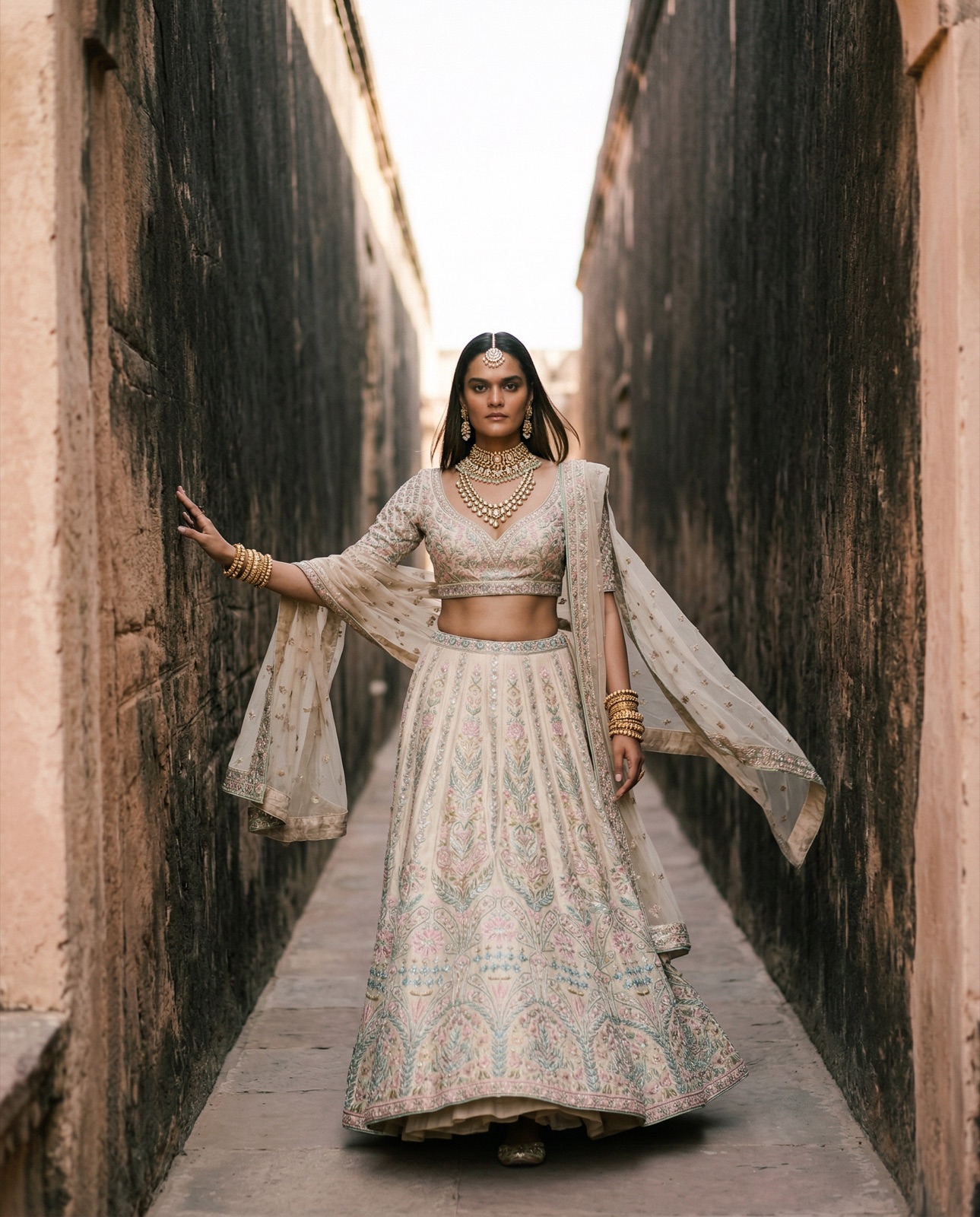
Apparel · streetwear drop-pack contract

Streetwear editorial that ships at the speed of the drop.

Editorial campaign imagery for streetwear brands is the hero, lookbook and paid-pack imagery composed against the locked brand-spine document a streetwear label drops against — palette, grain, posture, type and locality — and shipped inside the fourteen-day drop window the customer and the resale market are already counting down to. It is not the studio's house style applied to the drop. It is the brand's drop, photographed by a production system that ingested the brand on day one and ships every subsequent frame against it. For streetwear founders at the two to twenty million revenue band — Awake NY, Brain Dead, Online Ceramics, Reese Cooper, Aimé Leon Dore, Stüssy, Carhartt WIP, Madhappy, Sporty & Rich, A Cold Wall, Pop Trading Company, Fear of God Essentials, ERL, Kith, BAPE — the drop calendar dictates everything. The hero signals the drop. The editorial holds the world. The paid pack closes the sale before the resale market posts.

By Abhi Chawla, founder · Last updated: 2026-06-12

Brand-world reference

A streetwear brand world held inside one locked spine — produced as editorial campaign imagery for streetwear brands.

The drop is confirmed for Friday noon and the hero is not yet shot.

It is Wednesday seven pm. The drop manifest just landed in Notion — eleven SKUs, two graphic tees, a heavyweight hooded zip-up, two pieces of cut-and-sew outerwear, three accessories, the collab piece the brand has been teasing for a fortnight. Friday noon Eastern is the confirmed drop window. The paid pod has Meta and TikTok budgets staged on the ad accounts ready to go live at twelve oh three. The Shopify drop landing page is built but every module is grey because nobody has the hero. The founder has been on the phone since five with the freelance photographer she has used for the last three drops; the photographer is on a TKO Studios shoot in Brooklyn and cannot be in studio until Sunday. The drop cannot move. The market has already counted down to Friday.

This is the production crisis every streetwear founder hits inside the first eighteen months. The drop calendar runs on the customer and the resale market — Grailed bots are already crawling the brand's Shopify for drop-day pricing, Discord servers are tracking the drop, the brand's own SMS list is at fifteen thousand subscribers waiting for Friday's send. None of those clocks pause for a photographer's calendar. The brand director searches "streetwear brand photography fourteen days" at seven thirty pm Wednesday and the top three results are agency landing pages quoting six to nine weeks. Per Andrew Foxwell's apparel-vertical operator panels and Common Thread Collective's streetwear-cohort creative-fatigue audits, first-week sell-through on streetwear drops sits between fifty-five and seventy-eight percent of total inventory; the imagery that lands on drop day is the imagery doing the work, and the imagery that lands in week three is documenting a drop the customer has already moved on from.

The diagnosis is not capacity and not budget. It is calendar-class. The studio photographer model and the freelance-per-drop model both operate on a six-to-nine-week cycle. Streetwear operates on a fourteen-day cycle, often a seven-day cycle, sometimes a forty-eight-hour cycle when the collab partner moves up the drop. The two clocks are incompatible. The fix is not a faster freelance roster. The fix is a production system that ingested the brand on day one against a locked brand-spine document and ships every subsequent drop's hero, lookbook and paid pack against the spine — at the cadence the drop calendar dictates, not the cadence the studio dictates.

Why the studio shoot, the freelance per-drop and the Sunday iPhone all break the brand.

The first instinct after the Wednesday seven pm crisis is to call the agency the brand used for the spring editorial. The agency comes back with a sixty-to-one-eighty-thousand quote, a four-to-six-week timeline, a named photographer based in LA, a stylist deck, a location-scout proposal and a contract requiring three months notice on cancellation. The founder closes the email by ten pm Wednesday. The numbers do not match the drop. They match a tentpole season the brand also wants to run once a year, but they do not match the thirty-eight other drops scheduled across the calendar. The agency is not wrong about its discipline. It is wrong about the cycle the brand is operating in.

The second instinct is the freelance per-drop roster. Three or four photographers on call, each shooting one drop per month for four-to-fourteen thousand all-in. The frames arrive on time. The frames also arrive against four different colour profiles, four different light direction defaults, four different composition languages, and the brand's grain language drifts inside three drops. Awake NY ran this model for two seasons before locking the brand-spine discipline — the founder has talked about it publicly at the New York streetwear founders' panel. The customer reading the Instagram grid sees four different brands stitched into one feed. The resale market reads the inconsistency before the next drop's countdown opens. Per Business of Fashion's streetwear operator reporting through 2025 and 2026, brand-spine drift across drop imagery correlates directly with first-week sell-through compression — the brands holding spine compound resale-market premiums; the brands losing spine compound discounting.

The third instinct the in-house team hears every drop is "can we just shoot the lookbook ourselves at the studio?" Two designers, the brand director, the social manager and the new-drop pieces piled into a Sunday afternoon with the founder's iPhone 15 Pro and a softbox. The frames are real. The frames are also lit by ambient afternoon light at five thousand five hundred Kelvin against a previous drop's hero shot at golden hour at twenty-eight hundred Kelvin. The feed grid puts the iPhone Sunday register next to the spring editorial's named-photographer frame. The eye registers the colour temperature shift before the customer reads the caption. The save-rate drops on the drop-day post inside the first six hours. The resale market reads the brand as slipping.

All three failure modes have one cause. None are composed against a brand-spine document. The agency operates against its own house style. The freelance roster operates against four different individual house styles. The Sunday iPhone operates against ambient conditions. The fix is not better people. The fix is a documented spine the founder signs off on once, and a production system that composes every subsequent frame against it. The same spine discipline anchors the brand-world model for in-house creative teams at the fifty-million-plus tier and the apparel brand identity and campaign system as the upstream identity layer; here it is deployed for the drop calendar.

The six layers of the streetwear brand spine the drop pack composes against.

The drop pack ships against a locked brand-spine document built in the first week of any engagement. We capture the spine in a four-to-six-hour working session with the founder, the creative director and the brand designer — walking the existing seasonal editorial, the customer's saved-feed grid, the previous twelve drops on the brand's Shopify, the resale market's last quarter on Grailed, StockX and GOAT, the brand's signature locality. The output is a forty-page document signed by the founder. Every subsequent frame is composed against it. The streetwear brand spine carries six layers, each one decomposable into testable production variables.

The first layer is the palette — locked in Pantone solid coated and sRGB at under three Delta E drift across every print run, every fabric dye, every render. Aimé Leon Dore's spine sits in cream, cobalt, oxblood and tobacco against rough cream paper-stock against soft directional north-window light. Stüssy's spine sits in faded black, dust grey, chrome silver and a single seasonal accent against high-noon harsh sunlight. Fear of God Essentials sits in oatmeal, bone, stucco, mocha and military green against soft overcast sky. The palette is not a moodboard. It is a production contract.

The second layer is the grain language — the brand's relationship to film, scan, halftone, digital noise, push-process, cross-process, or the deliberate clean digital register. Carhartt WIP runs heavy 35mm Portra 400 grain pushed two stops against neutral midtones. Online Ceramics runs flatbed scanner halftone over digital base. Madhappy runs clean digital with paper-stock noise added in finish. The grain is the brand's signature texture; the customer reads it before she reads the wordmark. The third layer is the light direction — golden hour, blue hour, harsh noon, soft overcast, stairwell fluorescent, parking-garage sodium, club-strobe red — specified per register in physical units and time-of-day notation.

The fourth layer is the locality register — the brand's named environments, the streets the brand was built on, the venues, the apartments, the rooftops, the basketball courts, the train platforms. Aimé Leon Dore's Queens. Stüssy's Laguna Beach and Tokyo. Carhartt WIP's industrial Europe. Awake NY's Lower East Side and Astoria. The fifth layer is the casting frame — face, posture, body language, age register, styling logic — locked for the season so every drop's hero recognises against the prior twelve drops' models. The sixth layer is type and wordmark relationship — when the wordmark sits in the frame, when it does not, the typeface for drop callouts, the relationship to negative-space ratio at a specified percentage per register. The same mechanic the luxury apparel campaign tier uses for restraint discipline is here deployed for the drop calendar — a different surface, the same production contract.

01

Lock the brand-spine document in week one

Palette in Pantone-locked sRGB at under three Delta E drift, grain language at film stock and push-process notation, light direction in physical units and time-of-day, named locality register, casting frame, type and wordmark relationship at negative-space ratio per register. Forty-page document signed by the founder. Every subsequent drop frame composes against it.

02

Hold the drop calendar as the production clock

The drop calendar runs the studio; the studio does not run the drop calendar. The hero, lookbook and paid pack are indexed back from drop day — sample in by T-minus-fourteen, wave one hero and lookbook by T-minus-eight, paid pack by T-minus-three, DAM ingestion by T-minus-one. The drop calendar is the contract, not a request.

03

Treat the hero and the paid pack as the same composition

The hero that runs on drop day on Instagram first-stop and the paid pack that runs in Meta Advantage Plus Shopping and TikTok Top View are composed from the same brand-spine session, not assembled in two parallel pipelines. The customer scrolling from organic to paid sees one drop, not two studios working in parallel.

04

Lock the casting frame against the season, not against the drop

The streetwear customer recognises the model before the drop. Locking the casting frame for the full season means every drop's hero reads against the prior eleven drops. Documented further in the AI fashion models versus real models comparison.

05

Ship the collab register as a second spine, not a deviation

Collab drops carry a second visual register on top of the brand spine. The collab partner's palette, locality and type relationship are captured against the brand-spine document in week one of the collab cycle as a second-spine layer. The drop reads as the brand inside the collab world rather than the collab pulling the brand out of register.

06

Render the resale market into the brief

The brand's last quarter on Grailed, StockX and GOAT shows the customer in the wild — which pieces resold above retail, which colourways carry the brand for the resale community, which silhouettes pulled premium. The drop pack composes the hero and lookbook to reinforce the silhouettes the resale market is paying for, not to chase the silhouettes the brand wishes it carried.

The fourteen-day drop window, indexed back from drop day.

The drop pack runs on a fixed fourteen-day calendar backed off drop day. Day one is the drop manifest lock — final SKU list, colourway grid, fabric content, retail and resale-band reference, drop day time-of-day, paid-pod media plan, SMS send window, organic post sequence and Discord drop sequence. Day two is sample reference — one calibrated sample per SKU against a Macbeth color checker and grey card at 5500K LED with tape in frame, captured by the brand or the manufacturer, sent as a six-frame reference pack per SKU. Day three is brief lock against the brand-spine document — the writer at our side maps the drop into the spine and confirms the locality, light direction, casting frame and grain register against the brand's last six drops.

Day four through day eight is wave one. The hero — one to three editorial frames composed against the brand spine, indexed to the drop's hero SKU and the brand's signature register, lands by day six end-of-day in the in-house team's DAM as a first-pass file with locked Pantone-sRGB colour, locked grain stack and locked light direction. The brand director reviews against the spine, flags or signs off. The lookbook — ten to eighteen frames carrying the full assortment across the locked casting frame — lands by day eight, composed against the same spine, with retailer-direct adaptations for any wholesale partner taking the drop.

Day nine through day eleven is wave two — the paid pack. Fifteen to thirty-five frames cropped for Meta Advantage Plus Shopping one-to-one, Meta four-by-five mobile-first, Meta and TikTok nine-by-sixteen vertical, Pinterest two-by-three, Shopify dot-com module crops, Klaviyo email hero at six-hundred-pixel wide, Postscript SMS image asset at one-to-one, and the Snapchat nine-by-sixteen on brands running Snap. Every frame composed from the wave-one hero and lookbook source files against the brand spine — not a separate pipeline. Day twelve is review against the spine, finishing and final retouching. Day thirteen is DAM ingestion against the in-house team's calendar — Bynder, Brandfolder, Frontify, Aprimo, Cloudinary or the brand's lightweight Notion-plus-Drive stack at the indie-streetwear end. Day fourteen is delivery into the drop-day kit — paid pod ready to push live, social manager ready to schedule, founder ready to post first-stop.

The rhythm matches the cadence the seasonal drop photography workflow establishes for the broader apparel category — here compressed into the streetwear fourteen-day window, with the paid pack folded into the drop pack itself rather than handed off to a separate creative agency. The same rhythm the fashion lifestyle photography contract runs at the two-week sprint cadence is here deployed at the drop-pack cadence — a different surface, the same calendar discipline.

The three drop-pack paths most streetwear brands have already tried.

Tier 1

The named-photographer seasonal editorial

Sixty to one-eighty thousand all-in for the season's editorial — Bafic at Aimé Leon Dore, Tyrone Lebon at Stüssy adjacency, Ronan Mckenzie at Awake NY register, Cian Moore at Carhartt WIP collab tier. Three to five weeks of pre-production, two to four shoot days, four to six weeks of post. Twelve to twenty-five usable frames at the brand's highest possible register. The discipline is real. The cycle is six to nine weeks. The brand has thirty to forty drops in the same year. The named-photographer editorial covers two of them at the seasonal moment. The other thirty-eight drops are not covered by the same line item.

Tier 2

The freelance per-drop roster and the Sunday iPhone

Four to fourteen thousand per drop against three or four freelance photographers on rotation, plus a Sunday iPhone shoot when the calendar slips. Twelve to thirty usable frames per drop. The numbers close in spreadsheet. The brand-spine discipline does not survive the rotation — four photographers means four house styles, the iPhone register breaks the colour-temperature lock, and the customer reading the feed grid sees four different brands plus a Sunday afterthought. Per Common Thread Collective's streetwear-cohort audits, brand-spine drift across drop imagery correlates with first-week sell-through compression — the brands losing spine compound discounting over the following two seasons.

Tier 3

The drop-pack contract (us)

Fourteen to thirty-six thousand per month against the fourteen-day drop window — sample in by T-minus-fourteen, hero and lookbook by T-minus-eight, paid pack by T-minus-three, DAM ingestion by T-minus-one. Thirty to seventy frames per drop, all composed against the locked brand-spine document, all cropped to every channel aspect ratio. Per-frame economics at eighty to one-hundred-eighty dollars versus three-hundred to nine-hundred at the freelance per-drop model. The named-photographer seasonal editorial stays where it is — the spine is calibrated against it. The drop-pack contract holds the brand inside the spine for every drop that follows.

The math against the drop cadence.

A streetwear brand at the two to twenty million revenue band typically runs thirty to forty drops per year — weekly across some sub-segments, biweekly across most, monthly at the more deliberate indie end. The freelance per-drop roster lands at four to fourteen thousand per drop, which is one-hundred-twenty thousand to five-hundred-sixty thousand on photography alone before any retouching overflow, before any Sunday-iPhone scar tissue, before any of the brand-spine drift that compounds across the year. Layer the named-photographer seasonal editorial at sixty to one-eighty thousand once or twice per year and the all-in photography stack lands at one-eighty thousand to nine-hundred-forty thousand against thirty to forty drops. The math is closed in spreadsheet and broken in brand-equity.

The drop-pack contract lands at fourteen to thirty-six thousand per month — one-hundred-seventy to four-hundred-thirty thousand per year — against thirty to seventy frames per drop, every drop, composed against the locked brand spine. The named-photographer seasonal editorial stays in the stack at its existing budget; the contract absorbs the per-drop freelance line and the Sunday-iPhone overflow. Per-frame economics land at eighty to one-hundred-eighty dollars at the contract versus three-hundred to nine-hundred dollars at the freelance per-drop model, supported by the broader per-frame economics stack the studio operates against and the comparison frame the AI fashion photography versus traditional piece carries.

The second-order economics sit on the brand-equity line the CFO does not have a column for. Per Business of Fashion's streetwear operator panels through 2025 and 2026, drops shipping with a locked brand spine carry a one to three point premium on resale market price-to-retail across the first ninety days. Aimé Leon Dore's documented brand-spine discipline against Bafic's seasonal editorial direction is the operator-cited benchmark; Stüssy's multi-decade spine against rotating named photographers is the longer-arc benchmark. Drops shipping against brand-spine drift compound discounting across the second and third quarters following the drop. The drop-pack contract preserves the brand-equity line in addition to the cash line. The documented case work at Anita Dongre at the bridal-luxury register and the discipline the apparel rebrand campaign relaunch piece carries across the post-identity-refresh window are the cross-vertical proofs of the same brand-spine production mechanic.

What the first three drops look like when the brand is moving onto the contract.

The first drop is brand-spine ingestion. The four-to-six-hour working session with the founder and creative director runs in week one. The walk-through covers the existing seasonal editorial, the brand's last twelve drops on Shopify, the customer's saved-feed grid, the resale-market last quarter on Grailed, StockX and GOAT, the signature locality, the named photographer the brand uses for the seasonal tentpole. The output is the forty-page brand-spine document — palette, grain, light, locality, casting frame, type — signed by the founder. The drop pack for the first drop ships against the spine inside the same eighteen-to-twenty-two day window, with the additional days against the spine session. The founder sees the first drop land and recognises the brand on every frame.

The second drop is rhythm. The fourteen-day calendar locks in. The drop manifest, sample reference, brief lock, wave one, wave two, finish and DAM ingestion run on the cadence the drop calendar already runs on. The brand director stops being the producer between drops and becomes the reviewer at three touchpoints per drop. The paid pod runs the drop-day media plan against frames that arrived in the DAM the previous afternoon. The Shopify drop landing page is built against the wave-one hero by the time it lands. The Klaviyo and Postscript pre-drop sends are built against the lookbook by day eleven. The drop ships on Friday noon as scheduled, with the brand-spine intact across every surface.

The third drop is integration. The paid pod begins running the drop pack as the source for the post-drop nurture sequence — TikTok organic carousels, Pinterest pinning, dot-com module refresh, email lifecycle hero refresh, Discord drop debrief imagery. The next-drop teaser register pre-leaks the upcoming drop on the locked casting frame in the brand's signature locality two to three weeks ahead of drop day. The wholesale partners taking the drop — Dover Street Market, END., SSENSE, Mr Porter, Selfridges streetwear floor, Brown Thomas, Slam Jam, KM20 — receive retailer-direct adaptations from the wave-one source files without any back-and-forth. The brand is operating as one world across every surface, drop-after-drop, on a calendar the founder can predict.

Inside the broader apparel brand-world practice.

The streetwear drop-pack contract is one tier of a broader apparel brand-world practice. The apparel brand identity and campaign system is the upstream identity layer the brand-spine document is composed against. The brand-world model for in-house creative teams is the parent document the drop pack outputs from at the fifty-million-plus tier. The luxury apparel campaign tier is the restraint-discipline sibling at the quiet-luxury register. The fashion lifestyle photography contract is the feed-depth sibling indexed to the social calendar; the seasonal drop photography workflow is the broader-cycle rhythm the drop-pack cadence compresses; the knitwear lookbook and wholesale linesheet pieces are sibling surfaces; the denim photography at scale piece is the fabric-specific cousin for brands carrying denim inside the drop assortment; the AI lookbook photography service tier carries the lookbook layer; and the best AI fashion photography services piece frames the broader category. The DTC clothing brand photography playbook sits as the playbook spine the whole practice composes against.

For the streetwear founder with Friday noon counting down, the resale market already crawling Shopify, the paid pod staged on the ad accounts and the freelance photographer in Brooklyn until Sunday — the drop-pack contract is the line that closes the gap. Not a replacement for the named photographer the brand keeps for the seasonal tentpole. Not a competitor to the brand's signature editorial voice. It is the production system that ingested the brand on day one and ships every drop's hero, lookbook and paid pack against the spine the customer already recognises, inside the fourteen-day window the customer and the resale market are already counting down to. The drop calendar runs the studio. The studio does not run the drop calendar.

Editorial campaign imagery for streetwear brands · frequent questions

What is editorial campaign imagery for streetwear brands?

Editorial campaign imagery for streetwear brands is the hero, lookbook and paid-pack imagery composed against the locked brand-spine document a streetwear label drops against — palette, grain, posture, type and locality — and shipped inside the fourteen-day drop window the customer and the resale market are already counting down to. It is not the studio's house style applied to the drop. It is the brand's drop, photographed by a production system that ingested the brand on day one and ships every subsequent frame against it. The hero signals the drop. The editorial holds the world. The paid pack closes the sale before the resale market posts.

Why does the studio photographer model fail streetwear?

Because the studio cycle is six to nine weeks and the streetwear drop is fourteen days. A named-photographer editorial shoot at the Aimé Leon Dore tier quotes at sixty to one-eighty thousand and three to five weeks of post — the drop has already shipped, sold out and posted on Grailed by the time the editorial frames are ready. Streetwear sells on first-week velocity, and the imagery has to be in market the day the drop drops, not three weeks later. Per Business of Fashion's streetwear operator panels through 2025 and 2026, first-week through-rate for streetwear drops sits between fifty-five and seventy-eight percent of total inventory. The hero that lands on day one does the work. The hero that lands in week four is documenting a drop the customer has already moved on from.

How is this different from running the in-house team plus a weekend iPhone shoot?

The Sunday iPhone shoot is the failure mode every streetwear founder has run at least once. It produces frames against ambient afternoon light at the wrong colour temperature, framed by a designer whose composition language is Stories-first, posted into a feed grid where the iPhone register sits next to a previous drop's named-photographer editorial. The eye registers the temperature shift and the resale market reads the brand as slipping. The fix is not a better iPhone. The fix is a production system that ingested the brand-spine document on day one — palette in Pantone-locked sRGB, grain language, blue-hour or harsh-noon light direction, locality register, posture frame — and ships the next drop's hero, lookbook and paid pack against the spine the customer recognises.

What does a streetwear drop pack look like at AI production?

A drop pack is roughly thirty to seventy frames composed against the brand-spine document and indexed to the drop calendar. The hero is one to three editorial frames in the brand's signature register — concrete, blue hour, harsh noon, Tokyo back-street, LA cul-de-sac, London estate stairwell. The lookbook is ten to eighteen frames carrying the full drop assortment across the locked casting frame. The paid pack is fifteen to thirty-five frames cropped for Meta one-to-one, four-by-five, nine-by-sixteen, TikTok nine-by-sixteen, Pinterest two-by-three, dot-com module, email hero six-hundred-pixel-wide, and Snapchat nine-by-sixteen where the brand is active. Everything composed against one brand spine. Everything in the DAM the in-house team works out of by drop day.

How fast can the hero, lookbook and paid pack ship?

Inside fourteen days against a confirmed drop, with the brand-spine document already locked. Day one through day three is sample reference in and brief lock. Day four through day eight is wave one — hero and lookbook frames composed against the brand spine and the drop manifest. Day nine through day eleven is wave two — paid pack across every active channel aspect ratio. Day twelve through thirteen is review, finishing and DAM ingestion. Day fourteen is delivery into the in-house team's drop-day kit. The first engagement that includes spine ingestion runs eighteen to twenty-two days for the first drop, then settles into the fourteen-day cadence for every drop after that.

How do you keep the brand looking like itself instead of an agency house style?

By treating the brand-spine document as the production contract. Week one of any new engagement runs a four-to-six-hour ingestion session with the founder and creative director — walking the existing campaign work, the palette in Pantone-locked sRGB at under three Delta E drift, the grain language, the light direction in physical units, the named locality register, the casting frame, the negative-space ratio, the type and wordmark relationship. The output is a forty-page brand-spine document signed by the founder. Every subsequent frame is composed against it. The agency house-style trap — where the studio is fluent in one register and translates every brand through it — is the failure mode the spine contract is engineered specifically to avoid. The test on every frame is whether the founder would have signed it off on a Friday at the studio without notes.

Which streetwear brands does the drop-pack contract fit?

Streetwear labels at the two to twenty million revenue band running weekly, biweekly or monthly drops with an in-house team of one to four people. Sharpest fit across three tiers: indie streetwear at the Awake NY, Brain Dead, Online Ceramics, Cactus Plant Flea Market, Reese Cooper, Hidden NY tier; mid-tier streetwear at the Aimé Leon Dore, Stüssy, Carhartt WIP, Pop Trading Company, Madhappy, A Cold Wall, Sporty & Rich tier; and collab-led streetwear at the Fear of God Essentials, ERL, BAPE, Kith, Off-White-adjacent tier where collab drops add a second visual register on top of the brand spine. The contract is engineered for the drop cycle, not for the once-a-year tentpole.

How does streetwear editorial AI photography fit alongside a named photographer for the seasonal lookbook?

Alongside, not instead of. Most streetwear brands at the eight-million-plus tier run one named-photographer seasonal editorial per year — Bafic for Aimé Leon Dore, Tyrone Lebon for Stüssy, Dan Regan for Fear of God Essentials adjacencies, Cian Moore for Carhartt WIP collabs, Ronan Mckenzie for Awake NY type registers. That seasonal moment stays where it is. The brand-spine document is calibrated against that named photographer's register, and the AI production system ships every drop pack in the eleven-to-thirteen weeks between seasonal editorial shoots against the same spine. The named photographer signals the brand. The drop-pack contract holds the brand inside it for every drop that follows.

What does this cost compared to a freelance shoot per drop?

A freelance streetwear shoot per drop typically lands at four to fourteen thousand all-in — photographer day rate, location, two to four models, stylist, retouching — for twelve to thirty usable frames against a fourteen-day window. Across thirty to forty drops per year that is one-hundred-twenty thousand to five-hundred-sixty thousand on photography alone, with brand-spine drift across every shoot because the freelance roster rotates and each photographer composes against her own register. The drop-pack contract lands at fourteen to thirty-six thousand per month — one-hundred-seventy to four-hundred-thirty thousand per year — against thirty to seventy frames per drop, all composed against one locked brand spine. Per-frame economics land at eighty to one-hundred-eighty dollars at the contract versus three-hundred to nine-hundred at the freelance per-drop model.

Start the next drop

Bring us the next drop. The hero will land before Friday noon.

If you are a streetwear founder, creative director or brand manager at a two to twenty-million label running weekly or biweekly drops, and the freelance roster is breaking the brand spine across every drop — send the brand's last six drops on Shopify, the named photographer the brand keeps for the seasonal tentpole, and the next confirmed drop date. The brand-spine document will be locked in the first week, the casting frame will be locked across the season, and the hero, lookbook and paid pack will ship inside the fourteen-day window the drop calendar already runs on. The drop calendar runs the studio. The studio does not run the drop calendar.

Book a drop-pack scoping call