Headwear brand campaign photography

Headwear campaign photography that reads at crown height, brim curve and panel structure — not at sixty-two separately quoted SKUs.

By Abhi Chawla, founder · Last updated: 2026-09-05

This is the production contract for the founder or head of brand at a $3M to $35M headwear label at the New Era, '47 Brand, Goorin Bros, Brixton, Stetson, Kangol, American Needle, Ebbets Field Flannels, Melin, Ciele Athletics, District Vision, Tracksmith, Lack of Color, Janessa Leoné and Gigi Pip tier — where the catalog multiplies by decoration rather than by garment, and the photography invoice multiplies with it. Headwear brand campaign photography is a production discipline for cap, hat and beanie brands in which the base blank — crown height, panel count, brim curve, closure and interior construction — is produced once as a measured geometry library, and every decoration, colorway and licensed design is composed against that locked geometry rather than quoted and staged as a separate garment.

The register

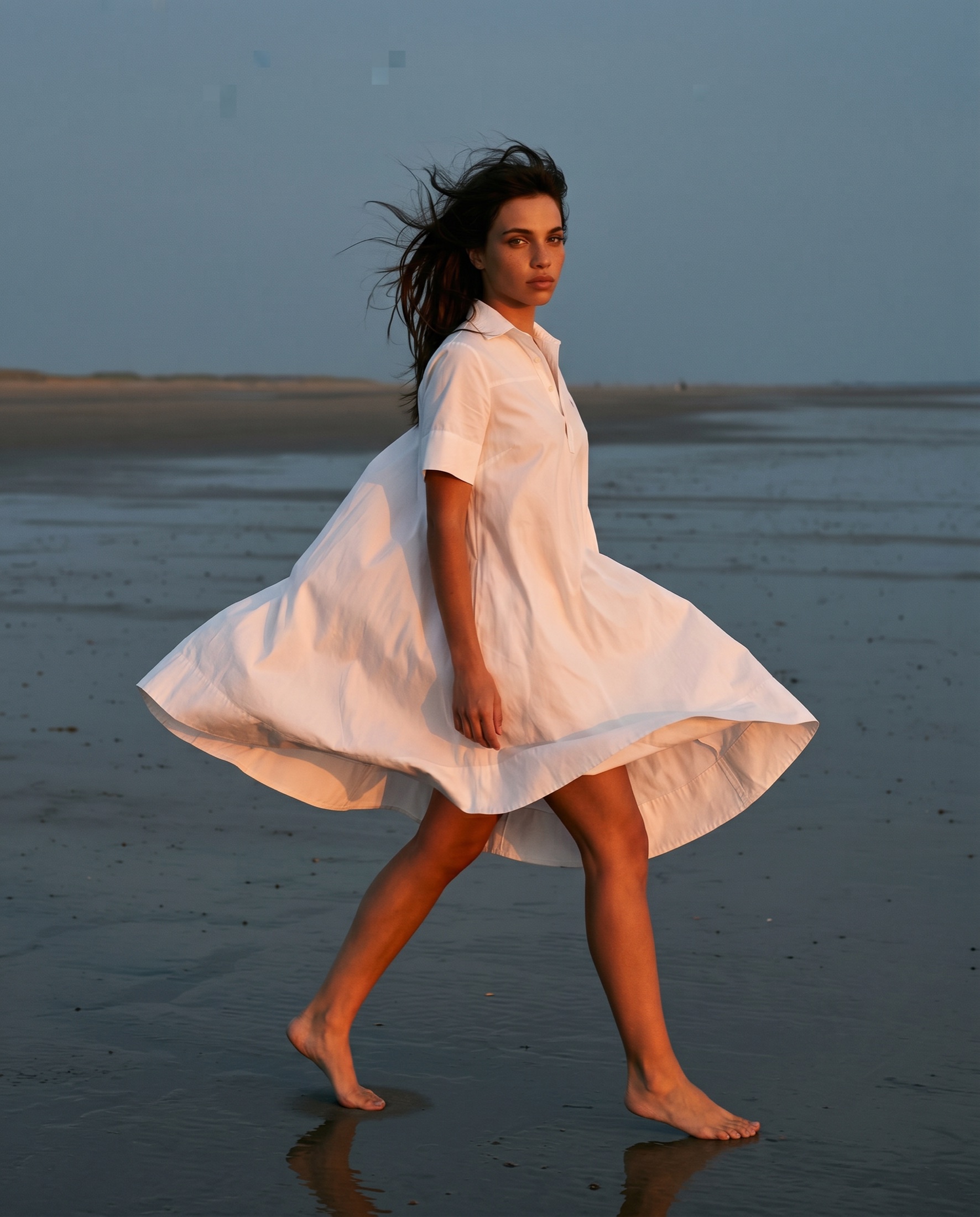
Heritage American apparel at the light and material fidelity a cap line has to hold — the register we build as headwear brand campaign photography.

Sixty-two SKUs. Four hats.

A Tuesday in mid-August, and the founder of a $9M headwear label is holding a studio quote for the holiday drop: $34,000, three weeks of lead time, delivery two days before the drop is due on site. The drop is sixty-two SKUs. She scrolls the line sheet and counts what is actually in it: four base blanks — a structured six-panel at a mid crown, a five-panel camp cap, an unstructured low-profile six-panel, and a cuffed merino beanie — carrying eleven decoration designs across four colorways. Sixty-two SKUs. Four hats.

The same season, the apparel side of the same business quoted $46,000 for eighteen styles. So headwear — which is twenty-one percent of her revenue and, because of a seventy-plus percent gross margin and a return rate a fraction of the apparel category, closer to a third of her gross margin dollars — costs seventy-four percent of what the whole apparel line costs to photograph. She has run that math three seasons in a row and every season she does the same thing: cuts the frame count to three per SKU, ships flat-lays, and watches the PDPs convert like a 2009 wholesale catalog.

The structural problem is not the studio's pricing. It is that headwear brands multiply by decoration and studios price by SKU, and those two facts are irreconcilable. A cap line does not add product the way an apparel line does. It adds artwork. One six-panel blank in black takes forty embroidery designs over three years — in-house designs, collaborations, licensed team marks, seasonal one-offs, wholesale customs for a dozen accounts — and each one arrives at the studio as a new setup, a new light check, a new colour reference, a new $210 line item, on a crown that has not changed by a single millimetre since the first shoot.

The fix is to invert what gets treated as the asset. The blank is the asset. The decoration is the variable. This is the only apparel category where that inversion is cleanly available, because headwear is the only apparel category with a rigid, repeatable silhouette — a cap does not drape, does not fall differently on a different body, does not need re-steaming between frames. Once a blank's geometry is produced correctly, it is correct forever, and the marginal cost of the fortieth design on it collapses toward zero. Almost nobody in the category is operating this way, which is exactly why the opportunity is sitting there.
Produce the blank once, then multiply the artwork

The spine document for a headwear brand is a blank library, and it enumerates every base form in the line by construction rather than by name: structured six-panel with fused buckram front, unstructured six-panel low-profile, five-panel camp cap, trucker with foam front and polyester mesh back, fitted, snapback with a seven-position closure, strapback with a brass slider or a leather-and-buckle, cuffed watch cap, uncuffed beanie, bucket, wide-brim in fur felt or wool felt, and Panama in toquilla straw. Each construction gets its own geometry set, and each colourway of each construction gets its own capture.

The unit of production is six frames per blank per colourway: front elevation on white for marketplace compliance, side crown-profile at ninety degrees at a fixed distance, three-quarter at the true wear angle, back panel with the closure legible, interior at a shallow overhead with sweatband and taping in focus, and a decoration-zone macro at two to three hundred percent. Four blanks in four colourways is sixteen base forms and ninety-six base frames. That is the whole capital cost of the library.

Everything after that is composition. The eleven holiday designs — direct flat embroidery at six thousand stitches, a 3D puff logo over three-millimetre foam, a Merrowed-edge woven patch, a debossed leather patch, a rubber PVC badge — get produced against the locked crown geometry rather than against a fresh setup. The sixty-two-SKU drop resolves into ninety-six base frames plus a decoration pass, and next season's thirty new designs on the same four blanks resolve into a decoration pass alone. That is the same SKU-multiplication economics we work through for high-variant apparel programs in scaling ecommerce apparel photography, except headwear has the cleanest version of the problem in all of DTC.

The second document is the register document, and its non-obvious rule is that on-form is a legitimate primary register for headwear in a way it is not for garments. A cap on a well-built form, lit properly, reads as a product; the same cap flat reads as fabric; the same cap on a styrofoam mannequin head reads as a mall kiosk. The invisible-form problem here is genuinely different from the garment version we solve in ghost mannequin alternatives — a cap needs its internal volume held and its sweatband edge preserved, which is a structural problem rather than a compositing one.

Crown profile and brim state are measurements, not angles

Two frames in the headwear set are measurements dressed as photographs, and both are routinely shot as styling angles instead, which destroys their value.

The first is the crown profile: a side elevation at ninety degrees, at a fixed camera height and distance, held constant across every style in the line. A repeat headwear customer buys crown height the way a denim customer buys rise. The gap between a low-profile unstructured crown at roughly three and a half inches and a structured six-panel closer to five inches is the entire decision, and it is completely illegible in a three-quarter hero. Shot at a locked distance across the line, the profiles become directly comparable — and a stacked crown-comparison strip across four blanks becomes an asset the customer service inbox stops needing to answer. It is the headwear analogue of the graded-anchor discipline we run for extended ranges in size-inclusive apparel campaign photography, applied to a rigid form instead of a body.

The second is brim state. A shapeable visor ships flat and lives however the wearer bends it, and the same snapback is a flat-brim product to one customer and a hand-curved one to another within a week of purchase. A PDP that shows only the as-shipped state is answering half the question, and the half it skips is the one that determines whether the hat reads as skate, as ballpark, as trail or as workwear. We produce a brim-state pair for every shapeable style — flat as shipped, curved at a documented radius — in the same frame position under the same light. One extra composed frame per style. It removes the most common pre-purchase question in the category and it doubles the creative families available to paid social at no incremental shoot cost.

Both frames share a discipline that headwear specifically demands: the camera position is written down and never negotiated. Apparel photography tolerates drift between styles because drape absorbs it. Headwear does not. A ten-degree change in camera height reads as a different crown height, and a customer who buys a cap expecting a four-inch crown and receives a five-inch one returns it — not for size, but because the photograph was, functionally, inaccurate.

Reference frames

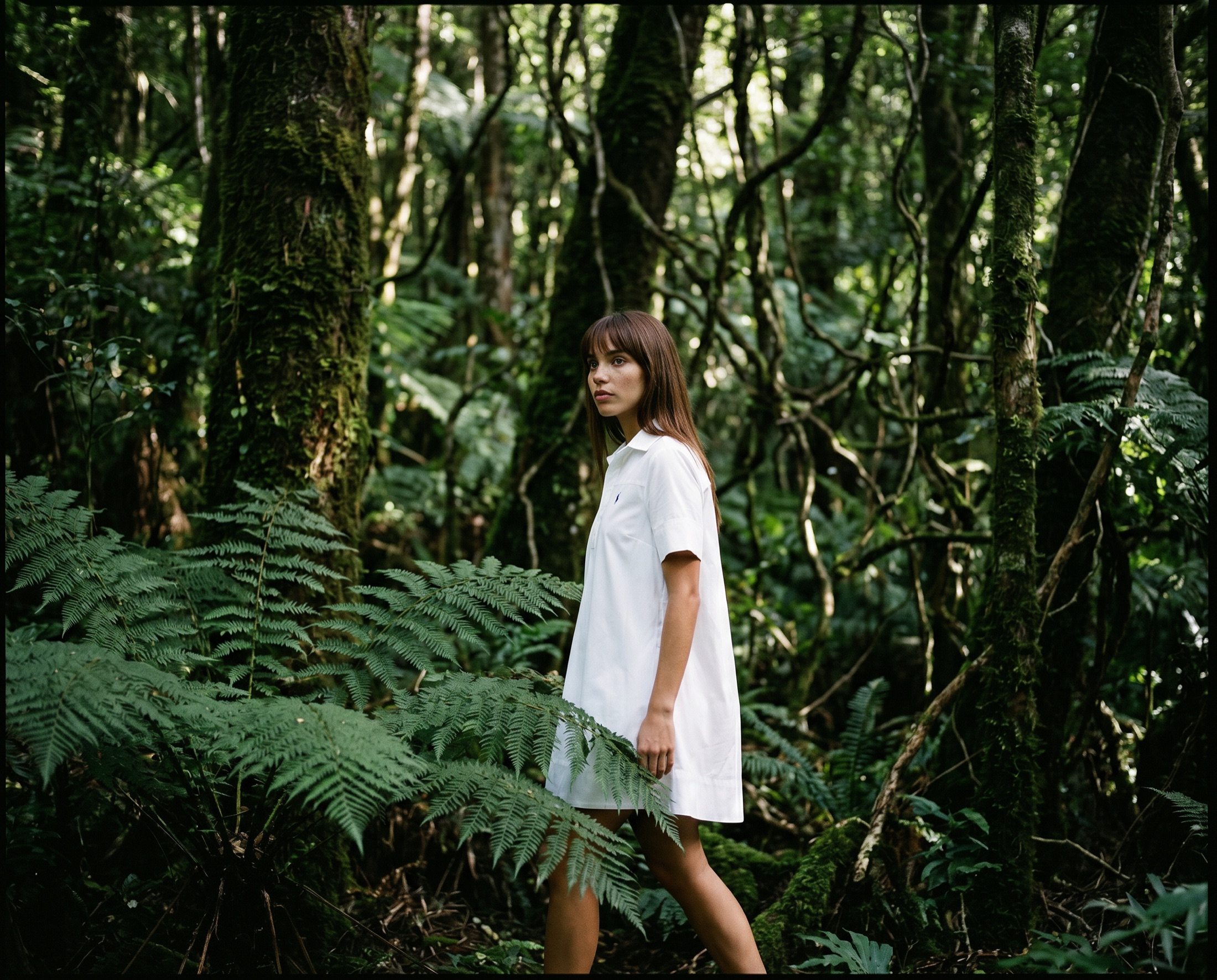
Three registers a headwear line has to hold at once — the frame grammar behind headwear brand campaign photography.

The interior frame and the hair roster

Two more frames sit in the headwear set that almost no brand in the category produces, and both are close to free once the blank library exists.

The first is the interior. Turn a cap over and the entire quality argument is sitting there: the sweatband material and its stitch, whether the seams are overlocked or taped, the closure hardware — a stamped brass slider against a moulded plastic snap against an elastic fitted band — the branded label, the panel lining, the eyelet finish. This is where the difference between a $38 cap and a $92 one is legible, and it is the frame that is missing from perhaps nine listings in ten. One shallow-overhead interior frame per blank, reused across every decoration built on that blank, does more to carry a premium price than a fifth colourway of the front. On marketplace listings it belongs in the secondary slots, which is the same underused real estate we argue for in Amazon apparel listing photography — Amazon's own Seller Central style guide governs the main image at pure white with the product filling roughly eighty-five percent of the frame, and says nothing at all about what slots two through seven have to contain.

The second is the on-head roster, and specifically its hair dimension. Headwear sits on a head, and the head has hair, and hair changes everything about how a crown seats and how a closure reads. A documented roster covers circumference across the range the line fits — roughly fifty-four to sixty-three centimetres for most programs — head shape at round and long-oval, and hair state across short and buzzed, mid-length loose, curly and coily volume, a ponytail routed through the closure, braids, and bald. The ponytail-through-the-strapback frame is asked about constantly by customers and produced by essentially nobody, and it is a single composed frame per relevant style. The identity discipline that makes a locked roster work across a whole season is the same one we hold for on-body work in activewear campaign imagery, where a running cap or a technical beanie has to read under sweat, weather and motion rather than under studio light.

The third variable that governs both is decoration type, because each one behaves differently under light. Flat satin-stitch embroidery carries a directional sheen along the stitch run and shifts as the light rotates. Three-dimensional puff over two or three millimetre foam throws a genuine shadow and needs raking light to read as raised at all. A Merrowed-edge woven patch is matte and flat. A debossed leather patch needs a grazing angle to show its depth. A rubber PVC badge is specular and blows out under exactly the light that flatters embroidery. A single light logic across all five produces a set where three of the decorations look dead, which is the most common failure mode in headwear catalogs shot fast and cheap.

Six rules the headwear contract runs on

01

Produce the blank once; the decoration is the variable

Every base form in the line — structured six-panel, unstructured low-profile, five-panel camp, trucker, fitted, snapback, strapback, cuffed beanie, bucket, wide-brim felt, straw — gets a geometry set per colourway, and every embroidery design, patch, collaboration and licensed mark is composed against it. Four blanks in four colourways is ninety-six base frames and it carries the whole catalog. The fortieth design on an existing blank costs a fraction of the first, which is the single largest cost asymmetry available in the category and the reason a headwear drop should never be quoted per SKU.

02

The crown profile is a measured frame at a locked camera position

Side elevation at ninety degrees, fixed camera height and distance, identical across every style in the line, so a low-profile crown at roughly three and a half inches and a structured crown closer to five are directly comparable. Camera position is written into the register document and never negotiated between styles. Ten degrees of drift reads to the customer as a different crown height, and a cap bought on an inaccurate profile gets returned for a reason that has nothing to do with fit.

03

Ship both brim states for every shapeable visor

Flat as shipped and curved at a documented radius, same frame position, same light. Brim state is a wearer decision rather than a factory one, and it determines whether the hat reads as skate, ballpark, trail or workwear — which is the question a customer is actually asking before checkout. One extra composed frame per style closes it, and the pair immediately doubles the creative families available to paid social from a category that usually runs one.

04

The interior frame carries the price

Sweatband material and stitch, taped versus overlocked seams, closure hardware, branded label, panel lining, eyelet finish — shot at a shallow overhead with the sweatband edge in focus. It is one frame per blank, reused across every decoration on it, and it is the frame that separates a $38 cap from a $92 one in a customer's read. Most listings in the category do not have it, which makes it one of the cheapest differentiators available in a secondary marketplace slot.

05

The on-head roster documents hair, not just circumference

Fifty-four to sixty-three centimetres across round and long-oval head shapes, plus hair state at buzzed, mid-length loose, curly and coily volume, ponytail through the closure, braids and bald. Hair changes crown seating and closure read more than head size does. The ponytail-through-the-strapback frame is asked about constantly and produced almost nowhere, and it is a single composed frame per relevant style once the roster is locked.

06

Each decoration type gets its own light logic

Flat satin embroidery holds a directional sheen along the stitch run. 3D puff over two or three millimetre foam needs raking light to read as raised. Merrowed-edge woven patches are matte. Debossed leather needs a grazing angle. Rubber and PVC are specular and blow out under embroidery light. Five decoration types on one blank is five light treatments, documented once and applied thereafter — otherwise a third of the catalog ships looking flat and the brand reads as cheaper than it is.

Three production models for a sixty-SKU headwear drop

Headwear production resolves into three models. The cost bands below sit alongside the DTC creative-cost breakdowns Common Thread Collective and Andrew Foxwell publish for apparel production, adjusted for the decoration-multiplication factor that headwear carries and general apparel benchmarks do not account for.

Per-SKU studio, quoted like apparel

Three to four weeks, $28,000–$52,000 for a sixty-SKU drop at five to six frames each. The work is competent and the pricing is honest — the studio genuinely is re-setting for each design. But it charges full freight for the same crown sixty times, which is why the frame count is the first thing cut when the drop calendar tightens, and why the cut always lands on the interior frame, the crown profile and the second brim state. The frames that carry the price are the frames that get removed.

In-house lightbox and flat-lay

$4,000–$9,000 in equipment and internal time, indefinite cadence, and the reason most headwear PDPs look like a wholesale catalog from 2009. It produces front elevations and flats reliably and produces nothing else: no on-head register, no measured crown profile, no interior frame, no decoration macro, no brim-state pair. It is not a bad tool. It is a tool that answers the compliance question and none of the conversion ones, and brands that stop here compete on price because they have given themselves nothing else to compete on.

Blank library plus decoration pass at $18k–$38k

The 100 Creatives model. Four to six weeks. Blank geometry library across every base form and colourway, crown-profile elevations at a locked camera position, brim-state pairs, interior and closure frames, decoration macro library with per-type light logic, the on-head register against a documented head-shape and hair roster, and the marketplace and wholesale crop sets. The library carries forward, so the following season's thirty new designs are a decoration pass rather than a new shoot — which is where the model stops being cheaper and starts being structurally different.

High margin, low returns, and almost no photography

Headwear occupies an unusual position in an apparel P&L, and the position is the argument. Caps and beanies typically carry gross margins in the seventy percent range against apparel's fifty to sixty, and they carry a return rate far below the broader apparel band — Coresight Research and National Retail Federation figures put general apparel returns somewhere around twenty to thirty percent, driven overwhelmingly by size and fit, and a strapback or a one-size beanie simply does not generate that class of return. High margin, low returns, high attach rate at checkout. And in most catalogs, the lowest photography spend per revenue dollar of anything on the site.

That mismatch is the whole opportunity. A brand that gives its $38 cap the frame set it gives its $220 jacket is not overinvesting; it is correcting an allocation error that most of the category has been carrying for a decade. And unlike apparel, the investment does not decay — the blank library is still accurate three seasons later, because a six-panel crown does not change with the trend cycle. The compounding-infrastructure argument we make across every vertical in our guide to choosing an AI product photography agency is at its most literal here.

The wholesale and collaboration case is sharper still. Headwear is the default collaboration object in streetwear and in heritage workwear alike — it is the lowest-risk, highest-visibility unit a partner can put a mark on, which is why a brand with four blanks can end a year with two hundred designs. Arriving at a wholesale or licensing conversation able to show any partner's artwork rendered on any blank, in any colourway, at PDP quality within days rather than weeks changes what gets greenlit. That is a linesheet advantage before it is a photography one, and it is the same mechanic we build for apparel accounts in wholesale lookbook and linesheet imagery. It also maps directly onto drop-cadence brands where the artwork is the product, which is the argument running through editorial campaign imagery for streetwear brands.

Paid media closes the case. A headwear account running creative built only from front elevations has one creative family and burns it fast — Andrew Foxwell's work on DTC creative fatigue consistently shows single-family accounts fatiguing in days rather than weeks against a narrow audience. Crown profiles, brim-state pairs, interior macros, decoration close-ups, on-head registers across a hair roster and in-motion performance frames give the account six distinct families from the same library, at no incremental capture cost. How many of those hypotheses the account can afford to run is entirely a function of per-asset cost, which is the argument in AI photoshoot versus studio cost. And for heritage-leaning cap programs specifically, the material register — wool melton, waxed canvas, eight-wale corduroy, sun-faded twill — carries the same patina discipline we walk through in workwear and heritage Americana campaign imagery.

Four to six weeks, blank by blank

Week one is the blank library specification. We take the samples, the tech packs, the crown-height and brim-radius measurements, the closure hardware, the sweatband and taping specs, the decoration files with their stitch counts and foam heights, and the retailer specs the line ships into — and we come back with every base form enumerated by construction, its six-frame geometry set storyboarded, the camera positions written down, and a light logic documented per decoration type. Nothing ships this week, and this is the week that determines whether the other five work.

Week two is capture and register lock: the base geometry set across every blank and colourway, the crown-profile elevations at the locked position, the brim-state pairs, the interior and closure frames. This is the ninety-six-frame block for a four-blank, four-colourway line, and it is the only part of the contract that has to be produced from scratch. Everything after it composes against what week two establishes.

Weeks three and four are the decoration pass and the on-head register. Every design in the drop rendered on every blank and colourway it ships on, at the correct light logic for its decoration type, plus the decoration macros at two to three hundred percent. Alongside it, the on-head set across the documented head-shape and hair roster — including the ponytail-through-the-closure frame and, for performance styles, the in-motion condition where the cap has to hold under sweat and weather rather than under studio light. The service-layer version of this cadence, applied to conventional apparel lines, is the one running through our AI fashion photography practice.

Weeks five and six are the derived surfaces: marketplace crop sets at Amazon Fashion's on-white main-image spec and the 2000×2600 to 2400×3200 band most apparel wholesale portals run, A+ modules built from the crown-profile and interior frames, the wholesale and collaboration deck, the Klaviyo pack, and paid-social crops at every placement ratio. The blank library and the register document carry into next season — a new colourway inherits its geometry set, a new design inherits its light logic, and only genuinely new construction is net-new work. That is why we treat this as infrastructure rather than a shoot, and it is the same posture we bring to accessory programs generally, including the face-registration discipline we lay out for eyewear and sunglasses brand campaign photography.

FAQ

Headwear brand campaign photography, answered

What is headwear brand campaign photography?

Headwear brand campaign photography is a production discipline for cap, hat and beanie brands in which the base blank — crown height, panel count, brim curve, closure and interior construction — is produced once as a measured geometry library, and every decoration, colorway and licensed design is composed against that locked geometry rather than quoted and staged as a separate garment. Headwear is the one apparel category where the silhouette is rigid and repeatable, which means the blank is the reusable asset and the decoration is the variable. Production models that ignore that pay for the same crown four hundred times.

Why does per-SKU photography pricing break headwear brands?

Because headwear brands multiply SKUs by decoration, not by garment. A brand carrying four base blanks and eleven embroidery designs across four colorways is shipping sixty-two SKUs built on four physical forms. A studio quoting per SKU prices those sixty-two as sixty-two separate setups, which is how a headwear drop ends up costing nearly as much to photograph as a full apparel line carrying a fifth of the units. The blank does not change between SKUs. Only the decoration does, and the decoration is the cheapest part of the frame to vary.

What is a crown-profile frame and why does it matter?

A crown-profile frame is a side elevation shot at ninety degrees, at a fixed camera distance and height, so crown height and panel structure are directly comparable across every style in the line. The difference between a low-profile crown at roughly three and a half inches and a high-crown structured six-panel at closer to five is the entire purchase decision for a repeat headwear customer, and it is invisible in a three-quarter styling angle. The crown profile is a measured frame, not an aesthetic one, and it belongs in the PDP set for every style.

How do you photograph a cap that comes in flat brim and curved brim?

As a pair, in the same frame position, with the same light. Brim state is a wearer decision rather than a factory one — the same snapback lives on one customer flat off the shelf and on another curved by hand within a week — and a PDP that only shows one state is answering half the question. We produce a brim-state pair for every style with a shapeable visor: flat as shipped, and curved at a documented radius. It costs one additional composed frame per style and it removes the single most common pre-purchase question in the category.

What should the on-head roster cover for a headwear brand?

Head circumference across the range the line actually fits — roughly fifty-four to sixty-three centimetres for most programs — plus head shape at round and long-oval, plus hair states, which is the part almost every brand skips. Short and buzzed, mid-length loose, curly and coily volume, a ponytail routed through the closure, braids, and bald all change how a crown sits and how a strapback reads. The ponytail-through-the-closure frame in particular is requested constantly by customers and produced by almost nobody, and it is close to free once the blank library exists.

Does the interior of a cap need its own frame?

Yes, and it is the highest-return frame most headwear brands are not producing. The sweatband material, the seam taping, the closure hardware, the branded label and the panel lining are where construction quality is legible, and they are the difference between a thirty-eight dollar cap and a ninety dollar one in a customer's eyes. An interior frame at a shallow overhead angle, with the sweatband and taping in focus, does more to justify a premium price than another colorway on the front. It is one frame per blank, reused across every decoration built on it.

How do decoration types change the light logic?

Every decoration type has a different surface behaviour and needs its own treatment. Flat satin-stitch embroidery holds a directional sheen along the stitch run. Three-dimensional puff embroidery over two or three millimetre foam throws a real shadow and needs raking light to read as raised. A Merrowed-edge woven patch is matte and flat. A debossed leather patch needs a grazing angle to show depth. Rubber and PVC patches are specular and blow out under the same light that flatters embroidery. One light logic across all of them produces a set where half the decorations look dead.

How long does a headwear production contract take, and what does it cost?

Four to six weeks at $18,000 to $38,000 for a sixty-SKU drop: the blank geometry library across every base form and colorway, crown-profile elevations, brim-state pairs, interior and closure frames, decoration macros, the on-head register against a documented head-shape and hair roster, and the marketplace and wholesale crop sets. The comparison point is $28,000 to $52,000 and three to four weeks of studio time for the same drop quoted per SKU, and the difference compounds every season, because the blank library carries forward and only the new decorations are net-new work.

The headwear contract

Ready to photograph the blank,
not the SKU count?

Blank geometry library, crown-profile elevations, brim-state pairs, interior and closure frames, decoration macro library, on-head register across a documented hair roster, marketplace and wholesale crop sets. Four to six weeks from brief to live.