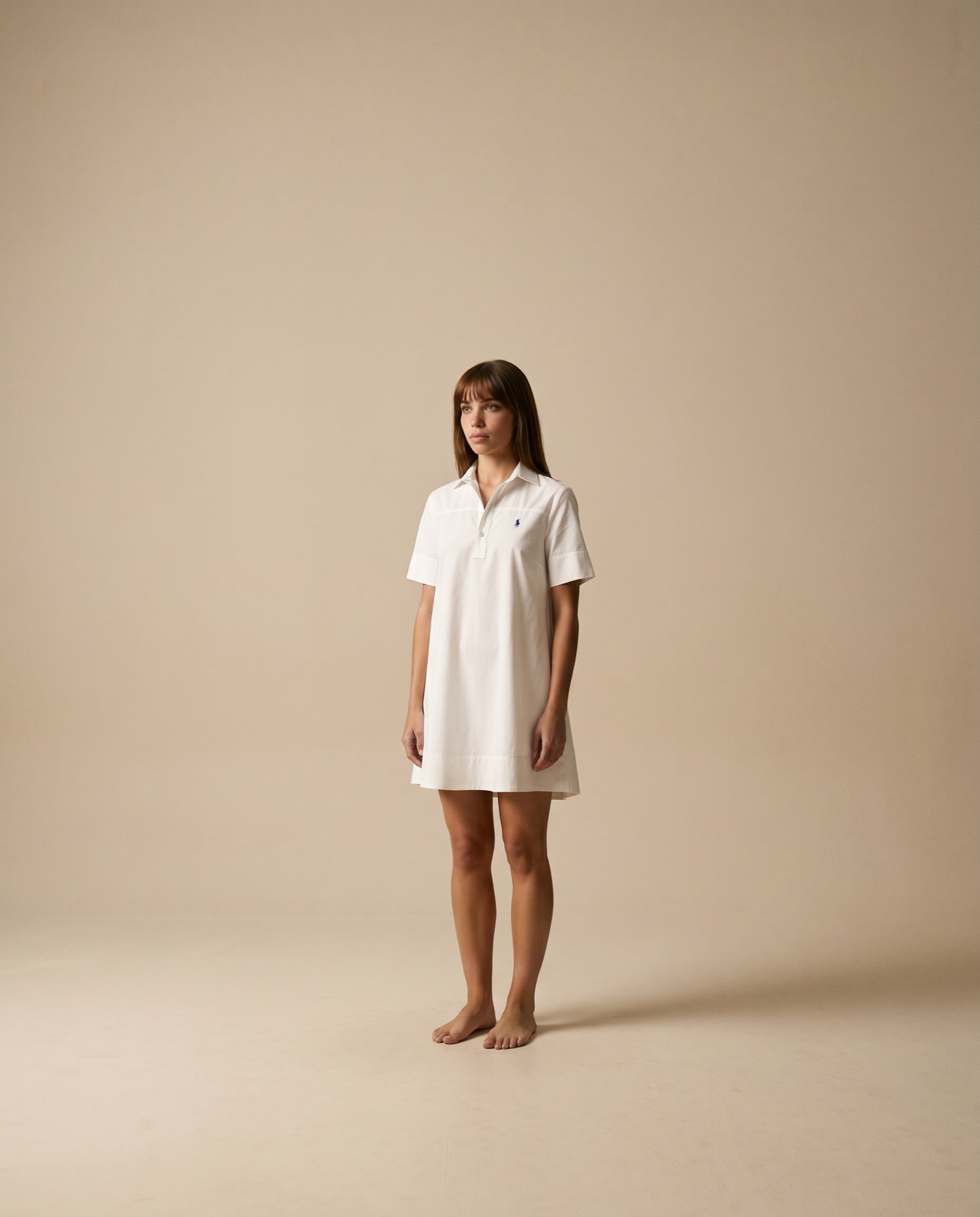
Eyewear brand campaign photography

Eyewear and sunglasses brand campaign photography that reads at the lens tint, the temple hinge and the face — not at the wordmark laser-etched on the arm.

By Abhi Chawla, founder · Last updated: 2026-09-02

You are a founder or head of brand at a $5M-to-$50M DTC eyewear label. The FW26 sun capsule lists eleven silhouettes across four acetate colorways plus two titanium builds, the optical capsule adds seven acetate-and-metal frames in five colorways each, and the wholesale-deck cover is due to Mr Porter Eyewear and Net-a-Porter Sunglasses in three weeks against an adjacency set that reads Warby Parker, Ace & Tate, Cubitts, Vada Eyewear, Moscot, Garrett Leight, Persol, Illesteva, Krewe, Jacques Marie Mage, DITA, Kirk & Kirk, Djerf Avenue Eyewear, Chimi, Le Specs, Bonnie Clyde, Bailey Nelson, and Pair Eyewear. Eyewear brand campaign photography is a specific production discipline that reads at the lens tint, the AR coating flare, the temple hinge, the acetate marbling or titanium finish, and the face carrying the frame — not at the wordmark laser-etched on the arm — and it ships the editorial hero, the wholesale-deck cover, the six-frame PDP grid, the on-face registration set across face shapes, the try-on card for home-try-on parity, and the paid-social crop set as one contract, not as five separate vendor engagements sequenced across a drop calendar that already breaks four times a year.

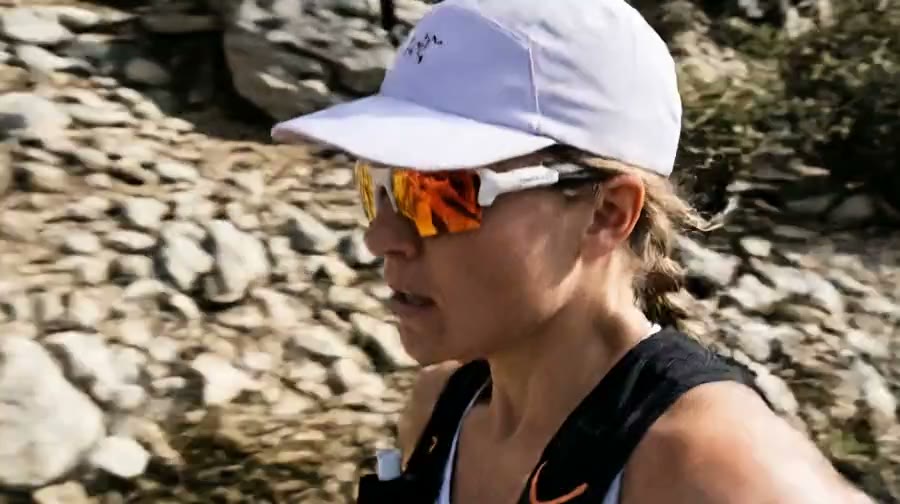
Sun and sport register

A reference frame — performance sunglass register in outdoor light at the discipline we translate to eyewear brand campaign photography.

The four-drops-a-year calendar that eats your creative budget

It is a Thursday morning in early June. You are looking at a $186,000 bid from your production partner for a two-day desert shoot in Joshua Tree for the FW26 sun capsule campaign, plus a separate $62,000 bid from your New York studio for the six-frame PDP grid across the eleven sun silhouettes and seven optical silhouettes, plus a $14,000-a-month rolling retainer with a performance-creative agency for the Meta and TikTok paid-social, plus a $9,000 line item for the Warby Parker-style home-try-on card variants because the mail-back program needs its own registration language. Your annual creative-development budget is $1.6M. Fifty-eight percent of your revenue lands across two windows — the sun-forward May-through-August window and the readers-and-optical January-through-March window — and everything you spend on creative between February and May has to earn out inside the first of those.

The pattern is the same across every $5M-to-$50M DTC eyewear brand we onboard. The traditional eyewear campaign-shoot model was built for an era when a brand shipped one SS capsule and one FW capsule a year, sold most of it through opticians and one or two department stores, and could absorb the destination-shoot economics because the campaign delivered the hero and everything else was catalog. That is not the calendar you are shipping against. Your calendar is a sun main drop plus an optical main drop plus a limited edition or collaboration drop plus a mid-season readers or blue-light or sport capsule — four capsule windows against eleven-to-eighteen silhouettes each, three-to-five colorways per silhouette, wholesale-deck cover due to Mr Porter Eyewear or Net-a-Porter Sunglasses in the pre-season buyer window, editorial hero live on Instagram by the first week of the drop to catch pre-launch interest, and paid-social running Memorial Day through Labor Day for sun and January through March for optical at CAC targets pinned to a $54 blended range.

The trap the category walks into is treating the desert-or-coast campaign hero, the PDP grid, the on-face registration set, the paid-social crop, the try-on card, and the wholesale-deck cover as six separate vendor scopes. A named-photographer campaign at the Cass Bird, Erik Madigan Heck, Angelo Pennetta, or Sølve Sundsbø tier delivers fourteen-to-twenty-two editorial hero frames at $220,000 to $420,000. A different New York or Los Angeles studio delivers the PDP grid on white at $58,000. A performance-creative agency delivers the paid-social crop set at another $14,000 a month. A third studio delivers the home-try-on cards at $9,000. A wholesale-deck vendor delivers the buyer-portal cover at $8,000. Five vendors, five production timelines, five style languages, five lens-optics logics, five face-casting philosophies. The customer scanning your brand across editorial, PDP, feed, try-on card, and buyer-portal reads it as five different brands. This is the disease the brand-spine discipline exists to solve, applied to a category where the lens optics and the frame material carry the fidelity signal that apparel textiles carry in an AI fashion photography engagement.

The article that follows is the contract we operate under for eyewear brand campaign photography. It reads at the lens-tint register (G-15 grey-green, B-15 brown, gradient-brown, gradient-grey, polarized indigo, blue mirror flash, gold mirror flash, silver mirror flash, clear anti-reflective, blue-light coat, photochromic transition), the frame-material register (Mazzucchelli 1849 block acetate at the correct depth and translucency, injection-cast acetate at the correct plastic tell, titanium at the correct beta finish, monel wire at the correct micro-brush, stainless at the correct hardness sheen, buffalo horn at the correct color variation, cotton acetate at the correct sustainability register), the hinge-geometry register (three-barrel spring, five-barrel Optyl, block-titanium pivot, screwless snap, Meister-style flex, riveted-rivet countersunk), and the face-inclusive on-face registration honest to the customer at the PDP. Every frame the brand ships across editorial, wholesale-deck, PDP, on-face grid, try-on card, and paid-social is produced under that same contract. There is no version of this work where the customer sees five different brands scanning across channels.
What the customer scans in under two seconds

The single largest fidelity signal on an eyewear campaign hero is the lens. A customer at the Warby Parker, Ace & Tate, Persol, Oliver Peoples, Illesteva, Krewe, DITA, Jacques Marie Mage, Moscot adjacency tier will scan a sunglass frame in under two seconds and, without naming it, decide whether the lens reads as an optical instrument or as a photograph of tinted plastic. If the tint gradient falls off in the wrong Kelvin, if the anti-reflective coating reads dead-flat rather than magenta-shifting at oblique angle, if the polarized register does not carry the specific extinguished-glare behavior a polarized wearer expects, the frame fails at the first scan and the brand-voice claim to optical seriousness falls apart. A $265 acetate sun frame photographed with a plastic-toy lens register has to convince against a $34 Amazon knock-off photographed with the same plastic-toy lens register, and it will lose that scan.

The lens register we lock at brand-spine onboarding covers eleven optical states at explicit contracts. G-15 grey-green at 15% visible-light-transmission is captured at the specific warm-neutral falloff that carries the Ray-Ban-lineage register. B-15 brown at 15% VLT is captured at the specific warm-amber falloff that carries the Persol lineage. Gradient-brown 55%-to-15% and gradient-grey 85%-to-25% are captured at the correct gradient sweep from lens-crown to lens-bottom for the editorial sun tier. Polarized indigo is captured at the correct axis alignment and the correct extinguished-glare register against water and glass reflection. Mirror-blue flash coat, mirror-gold, mirror-silver are each captured at the correct interference pattern that shifts hue as the frame rotates against the light. Clear anti-reflective is captured with the residual reflectance color the customer notices only subliminally (magenta AR reads different from green AR reads different from blue AR). Blue-light coat is captured with the specific yellow-shift the coating carries against a screen environment. Photochromic transition is captured at the correct intermediate register between the clear indoor state and the sun outdoor state.

Each state is captured against physical reference — every lens the brand ships is captured under Kelvin-controlled reference lighting, both flat-back and on-face at four to six face-shape registrations. Lens tint reads differently against a Fitzpatrick I brow bone than against a Fitzpatrick V brow bone because the surrounding skin reflects light into the eye socket at different Kelvin and intensity, which shifts the perceived lens color. If the tint reads wrong for a Fitzpatrick V customer looking at a Fitzpatrick V-lit frame, the brand loses trust before the color of the acetate is even registered. This is the same casting discipline our AI fashion models versus real models analysis operates under, tightened for eyewear's face-forward registration requirement.

The anti-reflective coating is the second half of the lens register. A quality AR coat carries a specific residual reflectance color at oblique angle — magenta on the Zeiss Duravision, green on the Essilor Crizal, blue on the Hoya Recharge, super-hydrophobic clear on the higher-end grades — and the customer who has ever worn a good pair of glasses knows this without knowing the technical vocabulary. If the AR reads dead-flat black in the campaign frame, the customer reads it as an unglazed prop rather than a photographed real frame. If the AR reads magenta-shifting on a frame the brand actually specs with green AR, the customer who owns that frame notices the mismatch. Every AR coating in the reference library is captured with its correct residual reflectance register so the campaign frame reads at the same coating the customer buys.

Why the frame reads plastic when the material fails

Frame material is the tightest material contract in the accessory category because the frame is a small, high-contrast object photographed at close range and its material tells are visible at PDP zoom in a way most accessory categories do not tolerate. A brand can render the correct silhouette and the correct lens and still ship a frame that reads wrong if the acetate depth is wrong. Mazzucchelli 1849 six-week-block cotton acetate carries a specific interior translucency and edge-cut register that separates it visually from injection-cast plastic — the block-cut acetate has depth the customer's eye reads even without naming the technical difference. A brand at the Cubitts, Moscot, Garrett Leight, Oliver Peoples, Jacques Marie Mage, DITA tier lives or dies on getting the block-acetate register right at the PDP.

The material register we lock covers ten frame-material classes at explicit fidelity contracts. Mazzucchelli 1849 block cotton acetate is captured at the correct translucency, correct color-through-block depth, and correct edge-cut micro-bevel that reads as hand-finished rather than injection-tumbled. Injection-cast acetate is captured with its correct plastic tell so the brand honestly at that tier reads at that tier. Titanium is captured at the correct beta-titanium finish (satin, brushed, matte-blast, high-polish) with the correct grey-through-warm register across the four common Ti finishes. Monel wire and stainless wire are captured at the correct 1.2mm and 1.6mm gauges with the correct micro-brush pattern that separates a $220 wire frame from a $48 wire frame at the PDP zoom. Buffalo horn is captured at the correct color variation, correct horn-grain register, and correct polished-versus-matte finish (the Kirk & Kirk and Kirk Originals lineage). Cotton acetate sustainable-source (the Ace & Tate, Cubitts, Bailey Nelson lineage) is captured at the correct plant-based sheen. Layered laminated acetate (Illesteva, Krewe lineage) is captured at the correct color-strata depth. Wood and horn hybrid, aluminum flat-cut, and polycarbonate performance are each captured at the correct register.

The frame edge is the third material variable and it is where the fidelity signal most often fails. An acetate frame that has been hand-cut, hand-buffed, and hand-polished carries a specific micro-bevel at the edge that separates it from a cast-tumbled frame. That micro-bevel is what a Cubitts or Moscot customer sees when she picks up the frame in the store and turns it against the light — the edge reads considered rather than mass-manufactured. Production-grade AI eyewear photography holds the edge geometry per material class because the material contract is captured against the physical frame at brand-spine week, not approximated afterwards. This is the same fabric-fidelity discipline the DTC clothing brand photography playbook holds for apparel textiles, tightened by an entire optical-and-precision-mechanical layer for eyewear.

The color of the acetate is the fourth register variable. Tortoise is not one color; tortoise is a family — dark demi tortoise, honey demi, blonde tortoise, spotted tortoise, tobacco tortoise, wine tortoise, olive tortoise, and each carries its own color-stratification register through the block. A brand shipping a "honey tortoise" colorway knows exactly the pattern of amber-through-caramel-through-warm-brown its Mazzucchelli sheet carries, and the campaign has to render that specific stratification at PDP grade against the physical sheet. The color contract runs at Delta E under 3 against the physical frame under 5600K on the PDP and at Delta E under 3 against the physical frame under whatever Kelvin the campaign environment is set at for the editorial frame. If the tortoise reads honey on the PDP and dark-demi in the campaign, the customer notices without knowing she noticed.

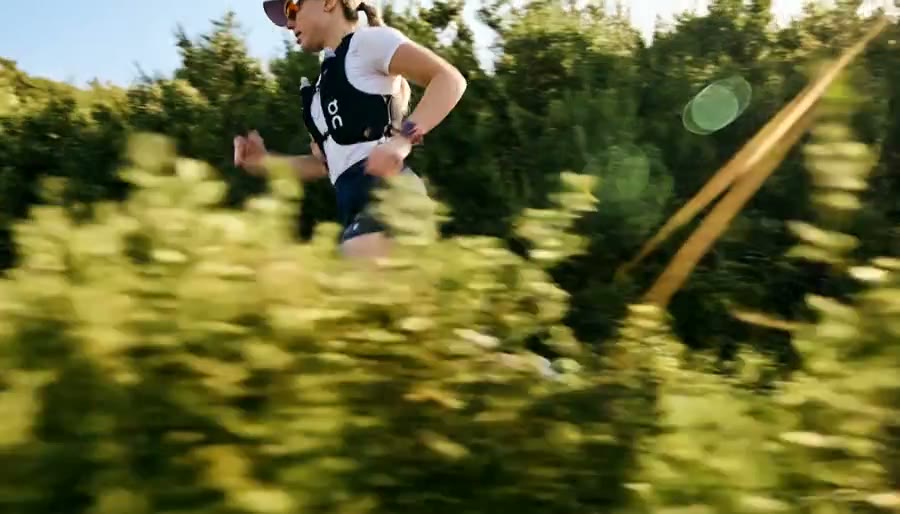
On-face performance context

Reference frames — outdoor performance and heritage American on-face register applied to eyewear brand campaign photography.

The six principles of eyewear brand campaign photography done right

These are the six principles the brand-spine contract signs against for every eyewear engagement. If a delivered frame fails any of them, the asset does not ship — we redo it at our cost.

01

Lens tint is captured, not approximated

G-15, B-15, gradient-brown, gradient-grey, polarized indigo, mirror-blue, mirror-gold, clear AR, blue-light coat, photochromic — each state at the correct VLT falloff, correct residual reflectance color, correct oblique-angle behavior. Captured against physical Kelvin-controlled reference. Wrong lens register, the frame does not ship.

02

Frame material tells its own story

Mazzucchelli 1849 block acetate versus injection-cast, titanium versus monel versus stainless, buffalo horn versus cotton acetate sustainable versus layered laminate — captured at the correct depth, correct edge-cut, correct micro-bevel. Wrong material tell, the customer reads plastic. Redo.

03

Hinge geometry is a precision signal

Three-barrel spring, five-barrel Optyl, block-titanium pivot, screwless snap, Meister flex, riveted countersunk — each at the correct barrel count, correct pivot geometry, correct engagement register at 90-degree open. The hinge is where cheap versus precision reads at the PDP zoom. Wrong hinge, redo.

04

Face-inclusive on-face casting is honest

Eight to twelve locked model identities across face shapes (round, oval, heart, square, oblong, diamond, triangle, rectangle), pupillary-distance ranges 54mm through 72mm, Fitzpatrick I-through-VI skin tones, and age brackets twenties-through-sixties. Each returns across every campaign so the customer can filter by the face closest to hers.

05

The frame set is six per SKU

Editorial hero on-face at three-quarter. PDP hero on white at platform aspect ratio. 45-degree quarter-view for lens curvature. Flat-lay top-down for construction and temple-length. On-face front registration across four to six face shapes. Temple close-up at 300% zoom for hinge, engraving, and material handoff. Forty-two frames on a seven-SKU capsule.

06

One contract across every channel

Editorial hero, wholesale-deck cover for Mr Porter Eyewear and Net-a-Porter Sunglasses, PDP grid, on-face registration set, home-try-on card, paid-social crop set, Klaviyo eyewear flow — produced under the same brand-spine contract by the same team on the same production timeline. The customer scanning across every surface reads one brand.

What actually ships per SKU

Every silhouette in the capsule delivers six frame types minimum, plus a paid-social crop set indexed to each hero frame and an on-face registration set across face shapes. A seven-SKU FW26 sun capsule with an average of four colorways per SKU ships 168 base PDP frames, plus 42 editorial and wholesale frames, plus the paid-social crop multiplication (five aspect ratios per hero frame times two hero frames per SKU is 70 crop variants), plus the on-face-shape registration set (four face shapes per SKU per colorway is 112 face-shape variants), plus the Klaviyo eyewear flow (three lifecycle frames per SKU per email flow times three active eyewear flows is 63 email-optimized frames), plus the home-try-on card variants for the mail-back parallel (56 card variants at 1600×1600). That is 511 delivered assets against a seven-SKU capsule, produced under one brand-spine contract in four-to-six production weeks.

Frame one is the editorial hero. Three-quarter angle on the locked face against the campaign environment, natural light balanced against lens flare geometry, on-face registration honest to the actual pantoscopic tilt the frame carries. This is the campaign wall frame — the one that anchors your Instagram feed at the FW26 sun capsule reveal, the one your PR team distributes to Vogue Runway, WWD, Highsnobiety, GQ, the Cut, and the eyewear-vertical accounts, the one the customer remembers three weeks after the drop. The composition is designed at hero-frame stage so the on-face registration and the lens tint hold across every subsequent crop.

Frame two is the PDP hero on white or seamless. This is the working hero that anchors your Shopify PDP, your Mr Porter Eyewear listing at 2400×3200, your Net-a-Porter Sunglasses at 2400×3200, your Revolve Eyewear at 2000×2600, your Amazon main image at 1000×1000 white background. Zero background distraction, controlled light, correct color temperature (5600K daylight neutral for accurate color rendition), Delta E under 3 against the physical frame. This is the frame that has to render the acetate depth, the lens tint, the hinge finish, and the temple engraving accurately at PDP zoom because a customer suspicious of the material will zoom in on the edge cut, the lens face, and the hinge barrel count.

Frames three and four are the 45-degree quarter-view and the flat-lay top-down. The 45-degree quarter-view carries the lens curvature (six-base sun curve versus four-base optical curve), the frame profile against the temple, and the anti-reflective coating flare at oblique angle. Flat-lay top-down carries construction fidelity — the temple length in millimeters (135, 140, 145, 148), the bridge width, the lens-height at the vertical, the hinge engagement at 90 degrees open, the nose-pad geometry (Optyl saddle versus adjustable silicone versus keyhole). Frame five is the on-face front registration across four to six face shapes so a round-face customer sees the frame on a round face and an oval-face customer sees the same frame on an oval face. Frame six is the temple close-up at 300% zoom — hinge barrel count, laser-etched wordmark, riveted rivet register, acetate marbling grain, material handoff. This is on-model photography at scale applied to the eyewear category, at the catalog-throughput discipline apparel operates under with the optical-and-precision-mechanical layer added on top.

The economic comparison against traditional eyewear campaign shoots

Three production tiers exist in the eyewear category. Named-photographer campaign at the Cass Bird, Erik Madigan Heck, Angelo Pennetta, Sølve Sundsbø, or Charlotte Wales tier delivers fourteen-to-twenty-two hero frames at $220,000 to $420,000 for one-to-three shoot days on location at Joshua Tree, Palm Springs, Marfa, the Amalfi coast, or a New York rooftop — before the wholesale-deck cover, PDP grid, on-face registration set, paid-social crop set, home-try-on cards, or Klaviyo eyewear flow are scoped. Volume DTC studio production in New York or Los Angeles delivers the six-frame PDP grid at $48,000 to $88,000 per capsule across 80 to 180 frames that fail at register because the lens optics logic is never installed (the lens is photographed with generic flat-neutral tint, on a size-4 model whose face shape happens to be the model on-call, on a seamless that reads as brand-neutral). The lens-and-face-spine contract — what 100 Creatives ships against — delivers all six scopes (editorial hero + wholesale-deck cover + PDP grid + on-face grid + home-try-on card + paid-social crop) at $48,000 to $92,000 across four-to-six production weeks under one team.

Common Thread Collective's DTC creative-cost benchmarks index eyewear as one of the most creative-development-intensive DTC categories because every SKU needs an on-face registration frame that footwear, apparel, and bag categories do not require. Andrew Foxwell's DTC creative-cost breakdowns cite eyewear paid-social fatigue half-life at seven to ten days on production-grade creative composed at the crop set, dropping to two to five days on reformatted general-apparel creative — a differential that an eyewear brand at $5M-to-$50M ARR cannot absorb because the sun-forward May-through-August paid window and the optical-forward January-through-March window each concentrate 40%+ of the annual paid-media spend inside a compressed twelve-to-fourteen-week runway. This is why the compare page on AI fashion photography versus traditional maps directly across into the eyewear category — the same production economics apply, tightened for the lens-optics and hinge-precision fidelity constraints. And it is why the fine-jewelry brand campaign photography discipline sits adjacent to eyewear on our production ladder — the precision-material register and the face-and-hand carrying frame overlap conceptually across accessory-metal-and-lens work.

01

Tier 1 · Named-photographer campaign

$220,000-$420,000 for fourteen-to-twenty-two editorial hero frames, one-to-three shoot days at Joshua Tree / Palm Springs / Marfa / the Amalfi coast / a New York rooftop, six-to-ten-week production window. Delivers the campaign wall only. Wholesale-deck cover, PDP grid, on-face grid, try-on card, paid-social, Klaviyo eyewear flow all scoped separately at additional cost.

02

Tier 2 · Volume DTC studio

$48,000-$88,000 per capsule for the six-frame PDP grid across 80 to 180 flat-neutral studio frames. Fast turnaround but the lens-optics logic is never installed — the customer reads the campaign as one brand and the PDP as a different brand. Wholesale-deck cover fails buyer-portal composition test at the Mr Porter or Net-a-Porter tier.

03

Tier 3 · Brand-spine contract (our tier)

$48,000-$92,000 across four-to-six production weeks for editorial hero + wholesale-deck cover + PDP grid + on-face grid + home-try-on card + paid-social crop set + Klaviyo eyewear flow under one contract. One team, one production timeline, one lens-optics logic, one face-inclusive locked cast across every channel. Optical-capsule and limited-edition-drop re-cast built in.

A four-to-six-week sprint calendar

Week one is the brand-spine document. Two units of every silhouette in every colorway and every lens spec ship to us for accuracy capture — sun main, optical main, limited-edition, and mid-season readers or blue-light or sport capsule. Your Pantone references, your acetate mill card from Mazzucchelli or the sustainable-source equivalent, your lens spec sheet from Zeiss or Essilor or Hoya or Barberini, your existing brand book, ecommerce style guide, and reference imagery from prior campaigns all consolidate into a single reference document that becomes the contract every subsequent frame signs against. Locked outputs from week one: lens-optics fidelity contract per lens class, frame-material contract per acetate and metal class, hinge geometry per silhouette, face-inclusive casting lock across eight-to-twelve identities, palette pin, register pin.

Weeks two and three are the first production wave. Editorial hero, wholesale-deck cover for Mr Porter Eyewear and Net-a-Porter Sunglasses, and PDP grid for the flagship silhouette — usually your best-selling silhouette from the prior sun or optical capsule or the strongest new introduction in the current drop. These frames set the visual language for the entire capsule and the subsequent silhouettes compose against them for consistency. Your buyer at Mr Porter Eyewear or Net-a-Porter Sunglasses sees the wholesale-deck cover first in the pre-season window; your customer sees the editorial hero first on Instagram at the drop reveal; both are landing in-brand and consistent because both were produced under the same lens-optics contract on the same production week.

Weeks four and five extend the discipline across the full capsule — colorway multiplication (dark tortoise, honey tortoise, blonde, black, crystal, jet, olive, tobacco, wine), remaining silhouettes, on-face registration across face shapes, paid-social crop set indexed to every hero frame, home-try-on card variants at 1600×1600 for the Warby-Parker-style mail-back program, Klaviyo eyewear flow indexed to the pre-book / launch / mid-season / clearance email flows. This is where the throughput advantage of the production-grade AI system compounds. Seven silhouettes times an average of four colorways times six frame types is 168 base frames, plus the crop-set multiplication, on-face-shape multiplication, and email-flow multiplication. On a traditional studio pipeline that is a twelve-to-sixteen-week production; on the brand-spine contract it is a two-week production because the fidelity contract, the model lock, the lens-optics contract, and the frame-material contract are all held from week one.

Weeks six and seven — or on a compressed timeline the second half of week five — are QC against retailer specifications, wholesale partner portal uploads, optical-capsule and limited-edition drop planning, and archive. Every frame ships in the platform-mandated aspect ratio for Mr Porter Eyewear, Net-a-Porter Sunglasses, MyTheresa Eyewear, Selfridges Optical, Nordstrom Sun, Bloomingdale's Sun, Bergdorf Optical, MATCHESFASHION Eyewear, SSENSE Eyewear, and East Dane Sun, plus your Shopify PDP, plus the paid-social crop set, plus the home-try-on card format. The optical-capsule re-cast — clear-lens on-face registration for the readers-and-progressives customer, mid-season blue-light refresh, sport-capsule performance-lens variant — runs against the same brand-spine document. New capsule, same discipline, no re-onboarding cost.

What the retail buyer opens first in pre-season

The wholesale-deck cover is the first frame the buyer at Mr Porter Eyewear, Net-a-Porter Sunglasses, MyTheresa Eyewear, Selfridges Optical, Nordstrom Sun, Bloomingdale's Sun, Bergdorf Optical, MATCHESFASHION Eyewear, SSENSE Eyewear, or East Dane Sun opens when they click into your FW26 book in the pre-season buyer review. It has to signal price point, frame register, and buyable-in-the-fixture inside two seconds. A brand at the Warby Parker / Ace & Tate / Cubitts / Vada Eyewear / Moscot / Garrett Leight / Persol / Illesteva / Krewe / Jacques Marie Mage / DITA / Kirk & Kirk / Bailey Nelson / Pair Eyewear adjacency tier lives or dies on that frame — the buyer opens between twenty-two and forty eyewear brand books in a week during the pre-season window and the ones that do not read at buyable register in the first frame do not make the second review.

The wholesale-deck cover is different from the editorial hero in three specific ways. First, the composition is tighter — the frame reads at three-quarter registration on the locked face against a clean context, not deep-environment editorial with the model half-obscured by desert-rock composition. Second, the light logic is flatter — a Mr Porter Eyewear buyer opening a book of thirty brands does not have time to read complex specular play; they need the acetate depth, the lens tint, and the hinge geometry to read fast. Third, the color rendition is retail-portal accurate at Delta E under 2, tighter than the Delta E under 3 the PDP tolerates, because the buyer will compare your honey-tortoise against the physical Mazzucchelli sheet she holds in hand while flipping through your book.

Every wholesale-deck cover ships with three secondary frames per silhouette — a 45-degree quarter-view for lens curvature and coating flare, a flat-lay top-down for temple-length-and-construction, and one on-face lifestyle frame for the buyer to see the frame at the register the store customer will wear it. The buyer opens the cover, opens the secondary set, and inside four frames has decided whether to allocate open-to-buy against your FW26 book. This is the same wholesale-deck discipline the apparel wholesale lookbook and linesheet holds for general apparel, applied at the tighter tolerance eyewear wholesale requires because the eyewear buyer is allocating against a fixture with limited slot count and cannot afford to mis-buy.

The retailer-portal QC is the last step and it is the one most eyewear brands under-invest in. Mr Porter Eyewear runs at 2400×3200 with tighter Delta E and an editorial cover surround; Net-a-Porter Sunglasses at 2400×3200; Revolve Eyewear at 2000×2600 with styling latitude; Bloomingdale's Sun at 2000×2600 with US retail cover discipline; Nordstrom Sun at 2400×3200 pure white with drop-shadow; Selfridges Optical at 2000×3000 with UK-market color calibration; Bergdorf Optical at 2500×3200 with premium retouch; MyTheresa Eyewear at 2400×3200; MATCHESFASHION Eyewear at 2400×3000; SSENSE Eyewear at 2400×3200 with the SSENSE editorial cover system; East Dane Sun at 2000×2400. The brand-spine contract runs the QC pass against every retailer's spec before the deck ships.

The Warby Parker mechanic that changed eyewear commerce

Every eyewear brand at the DTC-scale tier that ships to a home-try-on program — Warby Parker Home Try-On, Ace & Tate Home Try-On, Cubitts Home Try-On, Vada Home Try-On, Pair Eyewear at scale, Bailey Nelson Home Trial — has to produce a parallel try-on card asset set that is distinct from the PDP grid. The try-on card is a 1600×1600 square (or brand-specific ratio) frame that reads as a product-card in a physical mailer, not as a full campaign frame. It has to render the frame accurately enough that the customer who receives five frames in a home-try-on box can match card-to-frame in one scan, remove four back into the return envelope, and know which one she is keeping without looking at a Shopify PDP for reference.

The try-on card discipline is the reason the volume DTC studio configuration fails eyewear so consistently. A New York or Los Angeles PDP studio produces the six-frame PDP grid at flat-neutral seamless and stops. The card asset is either an afterthought crop from a PDP hero or produced by a separate junior-tier vendor at $80-$120 per card. Neither reads brand-consistent with the editorial hero on Instagram or the wholesale-deck cover on Mr Porter Eyewear. The brand ends up with three visual languages the customer sees inside a week — editorial on the feed, retailer-cover in her Mr Porter recommendations email, and try-on card in the physical mailer that shows up on her doorstep — and the compounding brand-recognition benefit that home-try-on is supposed to build gets diluted.

The brand-spine contract holds the try-on card at the same lens-optics register, same frame-material register, same face-inclusive casting logic as every other channel. The card is designed at composition stage so the acetate marbling, the lens tint, and the hinge geometry read at the physical-mailer scale (approximately 4-by-4 inches printed) with the correct color calibration for the digital-print register the brand's fulfillment partner runs. When the customer opens the mailer, the card she is holding reads at the same brand register as the Instagram hero she saw at drop day. That is the compounding-recognition mechanic home-try-on was built to deliver, held at the visual layer most eyewear brands leak.

The Klaviyo eyewear flow rides on the same contract. The try-on-box confirmation email, the mid-try-on nudge, the pick-your-favorite prompt, and the return-window nudge all use frames drawn from the same asset set and composed under the same brand-spine document. The customer scanning her inbox during her five-day try-on window sees the same acetate depth, the same lens tint, the same face-inclusive on-face register that arrived in her mailer and that anchors the campaign feed. This is why the compare page on AI photoshoot versus studio cost maps directly into the eyewear paid-and-lifecycle economics — the composition-stage crop set and the try-on card discipline are the two single largest levers in the fatigue-half-life differential across the drop-cadence-plus-home-try-on paid-and-owned pipeline.

Replacing your current eyewear photography vendor

Most eyewear brands come to us from one of three vendor configurations. Configuration one is the named-photographer campaign on a once-or-twice-a-year cadence for the sun and optical campaign wall, plus a New York or Los Angeles DTC studio on retainer for the PDP grid, plus a performance-creative agency on a monthly retainer for the paid-social, plus a fourth vendor for the home-try-on cards — four vendors, four timelines, four style languages, one visual identity fractured across them. Configuration two is a single all-in-one New York or Los Angeles eyewear studio that delivers everything at mid-tier quality — the editorial hero reads flat because the studio is optimized for PDP throughput, the PDP grid reads okay, the paid-social feels off-brand, the try-on card feels like a spec sheet, and the lens-optics logic is never installed. Configuration three is a rotating carousel of freelance photographers on a per-capsule basis — every drop looks like a different eyewear brand.

The transition off any of these configurations onto the brand-spine contract is a four-to-six-week onboarding, not a hard cutover. The existing vendor(s) ship their final capsule while we run week-one brand-spine work in parallel. There is no gap in creative output. By the time your next capsule lands in Mr Porter Eyewear's pre-season buyer review, the brand-spine contract has produced the editorial hero, wholesale-deck cover, PDP grid, on-face registration set, home-try-on card, and paid-social crop set under one team on one production timeline, and the outgoing vendors have wound down their scope. The transition is invisible to the customer because there is no interruption in the drop cadence.

The financial reset is meaningful. A brand consolidating from configuration one — named photographer campaign plus DTC studio plus performance-creative retainer plus try-on-card vendor — typically reduces annual creative spend by 45% to 62% while increasing frame throughput by 3x to 5x and closing the lens-optics-and-face-register drift across editorial, PDP, try-on, and paid-social. A brand consolidating from configuration two — single mid-tier studio — reduces spend by 25% to 40% and lifts editorial hero quality up to the campaign-wall tier without paying named-photographer campaign rates. A brand consolidating from configuration three — freelance carousel — cuts spend by 50% to 65% and gains a coherent visual identity for the first time in the brand's history. This is the same operational math the best AI product photography agency for DTC brands anchor page runs against the general apparel category, applied to eyewear economics.

The brand-spine document is portable. If your team ever needs to onboard a new agency, hire an in-house creative director, or brief a named-photographer campaign revival for a specific launch moment (a Persol collab, an Oliver Peoples archive reissue, a DITA Legends Series drop), the spine document — lens-and-coating fidelity contract, frame-material contract, hinge geometry contract, on-face registration, face-inclusive locked cast, palette pin, register pin — is the reference the new team signs against. The one-time work of building the spine compounds every subsequent capsule, and the discipline reads adjacent to how luxury apparel brand-world campaign production holds its spine across seasons.

The deliverable set at capsule close

At capsule close, the deliverable set is one editorial hero per silhouette plus one editorial hero motion frame (five to eight seconds) for the campaign wall and Instagram Reels. One wholesale-deck cover per silhouette plus three secondary frames per silhouette (45-degree quarter-view, flat-lay top-down, on-face lifestyle). Six PDP frames per SKU across every colorway (editorial hero, PDP hero on white, 45-degree quarter-view, flat-lay top-down, on-face front registration across four to six face shapes, temple close-up at 300%). The on-face-shape multiplication set (round / oval / heart / square / oblong / diamond registered per silhouette per colorway). The full paid-social crop set — five aspect ratios per hero frame — indexed at composition stage. The Klaviyo eyewear flow — three lifecycle frames per SKU per active flow across the pre-book, drop, mid-season, and clearance flows. The home-try-on card set at 1600×1600 per silhouette per colorway. The retailer-portal QC pass against every retailer's platform spec. The archive of the raw production files for future reformatting for the optical capsule, the mid-season readers refresh, and the limited-edition collab.

For a seven-SKU FW26 sun capsule with an average of four colorways per SKU, that is 168 base PDP frames, 42 editorial and wholesale frames, 70 paid-social crop variants, 112 face-shape registration variants, 63 Klaviyo lifecycle frames, and 56 home-try-on card variants — 511 delivered assets against a $48,000 to $92,000 four-to-six-week production. Compare that to the named-photographer campaign at $312,000 for eighteen hero frames only, or the volume DTC studio at $72,000 for 168 PDP frames only. The brand-spine contract is the only tier at which the full capsule creative pipeline ships as one contract at one economic line.

Every asset is delivered in the platform-mandated format. Amazon main image at 1000×1000 pure white. Mr Porter Eyewear at 2400×3200. Net-a-Porter Sunglasses at 2400×3200. Revolve Eyewear at 2000×2600. Bloomingdale's Sun at 2000×2600. Nordstrom Sun at 2400×3200 pure white with drop-shadow. Selfridges Optical at 2000×3000. Bergdorf Optical at 2500×3200. MyTheresa Eyewear at 2400×3200. MATCHESFASHION Eyewear at 2400×3000. SSENSE Eyewear at 2400×3200 with the SSENSE editorial cover system. East Dane Sun at 2000×2400. Shopify PDP at your ecommerce style spec. Paid-social at 1:1, 4:5, 9:16, 16:9, 1.91:1. Home-try-on card at 1600×1600 (or your fulfillment partner's format). Every frame color-calibrated at Delta E under 3 for PDP and under 2 for wholesale-portal frames, against the physical frame under 5600K daylight-neutral reference.

The optical-capsule and limited-edition drop re-cast — new lens spec (clear AR for the optical, blue-light for the readers, polarized for the sport-forward mid-season), refreshed colorway rotation, refreshed on-face lifestyle context — runs against the same brand-spine document. New capsule, same discipline, no re-onboarding cost. The one-time work of building the spine amortizes across every subsequent drop through the four annual drop moments. This is what production-grade lookbook photography economics look like when the discipline sits at the eyewear category with the lens-optics constraints layered over the frame-material and on-face register.

The founder or head of brand we speak to

The persona this article speaks to is the founder or head of brand at a $5M-to-$50M DTC eyewear label at the Warby Parker / Ace & Tate / Cubitts / Vada Eyewear / Kirk & Kirk / Moscot / Garrett Leight / Oliver Peoples / Persol / Jacques Marie Mage / DITA / Illesteva / Krewe / Bailey Nelson / Pair Eyewear / Djerf Avenue Eyewear / Le Specs / Poppy Lissiman / Chimi / Bonnie Clyde / Roka / Goodr / Shady Rays / Blenders / Sunski / Zeal Optics adjacency tier. You ship four to six drops a year across a sun capsule, an optical capsule, one or two limited-editions or collabs, and a mid-season readers or blue-light or sport variant. Your wholesale partners include some subset of Mr Porter Eyewear, Net-a-Porter Sunglasses, MyTheresa Eyewear, Selfridges Optical, Nordstrom Sun, Bloomingdale's Sun, Bergdorf Optical, MATCHESFASHION Eyewear, SSENSE Eyewear, and East Dane Sun. Fifty-eight percent of your revenue lands across the sun-forward May-through-August window and the optical-forward January-through-March window combined. Your Shopify PDP sees over 65% of first-touch traffic landing from paid-social; your home-try-on program (if you run one) drives 22% to 38% of first-order conversion.

You have tried some subset of the three vendor configurations described above — the named-photographer campaign plus DTC studio plus try-on-card vendor, the mid-tier all-in-one New York or Los Angeles eyewear studio, or the freelance carousel — and all three have shown you where they break at your drop cadence and your two-window concentrated sell-through. You are not looking for a general apparel photography vendor. You are looking for a production discipline that reads at your lens tint, your acetate marbling, your titanium finish, your hinge geometry, your face-inclusive on-face casting, and your brand voice specifically, and that ships editorial and PDP and try-on card and paid-social and wholesale under one team on one production timeline.

The book of business we run this discipline for is under NDA. What we can say is: the case-study anchors that reflect the discipline are Anita Dongre for slow-craft atelier register at material fidelity, Ralph Lauren for heritage American accessory and Polo Eyewear lineage, Aritzia and Veronica Beard for contemporary women's on-face lifestyle, and our editorial-premium and outdoor work for the performance-sun and sport-optical register. If your brand sits inside any of those aesthetic quadrants — atelier, heritage American, contemporary, or performance — the discipline maps directly. If your brand sits at the intersection of two of them (heritage-and-contemporary at Garrett Leight, atelier-and-performance at Kirk & Kirk, contemporary-and-performance at Djerf Avenue Eyewear plus Roka), the brand-spine work is even more valuable because it lives at the register-discipline the intersection requires.

The next step is a strategy call. We look at your drop calendar, your wholesale partner list, your paid-social CAC target, your home-try-on program if you run one, your existing creative-development spend, and your reference imagery — and we scope a brand-spine document plus a first production wave against your next capsule. If the fit is not there, we say so on the call. If it is, we move to onboarding inside two weeks. The fashion lifestyle campaign imagery discipline is the parent template; the eyewear-specific overlay is what the brand-spine document builds in week one.

Frequently asked
questions

What is eyewear brand campaign photography?

Eyewear brand campaign photography is a specific production discipline that reads at the lens tint, the coating flare, the temple hinge, the acetate marbling or titanium finish, and the face carrying the frame — not at the wordmark laser-etched on the temple. It covers the editorial hero that anchors the drop, the on-model lookbook that carries the collection into wholesale, the six-frame PDP grid that renders acetate depth, wire construction, coating behavior, and try-on registration accurately at high SKU volume, and the wholesale-deck cover a Mr Porter Eyewear, Net-a-Porter Sunglasses, MyTheresa Eyewear, or Selfridges Optical buyer opens for a pre-season review. A traditional eyewear campaign shoot at Joshua Tree, Palm Springs, the Amalfi coast, or a New York rooftop runs $95,000 to $260,000 for one to three shoot days and returns twelve to twenty hero frames. Production-grade AI eyewear photography ships the same suite in four to six weeks at a locked contribution-margin line.

Why is eyewear photography harder than general accessory photography?

Eyewear photography carries four constraints general accessory photography does not. First, lens optics — every lens has a tint gradient, a coating behavior, and an anti-reflective specular register that is rendered wrong the frame reads as a plastic toy rather than as an optical instrument. Second, the temple hinge is where cheap-versus-precision reads instantly at the PDP zoom; a five-barrel Optyl hinge reads different from a three-barrel spring hinge which reads different from a titanium block hinge. Third, face registration — the frame sits at a specific bridge width, temple length, lens height, and pantoscopic tilt on a specific face shape, and a frame photographed on the wrong face shape sells to nobody. Fourth, prescription optics have to render the aspheric distortion honestly for the customer paying $340 for a progressive lens. An eyewear frame that fails any of these does not ship at 100 Creatives.

Can AI render lens tint, coating flare, and frame material accurately?

Yes, when produced correctly. Lens tint at the correct gradient falloff (G-15 grey-green at 15% VLT, B-15 brown at 15% VLT, gradient-brown 55%-to-15%, gradient-grey 85%-to-25%, polarized indigo, mirror-blue flash coat), anti-reflective coating at the correct specular geometry and correct residual reflectance color (magenta AR, green AR, blue AR, super-hydrophobic clear), acetate at the correct depth (Mazzucchelli 1849 six-week-block, cellulose acetate marbling at the correct grain and translucency), titanium at the correct grey-and-beta finish, monel and stainless at the correct micro-brush pattern, wire at the correct 1.2mm to 1.6mm gauge — all captured as pass-fail criteria in our production system. If a G-15 tint reads too warm, if the AR coating reads dead-flat rather than magenta-shifting at oblique angle, if the acetate reads plastic-injection rather than block-cut, the asset does not ship. This is the same fabric-fidelity discipline we apply to Anita Dongre silk drape and Ralph Lauren wool suiting, applied to the eyewear category with the optical-physics layer added on top.

What imagery do I actually need for an eyewear brand seasonal drop?

A production-grade eyewear brand seasonal drop needs six frame types per SKU, minimum. One editorial hero at three-quarter angle on the locked-cast face against the campaign environment. One clean PDP hero on white or seamless at the platform-mandated aspect ratio (1000×1000 for Amazon, 2400×3200 for Mr Porter Eyewear and Net-a-Porter Sunglasses, 2000×2600 for Revolve Eyewear, 1600×1600 for Warby Parker home try-on card). One 45-degree quarter-view for lens curvature and coating flare. One flat-lay top-down for construction and temple-length fidelity. One on-face front registration frame across four to six face shapes (round, oval, heart, square, oblong, diamond) so the customer can see the frame on the face closest to hers. One temple close-up at 300% zoom for hinge geometry, acetate marbling grain, engraving, and material handoff. That is 42 frames on a seven-SKU flagship capsule before any colorway multiplication.

How do you handle face-inclusive casting for prescription and sunglass photography?

Face-inclusive casting for eyewear is tighter than any other apparel or accessory category because the frame lives on a face and the customer at the PDP is a specific face shape trying to figure out whether the frame will look right on hers. We lock eight to twelve model identities across face shapes (round, oval, heart, square, oblong, diamond, triangle, rectangle), pupillary-distance ranges (54mm through 72mm), skin tones (Fitzpatrick I through VI), age brackets (twenties through sixties for the readers-and-progressives customer), and features (higher and lower bridge, wider and narrower zygomatic). Each locked model returns across every campaign so brand recognition compounds and the customer can filter PDP hero frames by the face shape closest to hers — the same face returns the customer to the brand every drop. That reads as brand-consistent, not campaign-transient.

What does a traditional eyewear campaign shoot cost?

A traditional eyewear campaign shoot runs $95,000 to $260,000 all-in for one-to-three shoot days at Joshua Tree, Palm Springs, Marfa, the Amalfi coast, or a New York rooftop. That figure covers photographer at $12,000 to $24,000 per shoot day, location fee at $4,000 to $12,000 per day, model booking at $2,000 to $5,500 per day per model across three to five models, hair-and-makeup at $1,500 to $3,000 per day, travel and per-diems at $16,000 to $38,000 total, prop styling and set at $3,000 to $7,000 per day, plus $8,000 to $18,000 in post-production retouch across an eighteen-SKU editorial capsule. The named-photographer tier at Cass Bird, Erik Madigan Heck, Angelo Pennetta, or Sølve Sundsbø lands at $220,000 to $420,000 for the same days and delivers fourteen to twenty-two editorial hero frames — before the wholesale-deck cover, PDP grid, paid-social crop set, or Klaviyo eyewear flow are scoped. Common Thread Collective's DTC creative-cost benchmarks index eyewear as one of the most creative-development-intensive DTC categories because every SKU needs the on-face registration frame that footwear, apparel, and bag categories do not require.

Can this replace our current eyewear photography vendor?

In most cases yes, and the transition is a four-to-six-week onboarding rather than a hard cutover. Week one is brand-spine work — lens-and-coating fidelity contract per lens type, frame-material contract per acetate and metal class, hinge geometry per silhouette, face-inclusive casting lock, palette pin, register pin — against your reference imagery, your physical frames shipped to us for accuracy capture, and your existing brand book. Weeks two and three are the first production wave — editorial hero, wholesale-deck cover, PDP grid for the flagship silhouette. Weeks four through six extend into colorway multiplication (tortoise variants, crystal variants, honey variants, jet, olive, sun-and-optical parallel builds), paid-social crop set, Klaviyo eyewear flow, and the try-on card variants for the Warby Parker or Ace & Tate home-try-on parallel. Existing vendor stays on for their final capsule while we ramp; there is no gap in creative output.

What brands do you produce this discipline for?

Under NDA we cannot name our eyewear-brand roster directly. The reference case-study anchors are Anita Dongre for slow-craft atelier register at material fidelity, Ralph Lauren for heritage American accessory register on the Polo Eyewear and Ralph Lauren Purple Label lineage, Aritzia and Veronica Beard for contemporary women's on-face lifestyle, and our editorial-premium and outdoor work for the performance-sun and sport-optical register. The adjacency tier this article speaks to is the Warby Parker / Ace & Tate / Cubitts / Vada Eyewear / Kirk & Kirk / Moscot / Garrett Leight / Oliver Peoples / Persol / Jacques Marie Mage / DITA / Illesteva / Krewe / Bailey Nelson / Pair Eyewear / Djerf Avenue Eyewear / Le Specs / Poppy Lissiman / Chimi / Bonnie Clyde / Roka / Goodr / Shady Rays / Blenders / Sunski / Zeal Optics adjacency tier — $5M to $50M ARR, four to six drops annually across a sun capsule + an optical capsule + a limited-edition + a collab, wholesale-deck partnership with Mr Porter Eyewear, Net-a-Porter Sunglasses, MyTheresa Eyewear, Selfridges Optical, Nordstrom Sun, Bloomingdale's Sun, Bergdorf Optical, MATCHESFASHION Eyewear, SSENSE Eyewear, and East Dane Sun.

Ready for eyewear campaign
photography that reads at the
lens tint, the temple hinge and the face?

Editorial hero, wholesale-deck cover, PDP grid, on-face registration set, home-try-on card, paid-social crop set — one brand-spine contract, four-to-six-week production, one team.