Size-inclusive apparel campaign photography

Size-inclusive apparel campaign photography that holds the grade rule at every anchor — not one straight-size hero and a token extended frame.

By Abhi Chawla, founder · Last updated: 2026-09-03

This is the production contract for the founder or head of brand at a $6M to $45M apparel label that ships a real extended range — 00 to 32, XXS to 5X — at the Universal Standard, Good American, Girlfriend Collective, Eloquii, Henning, Alder Apparel, Kirrin Finch, Big Bud Press, Snag, Wray, Loud Bodies tier, where the size run was a founding promise and the photography budget never grew to match it. Size-inclusive apparel campaign photography is a production discipline for brands shipping a full extended range where every style is rendered at three or four documented size anchors on an identity-consistent model roster, rather than shot once on a straight-size body and captioned as available in extended sizes — with the brand's own grade rule visibly honored at armhole depth, bicep sweep, rise and thigh circumference in every frame that ships.

The register

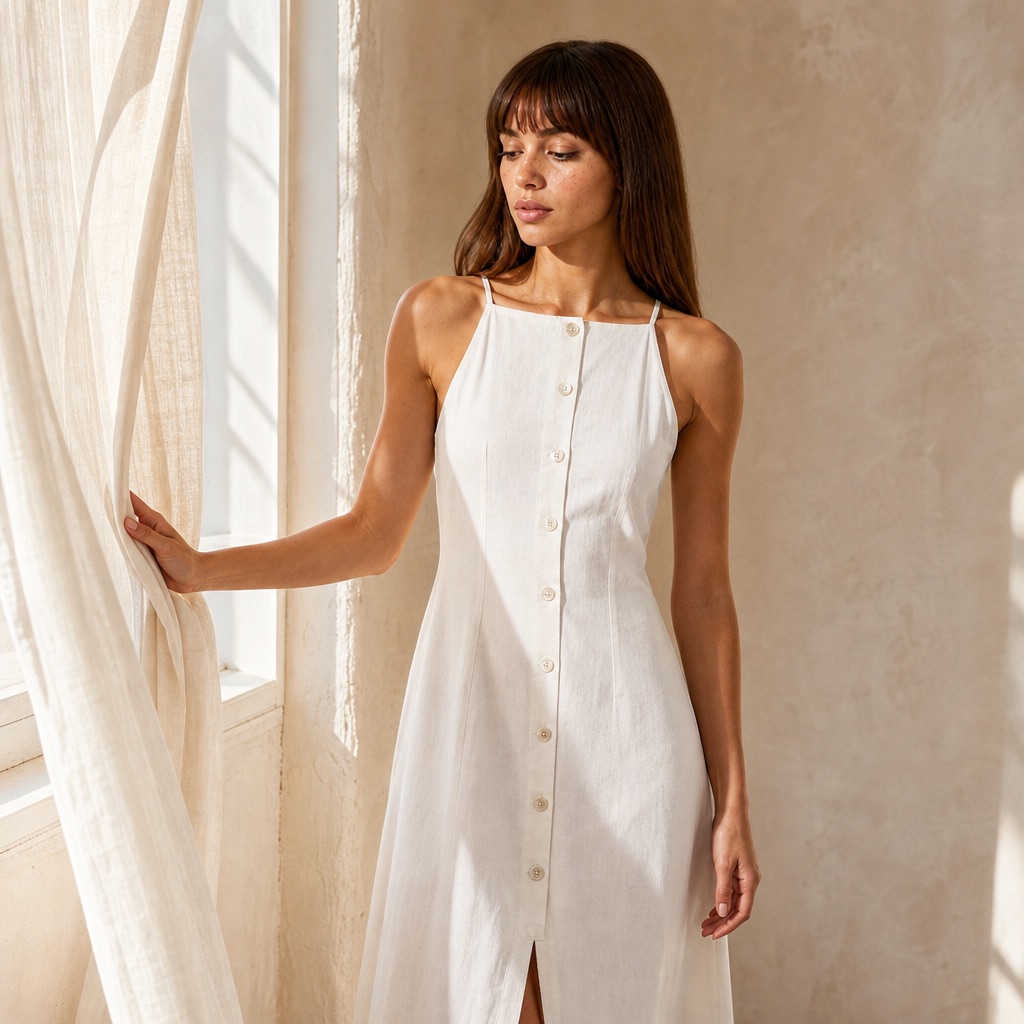
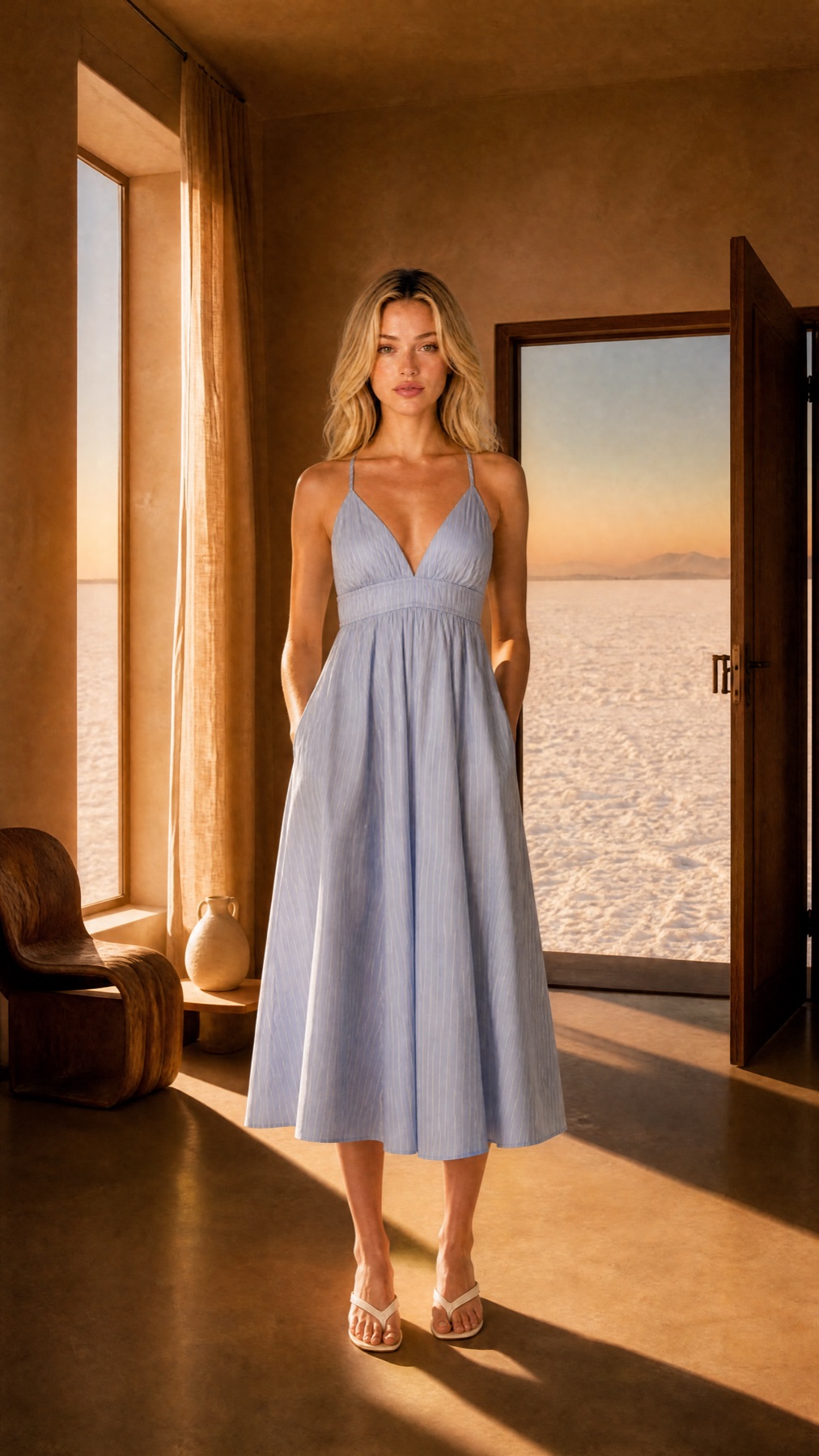
Contemporary women's register held at a single light logic — produced as size-inclusive apparel campaign photography.

The spreadsheet that says 600 frames

It is a Tuesday in early February, a little after two in the afternoon, and the head of brand at a $19M extended-range label is looking at a production spreadsheet that has stopped making sense. The Spring drop is thirty-two styles. The brand ships 00 to 32 — that was on the About page in 2021 and it is the reason two-thirds of the email list subscribed. Marketing wants the drop on the site March 24. The studio quote for four bodies came back at $214,000 and eleven shoot days.

She does the arithmetic that every extended-range operator eventually does. Thirty-two styles times four size anchors times five angles is six hundred and forty frames. Four model bookings, four fitting sessions, four complete sample sets cut and graded before anyone gets in front of a camera, and a styling team working four garment sets in parallel while the light has to stay identical across all of it. The straight-size version of this shoot — one body, thirty-two styles — was $58,000 last season and everyone thought that was expensive.

So she does what almost everyone in this position does. She shoots the campaign on one body, picks six hero styles to also shoot on a size 22, and builds an extended-sizes landing page. It is a real decision made by serious people under a real constraint, and it is also the exact thing the customer notices. The shopper at a size 26, looking at the wide-leg trouser she has wanted for three weeks, sees it on a size 4 and has to do the translation in her own head before she is willing to spend $148. Some fraction of those shoppers do the translation and buy. A larger fraction close the tab.

The gap here is not commitment and it is not taste. Nobody in this building needs to be persuaded that extended sizing matters — they built the company on it. The gap is that the merchandising decision to ship 00 to 32 was made in one meeting and the production cost of photographing it honestly showed up two quarters later, and no traditional production model prices multi-body work at anything a $19M brand can carry every season. That is the problem this contract solves.

Size-anchor registration is the spine

The spine document for an extended-range brand is not a mood board. It is a size-anchor contract, and it is four things written down and held.

First, the anchors themselves. Most extended ranges resolve cleanly to four: one in the core block (a 4 or a 6), one at the top of core where the block usually changes (a 14), one in the middle of the extended run (a 22), and one at the top of the range (a 30). Those four are chosen against the brand's own sales curve, not against convention — a brand whose volume sits at 16 through 24 should anchor there and let the tails carry one frame each. The anchors get named in the document and every downstream surface composes against them.

Second, a locked roster identity per anchor. This is the part brands skip and it is the part that compounds. The size-14 anchor is not "a size 14 model" — it is one specific, consistent identity, held across the season, the way the identity discipline works in AI fashion models versus real models. When the roster rotates every drop, the brand loses the thing it is actually trying to build: a customer who recognizes herself in the imagery month over month. Four anchors, four held identities, one season.

Third, the grade rule as a visible, checkable input. Every extended-range brand has graded spec sheets — armhole depth, across-shoulder, bicep circumference, bust, waist, hip, rise, thigh sweep, sweep at hem, at every size in the run. Most brands never connect those sheets to their photography. We do the opposite: the spec sheet is the reference library, and a frame in which the size-28 armhole reads at the size-14 measurement fails the check the same way an off-Pantone garment fails a color check. This is the same pass-fail posture we apply to garment fidelity in on-model photography at scale.

Fourth, one light logic across all four anchors. This sounds obvious and it is the most commonly broken rule on the list. When the size-4 frames come from the January campaign shoot and the size-24 frames were added in March by a different photographer in a different studio, the extended frames read as an appendix — different key, different fall-off, different retouch curve — and the customer reads "afterthought" without being able to name why. Same light, same lens register, same finishing curve, or the whole exercise undoes itself.
Reference frames

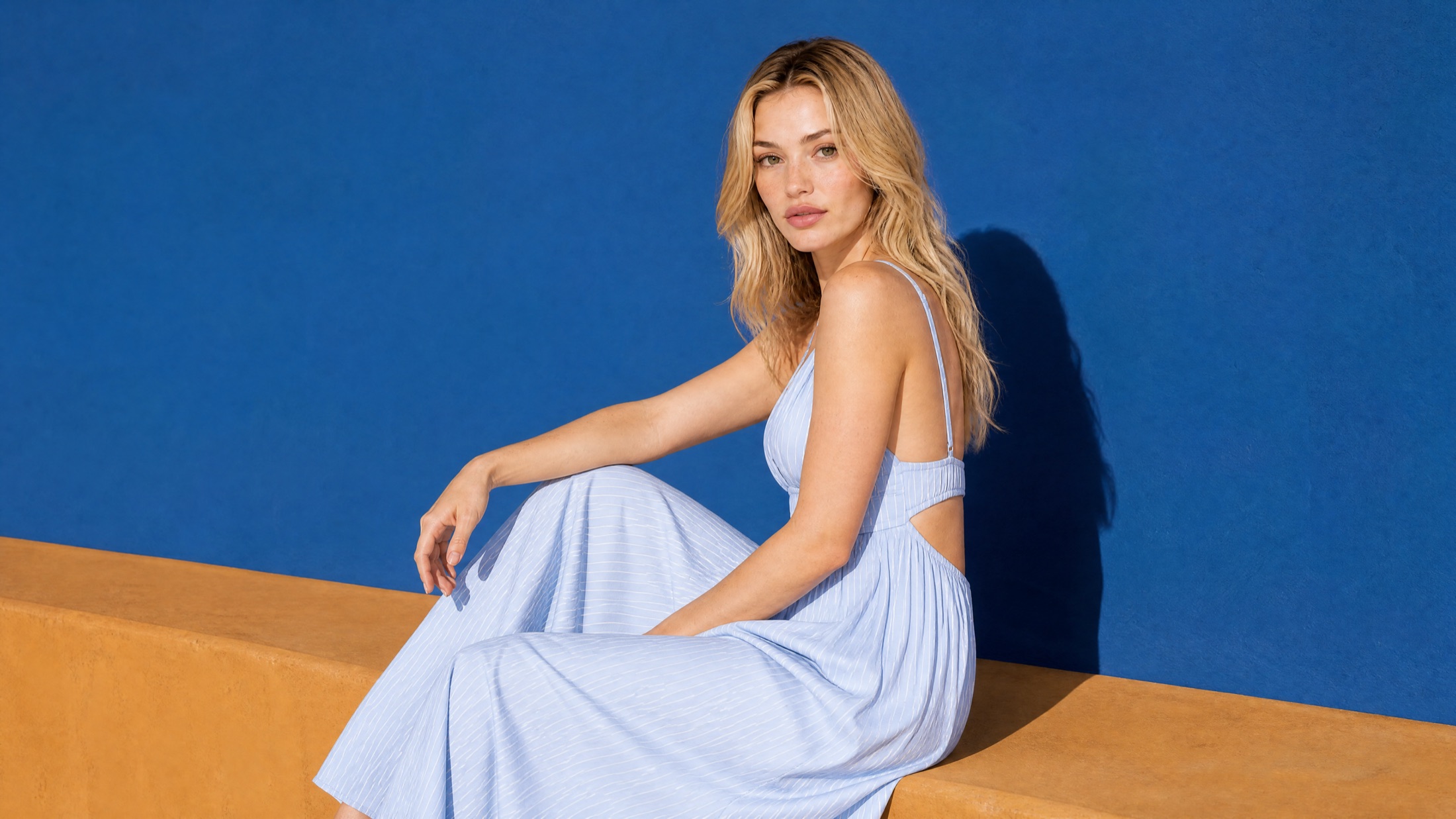
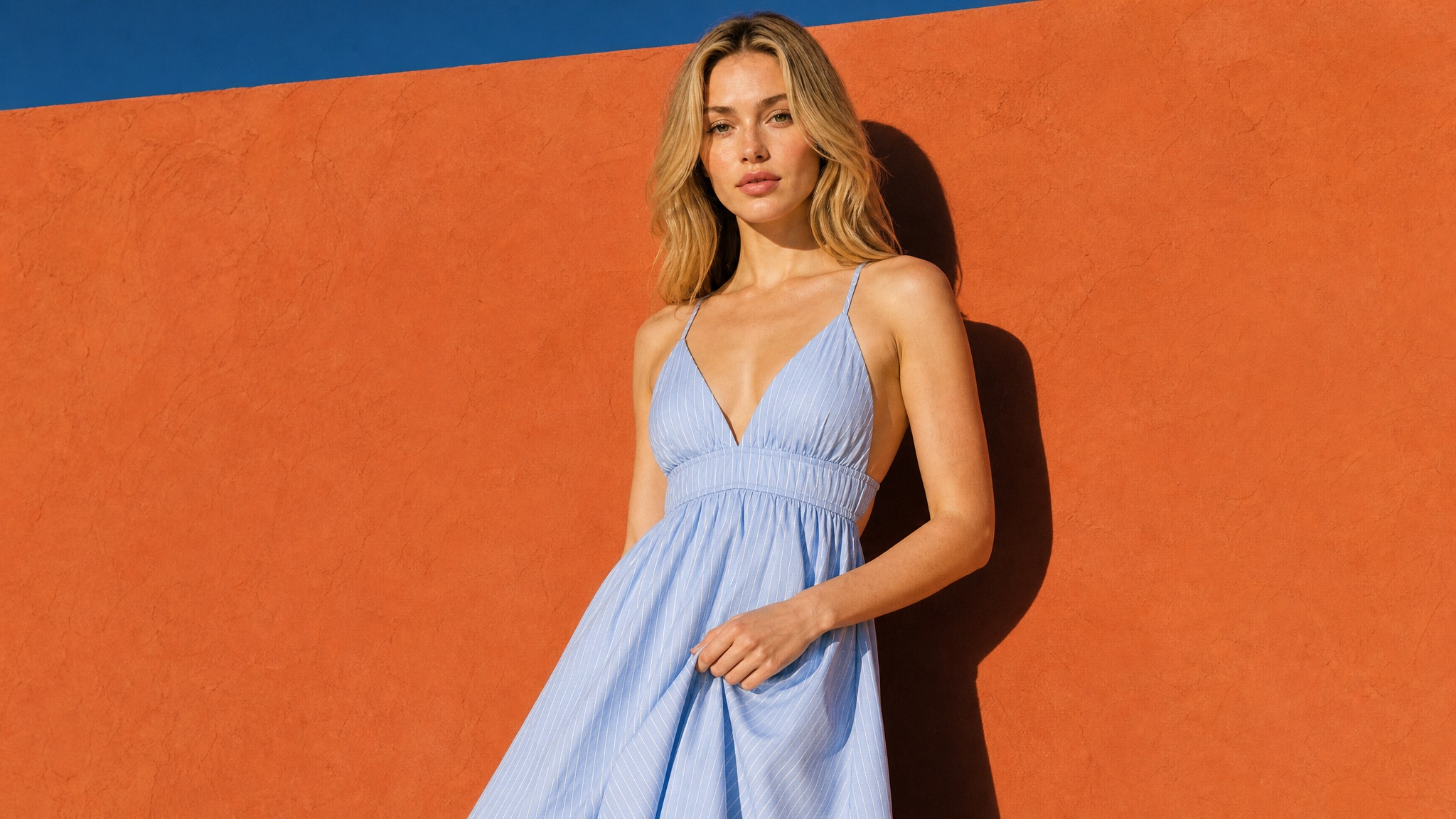
One register, held across the range — produced as size-inclusive apparel campaign photography.

Five angles per anchor, and the comparison strip

The per-SKU frame set for an extended-range brand is five angles at each anchor. Front on-white at the retailer spec. Three-quarter turn, which is where the side seam and the through-body silhouette actually read. Back, which is where a rise that has not been graded properly announces itself immediately. A graded-seam detail frame at 200 to 300 percent — armhole on a top, rise and inseam junction on a bottom, bust dart or princess seam on a fitted piece — because that single frame is what a fit-anxious shopper zooms into. And a full-length on-body lifestyle frame, which is the one that carries the brand rather than the garment.

Then the frame most brands do not produce at all: the size-comparison strip. Four anchors of the same style, same pose, same light, laid out in one asset. It is the single most useful image on the page for a customer deciding between a 20 and a 22, and it is close to impossible to produce traditionally because it requires four bodies in the same session with identical styling. It is trivial to produce inside an anchor-registered pipeline, because the anchors were composed against each other from the start.

Thirty-two styles at four anchors at five angles is six hundred and forty frames. Add three colorways across the ten best sellers and it crosses eight hundred. That number is not negotiable if the brand is serious about the range — it is simply what an honest extended-size catalog costs in frames. What is negotiable is the cost per frame, and that is where the production model matters more than the creative brief. The volume arithmetic here works the same way it does in scaling ecommerce apparel photography: the moment the frame count multiplies, per-frame cost becomes the whole conversation.

Six rules the size-inclusive contract runs on

01

Anchors chosen against the sales curve, not convention

The default four-anchor set — 4, 14, 22, 30 — is a starting point, not an answer. A brand whose revenue concentrates between a 16 and a 26 should anchor at 16, 20, 24 and 28 and let the tails carry a single frame each, because every anchor costs frames and the frames should sit where the customers are. A brand launching an extended run for the first time should anchor conservatively at three and add the fourth in the second season. The anchors are written into the spine document with the sales data that justified them, so the next drop does not relitigate the decision from scratch.

02

One held identity per anchor, across the whole season

The roster is four named identities, documented at height, proportion, skin tone across the Fitzpatrick range, hair, and posture, held from the first drop of the season to the last. This is the compounding asset. A customer who has seen the same size-24 identity in four consecutive drops has a relationship with the brand's imagery that no amount of one-off casting produces. Rotating the roster every drop resets that to zero and is the single most common unforced error in extended-range production. The roster carries forward; only the garments change.

03

The grade rule is pass-fail, not aspirational

Armhole depth, across-shoulder, bicep circumference, bust, waist, hip, rise, thigh sweep and hem sweep at every anchor come straight off the brand's graded spec sheets and into the reference library. Every frame is checked against those numbers before delivery. A size-28 render carrying a size-14 armhole, or a rise that did not grow with the block, does not ship — it goes back. Treating the grade rule as a measurable input rather than a styling intention is the difference between imagery that a fit-anxious customer trusts and imagery that quietly teaches her the brand does not actually understand her body.

04

One light logic from anchor one to anchor four

Same key, same fill ratio, same fall-off, same lens register, same finishing curve across every anchor in the run. When extended frames are produced later, elsewhere, by someone else, the customer reads the seam even if she cannot name it — the extended sizes look like a supplement to the campaign rather than part of it. The technical fix is a documented light logic in the spine, applied identically at every anchor in the same production pass. The commercial payoff is that the size-30 frame carries exactly as much brand equity as the size-4 frame, which is the entire point.

05

The comparison strip ships with every hero style

Four anchors of one style, same pose, same light, one asset. This is the highest-utility image on an extended-range PDP and almost nobody has it, because producing it traditionally means four bodies in one session with identical styling and identical light. Inside an anchor-registered pipeline it is a byproduct rather than a production. Put it below the fold on every hero style, use it in the size-guide module, and use it in the Klaviyo drop email — it converts because it answers the question the shopper is actually asking, which is not "does this exist in my size" but "what does this look like on a body like mine."

06

Every downstream surface composes against the campaign hero

The wholesale-deck cover, the paid-social crop set, the Klaviyo drop-day header and the four-anchor PDP suite all trace back to the same campaign hero and the same anchor document. Not adjacent to it — against it. When the buyer at Nordstrom or Anthropologie opens the linesheet and sees the same register they saw on the brand's Instagram, the extended range reads as a product commitment. When the deck was built by a different vendor from different assets, it reads as a size chart. This is the same rule the wholesale lookbook and linesheet contract enforces for the straight-size run.

Three production models for a four-anchor season

Multi-body production resolves into three models. The cost bands below are consistent with the DTC creative-cost breakdowns Common Thread Collective and Andrew Foxwell publish for apparel production, adjusted for the anchor multiplier that extended ranges carry and that straight-size benchmarks do not.

Full four-body traditional production

Four model bookings at $1,200-$3,500 per day each, four fitting sessions, four complete graded sample sets, nine to fourteen studio days, styling working four garment sets in parallel. $180,000-$340,000 for a thirty-style season once reshoots are counted. It delivers genuinely excellent imagery and it is the correct posture for a tentpole campaign once a year. It is not a posture a $19M brand can carry four drops a year, which is why the extended anchors are the first thing cut when the calendar tightens — and why the cut always lands on the same customers.

Straight-size shoot plus a token extended pass

One body for the campaign at $50,000-$70,000, then six hero styles re-shot on a size 22 a few weeks later for another $12,000-$20,000, then an extended-sizes landing page. This is the most common model in the category and it is cheap for a reason: it produces roughly forty extended frames against a catalog that needs four hundred. The light does not match, the roster changes every season, and the shopper at a size 26 still has to translate a size-4 photograph into her own body on every style that did not make the hero six.

Anchor-registered contract at $44k-$86k

The 100 Creatives model. Six to nine weeks. Size-anchor document, grade-rule reference library built from the brand's own spec sheets, four locked roster identities, campaign hero pack, the full four-anchor PDP suite across the drop, the comparison strip on every hero style, wholesale-deck cover, and the paid-social crop set. One light logic across all four anchors because they are produced in one pass. The roster carries into the next drop rather than being re-cast. It is the only one of the three models where photographing the full range honestly costs less than the merchandising decision to offer it.

Returns, wholesale, and the translation tax

Apparel return rates sit in the roughly 20 to 30 percent band in the figures Coresight Research and the National Retail Federation publish, and size-and-fit is consistently the most-cited reason shoppers give for sending something back. Imagery is not the only lever on that number — grading, size charts and fit-finder tooling all matter, and any vendor promising a specific point reduction from photography alone is selling something. What imagery does remove is a translation step: the mental arithmetic a shopper performs when she converts a photograph of a size 4 into a prediction about her own size 26. Old Navy framed its BODEQUALITY rollout in close to those terms publicly, and Universal Standard has made the same argument for its fit program since well before the category caught up.

The wholesale case is simpler and more immediate. Nordstrom, Anthropologie, Zappos and Amazon Fashion all run on-white specs in the 2000×2600 to 2400×3200 band with pure-white backgrounds and consistent crop treatment, and none of them require a multi-anchor set. That is exactly why arriving with one is a differentiator. A buyer looking at two extended-range linesheets — one with a size chart that runs to 3X and one with the actual four-anchor set already produced — is looking at one brand that has a size range and one brand that has a program. We have watched that distinction move a buyer meeting more than once, and it is the same dynamic the DTC clothing brand photography playbook describes for straight-size wholesale.

There is also a paid-media argument that is easy to miss. An extended-range brand running Meta creative built entirely from straight-size frames is buying reach against an audience whose highest-intent segment never sees itself in the ad. Four-anchor creative gives the account four distinct creative families to test against rather than one, which matters when the constraint is creative fatigue rather than targeting. The volume logic there is the same one we lay out in AI photoshoot versus studio cost — per-asset cost determines how many hypotheses the account can actually test.

Six to nine weeks, anchor by anchor

Week one is the spine document. We take the brand's graded spec sheets, the sales curve by size, the existing campaign imagery, and the retailer specs the range ships into, and we come back with the four named anchors, the grade-rule reference library, and the light logic written down. Nothing is produced this week. This is the week that determines whether the other eight work.

Weeks two and three are the roster and the hero pack. Four identities are cast, documented and locked. The campaign hero frames are produced at every anchor in one pass, under one light logic, and reviewed against the grade-rule library before anything moves downstream. If the size-30 armhole does not read at the size-30 spec, we fix it here rather than discovering it on a PDP in April.

Weeks four through seven are the volume: the four-anchor PDP suite across the drop, the comparison strip on every hero style, and the graded-seam detail frames. This is where the frame count lives — six hundred and forty on a thirty-two-style drop — and it is the part that would be nine to fourteen studio days and four parallel sample sets in a traditional model. Weeks eight and nine are the derived surfaces: wholesale-deck cover, paid-social crop set at every placement ratio, Klaviyo drop-day pack, and the size-guide module assets.

The roster and the grade-rule library carry into the next drop. The second season costs less than the first because the spine already exists — only the garments and the styling change. That compounding is the actual argument for treating this as infrastructure rather than a shoot, and it is the same argument we make for brands running the model across a whole portfolio in our guide to choosing an AI product photography agency.

FAQ

Size-inclusive apparel campaign photography, answered

What is size-inclusive apparel campaign photography?

Size-inclusive apparel campaign photography is a production discipline for brands shipping a full extended range — commonly 00 to 32 or XXS to 5X — where every style is rendered at three or four documented size anchors on an identity-consistent model roster, rather than shot once on a straight-size body and captioned as available in extended sizes. The mechanic is a size-anchor contract: named anchors such as 4, 14, 22 and 30, a locked roster identity per anchor held across the whole season, and the brand's own grade rule visibly honored at armhole depth, bicep sweep, rise and thigh circumference in every frame that ships.

How is this different from shooting one plus-size model for the extended-sizes page?

A single extended-size model on a separate landing page is a merchandising gesture, not a production system. The customer at a size 24 does not want a size-24 landing page; she wants to see the specific style she is holding in the cart rendered at her anchor, from the same angles, in the same light, at the same styling register as the size-4 hero. One token frame per collection cannot do that. A four-anchor contract renders every style at every anchor, which means the shopper never has to translate a straight-size photograph into her own body before she buys.

What does a four-anchor traditional shoot actually cost?

Four anchors multiplies almost every line item on a traditional call sheet. Four model bookings at $1,200 to $3,500 per day each, four fitting sessions, four full sample sets cut and graded ahead of the shoot, extended studio days to get through the frame count, and a styling team working four garment sets in parallel. For a thirty-style drop at four anchors, brands we talk to are commonly quoting $180,000 to $340,000 for a fully produced season once reshoots are counted — a range consistent with the DTC creative-cost breakdowns Common Thread Collective and Andrew Foxwell publish for multi-body apparel production.

Can AI-produced imagery hold the grade rule at each size anchor?

Yes, when the grade rule is treated as a documented input rather than an aesthetic. We build the reference library from the brand's own graded spec sheets — armhole depth, bicep circumference, across-shoulder, bust and waist and hip, rise, thigh sweep, sweep at hem — at each named anchor, and every frame is checked against those measurements before it ships. If a size-28 render shows a size-14 armhole or a rise that has not grown with the block, it fails the check and does not go out. Garment fidelity at the anchor is pass-fail, exactly the way color accuracy is pass-fail on a PDP.

How many frames does a size-inclusive drop actually need?

More than most teams budget for. A thirty-style drop at four size anchors and five angles per anchor — front on-white, three-quarter, back, graded-seam detail, and full-length on-body — is six hundred frames before any colorway multiplication. Add three colorways on the ten best sellers and the number crosses eight hundred. This is the arithmetic that quietly kills extended ranges: the merchandising decision to ship 00 to 32 is made in one meeting, and the production cost of photographing it honestly is discovered two quarters later.

Does size-anchor imagery actually reduce returns?

Apparel return rates sit in the roughly 20 to 30 percent band in the figures Coresight Research and the National Retail Federation publish, and size-and-fit is consistently the most-cited reason shoppers give. Imagery is not the only lever — grading, size charts, and fit-finder tools all matter — but showing the actual garment at the shopper's own anchor removes a translation step that currently happens in her head at the moment of purchase. Brands that have moved to multi-body PDP imagery, Old Navy's BODEQUALITY rollout being the most publicly documented, have framed it in exactly those terms.

What do wholesale and marketplace partners require for extended sizing?

Most major partners still accept a single straight-size image per style, which is precisely why doing more is a differentiator rather than a compliance task. Nordstrom, Anthropologie, Zappos and Amazon Fashion all run on-white specs in the 2000x2600 to 2400x3200 band with pure-white backgrounds and consistent crop treatment. What separates a brand in the buyer meeting is arriving with the four-anchor set already produced, so the buyer can see the extended range is a real product commitment with real imagery behind it rather than a size chart that ends at 3X on the linesheet.

How long does a size-inclusive campaign contract take, and what does it cost?

Six to nine weeks from brief to full delivery, at $44,000 to $86,000 for the complete season surface. That covers the size-anchor document, the grade-rule reference library built against the brand's own spec sheets, the locked roster identity at each anchor, the campaign hero pack, the four-anchor PDP suite across the drop, the size-comparison strip, the wholesale-deck cover, and the paid-social crop set. The comparison point is $180,000 to $340,000 for the equivalent four-body traditional season, and the roster carries into the next drop rather than being re-cast from scratch.

The size-inclusive contract

Ready to photograph the whole range,
not the first six sizes?

Size-anchor document, grade-rule reference library, four locked roster identities, campaign hero pack, four-anchor PDP suite, comparison strips, wholesale-deck cover, paid-social pack. Six to nine weeks from brief to live.