Wine & spirits — TTB and platform compliant

TTB-compliant wine & spirits photography
for DTC and Meta.

Holiday campaign ramp confirmed for the third week of October. Forty to seventy-five assets across DTC, Meta, TikTok, and gifting. Three creatives just got rejected by Meta's alcohol policy team for a model who reads under twenty-five. The TTB compliance team flagged a print frame for an implied therapeutic benefit. Your studio quoted four weeks and $80k for a reshoot that may or may not clear the same gates the second time. TTB-compliant wine and spirits photography means every asset clears the regulatory layer at 27 CFR, the platform layer at Meta and TikTok alcohol policy, and the brand's editorial standard — in one production system, on a holiday deadline.

Last updated: 2026-05-15

From our wine and spirits work

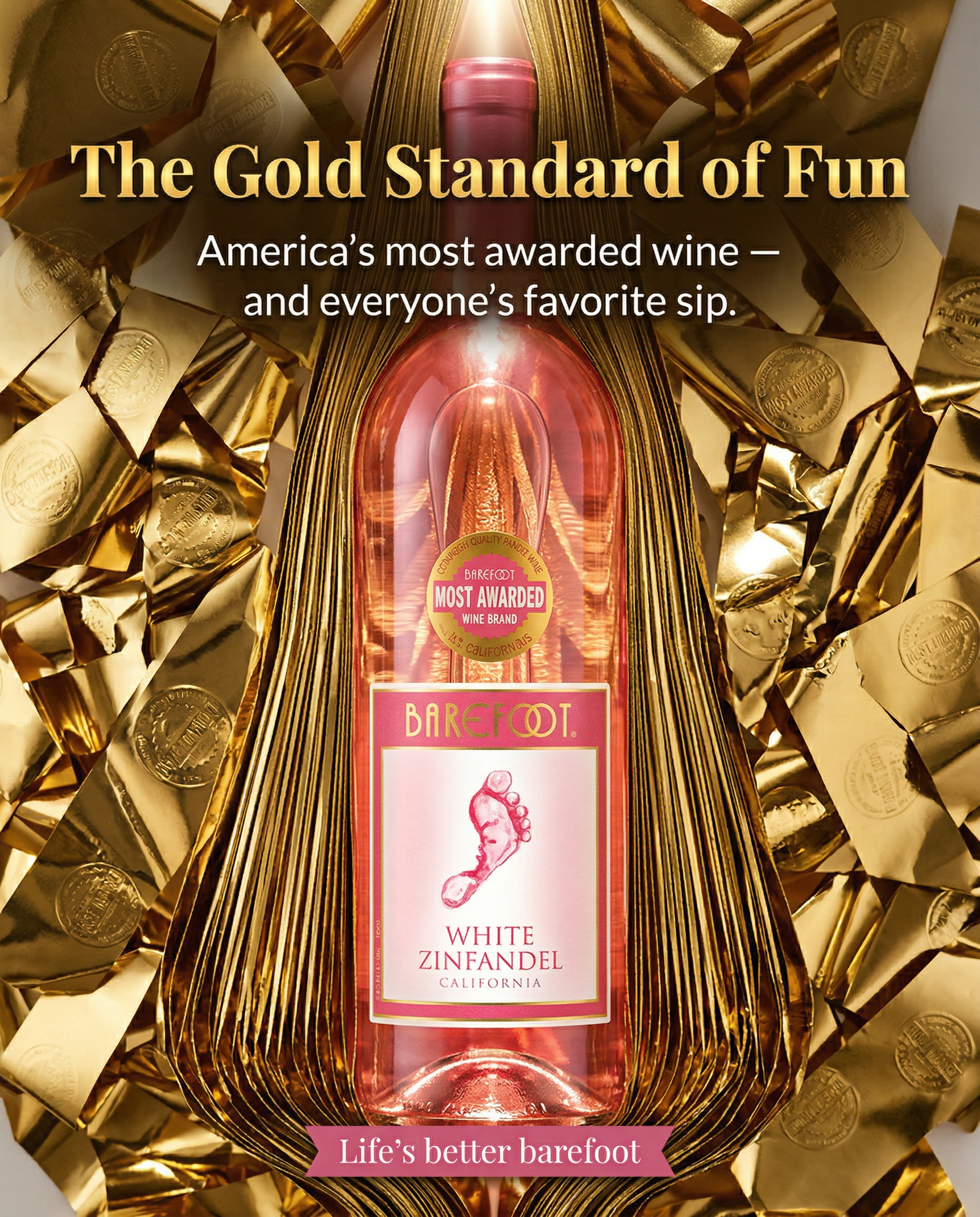
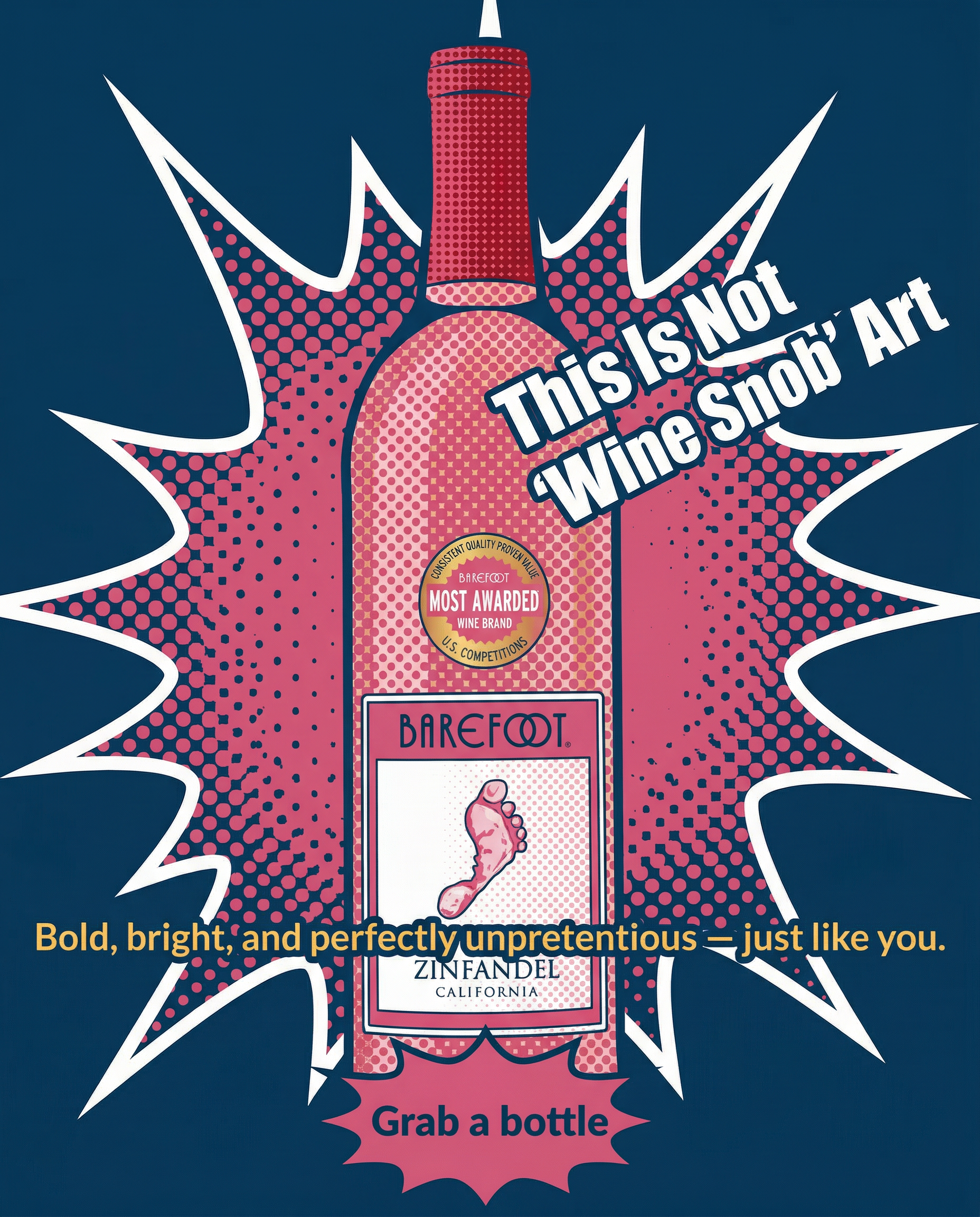
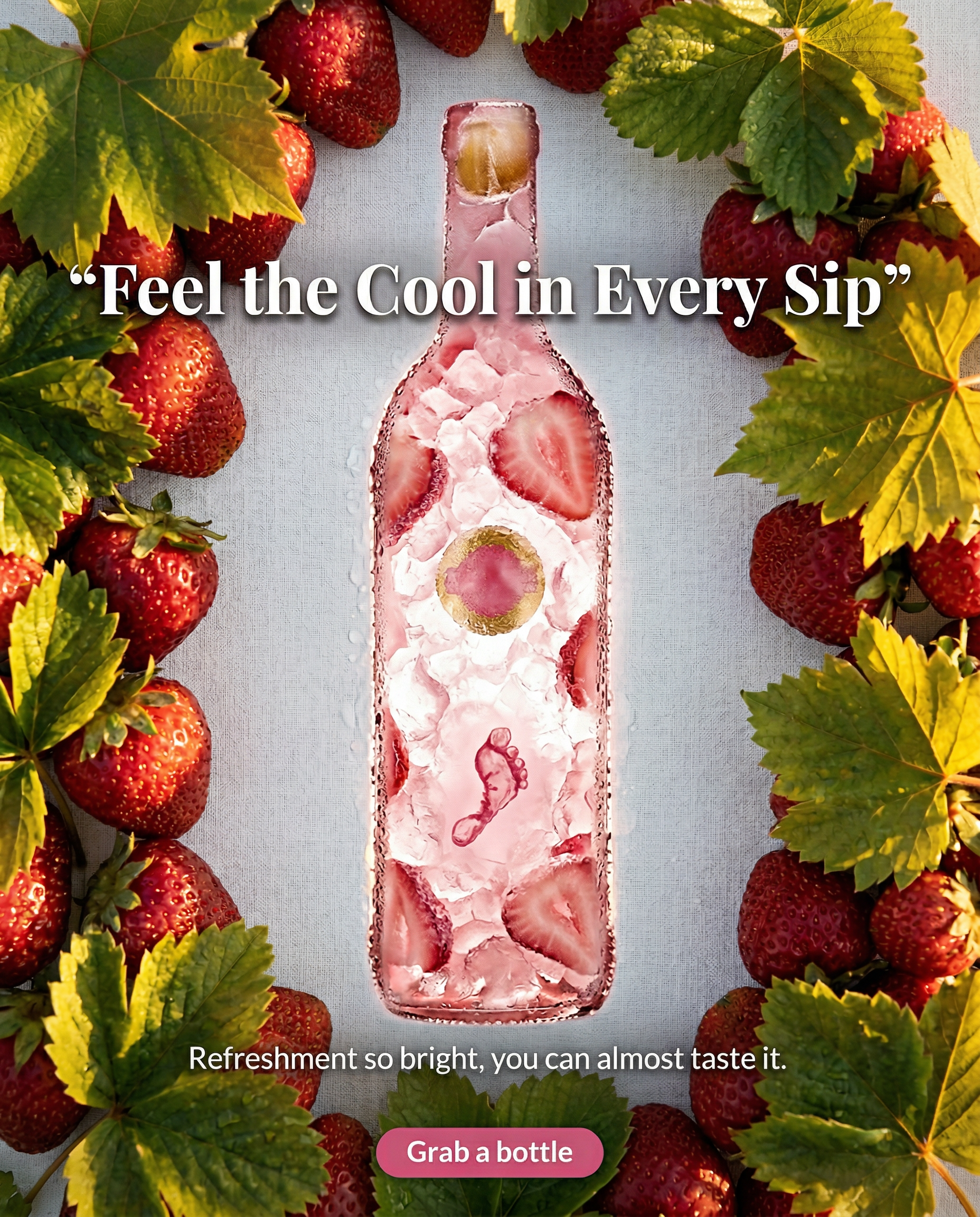
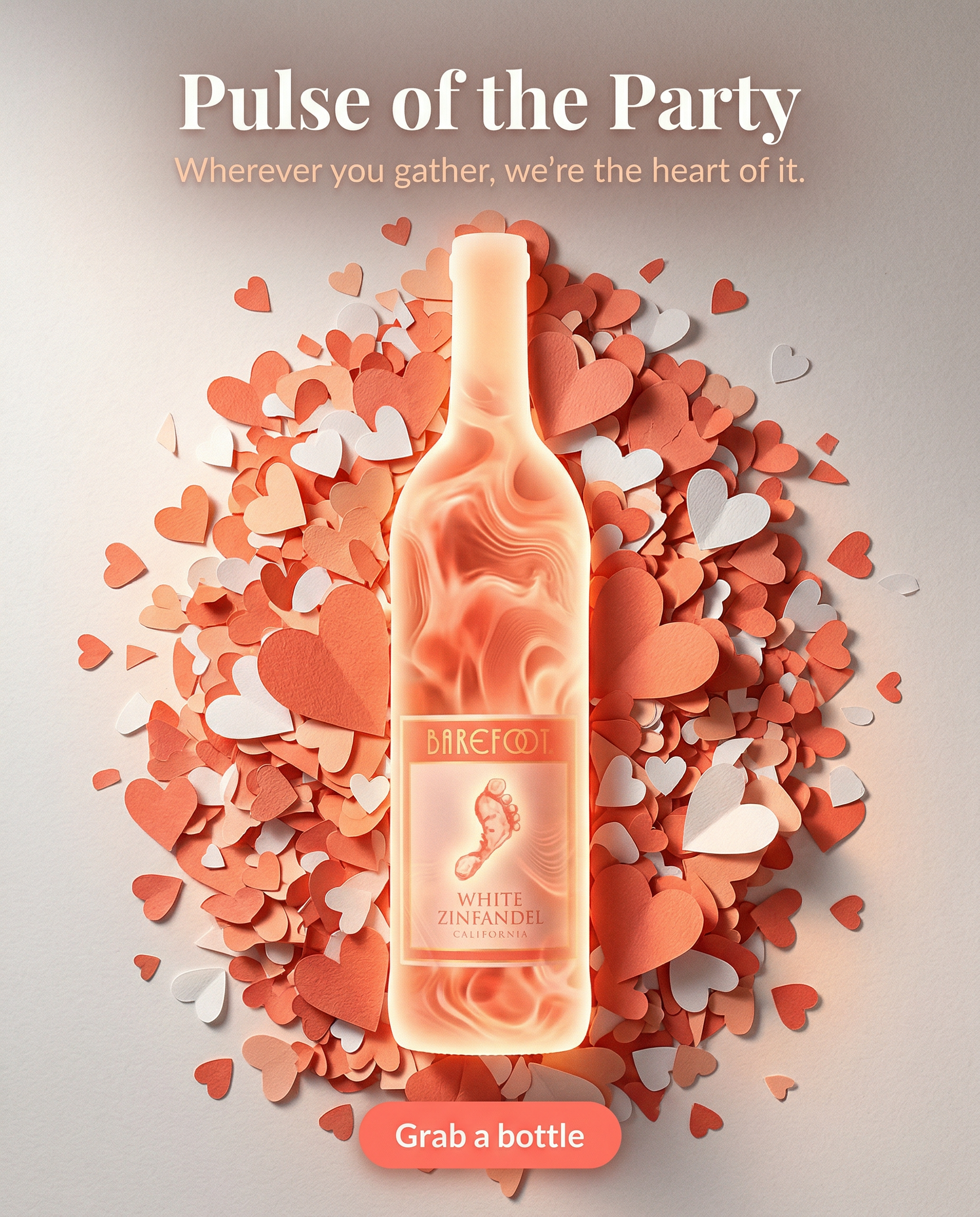
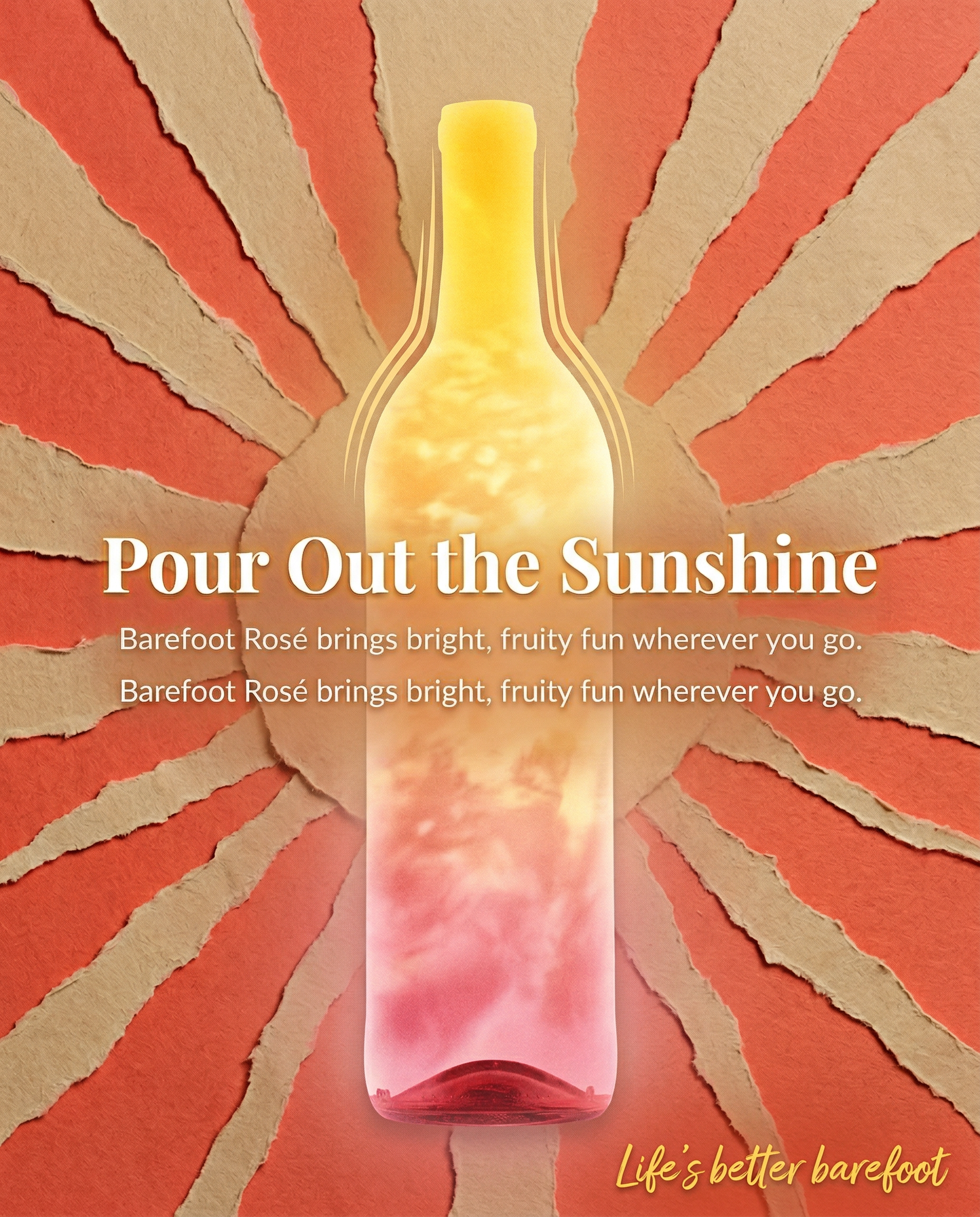
Barefoot Wines hero bottle — produced as TTB-compliant wine and spirits photography, cleared for Meta on the first pass.

Three gates. One asset. Most agencies hold one.

Every wine and spirits creative has to clear three gates simultaneously, and most production shops were built to hold one of them. The first gate is regulatory — the Alcohol and Tobacco Tax and Trade Bureau enforces 27 CFR Part 4 for wine, Part 5 for distilled spirits, and Part 7 for malt beverages. The TTB cares about therapeutic claims, false strength or origin implications, label fidelity, and any imagery that could appeal to or target minors. A wine and spirits photograph that places a glass beside a fitness tracker or wraps it in copy about "wellness benefits" is failing the TTB gate before it reaches anyone else.

The second gate is platform policy. Meta's alcohol advertising policy, TikTok's alcohol-restricted commercial content rules, and Google's alcohol ads policy operate on top of TTB, not instead of it. Meta rejects imagery depicting active consumption, models who appear under twenty-five regardless of stated age, implications of romantic or social enhancement, and any frame the auction classifier reads as targeting minors. TikTok's policy is even stricter on consumption depiction. Google's policy varies by destination market and by ad unit. A photograph can be TTB-clean and still get rejected by Meta in the second hour after ad delivery.

The third gate is the brand's own editorial ambition. A premium wine brand sitting next to Jordan, Caymus, and Frank Family Vineyards on the .com hero needs imagery that holds the same quiet confidence as the print catalog the brand has been building for fifteen years. A spirits brand competing with Whistlepig, Suntory, and Maker's Mark in the gifting aisle needs imagery that signals craft and weight. Neither brand can ship Meta-rejected work — and neither can ship work that clears Meta but feels like every other alcohol ad in the auction.

Most photography agencies hold one of these gates. The traditional studio that has shot luxury alcohol for two decades holds the editorial gate and assumes someone else will rework anything that gets platform-rejected. The performance creative shop running fast Meta production holds the policy gate but produces work that feels generic next to the editorial direction the brand actually wants. The compliance counsel reviews TTB after the fact. The brand director is left stitching three vendors together with a Q4 deadline. TTB-compliant wine and spirits photography means holding all three gates inside one production system, with the regulatory review baked into the brief and the platform-policy screen baked into the delivery checklist.

The TTB rules that shape the frame.

The TTB has rarely enforced an advertising rule against a photograph by itself — its primary jurisdiction sits on the label and on labeling-adjacent marketing claims. But TTB rules under 27 CFR §4.64 (wine), §5.65 (distilled spirits), and §7.54 (malt beverages) define what wine, spirits, and malt beverage advertising can and cannot say, and any photograph carrying overlaid text or operating as part of a campaign claim is subject to those rules. Premium wine and spirits brands at $5M–$50M ARR running national DTC and paid programs sit squarely inside that frame because their campaigns travel beyond state lines and into platform auctions where federal oversight matters.

Five rule clusters shape wine and spirits photography in practice. Therapeutic and health claims are banned — no implication that wine prevents cardiovascular disease, no implication that a spirit aids digestion, no wellness adjacency that reads as a curative claim. False origin and false strength are banned — a wine photographed beside a French chateau when it is California-sourced is a labeling adjacency problem. Misleading designation is banned — calling a vodka-based ready-to-drink a "cocktail" without the qualifying language the regulation specifies. Imagery that targets or appeals to minors is banned — cartoon characters, branded merchandise styled for under-21 use, scholastic or athletic contexts that read as youth coding. And in malt beverage advertising specifically, sexual or obscene imagery falls under TTB enforcement.

The practical translation for photography is this: the frame cannot make a health claim by adjacency (no wine next to running shoes with a sunrise overlay), cannot imply a false origin or production process, cannot use any visual element that codes as under-21 appeal, and cannot carry overlay copy that promises consumer outcomes the label cannot. Most premium wine and spirits photography fails the first one — brands enter the wellness adjacency to ride the low-and-no trend without realizing the visual implication ("wine that goes with your morning run") falls inside the TTB's therapeutic-claim frame.

The production system bakes this in by working from a compliance briefing on day one. Every campaign starts with one line that names the regulated category (wine, distilled spirits, malt beverage, hard cider, ready-to-drink) and the production team holds the TTB ruleset for that category as a visible constraint through to delivery. The same discipline that produces a CPG creative pack for a snack brand at retail meeting fidelity is the discipline that holds a wine and spirits campaign inside the regulatory frame — the production system is the same; the constraint layer changes.

The platform layer is where most assets fail.

Meta's alcohol advertising policy is the gate where most wine and spirits creative actually dies. The policy has six operative rules a wine or spirits photograph runs against. First — no imagery depicting active consumption from the container. A glass tilted to the mouth, a bottle to the lips, a shot being downed: all rejected. The classifier reads it before a human does. Second — no models who appear under twenty-five. Meta is enforcing visual age, not actual age. Casting a twenty-two-year-old who reads twenty-eight is fine; casting a twenty-eight-year-old who reads twenty-three is rejected. Third — no implications that alcohol enhances physical performance, mental performance, or specific social outcomes (a "drink this to land the deal" frame is rejected). Fourth — targeting and geo rules: certain countries and certain US states have hard floors. Fifth — no association with operating vehicles or heavy machinery. Sixth — explicit disclosure of the alcohol category on the ad account.

TikTok's policy goes further. Restricted commercial content rules for alcohol prohibit depiction of consumption almost categorically and require the audience to be filtered to the legal drinking age plus a buffer. Branded content and TikTok Shop have separate rules from organic. The practical outcome is that TikTok-compliant wine and spirits photography tends toward editorial bottle work, gifting frames, and lifestyle adjacent imagery that holds the product as protagonist without showing it being consumed.

Google's policy is more market-specific than Meta or TikTok. US Search and Display allow alcohol ads with age targeting and geographic restrictions; Shopping allows alcohol with retailer verification; YouTube restricts based on content category and audience signal. The wine and spirits brand shipping a single campaign across Meta, TikTok, and Google needs three slightly different cuts of the same hero asset — and that is before the DTC site itself and the print catalog.

The production discipline is to design the hero frame at the most restrictive intersection (typically TikTok-safe) and then derive Meta-safe and Google-safe variants from the same source, instead of producing one asset and discovering at upload time that the auction rejects half the variants. The same Meta-ad-pack discipline applied to apparel and CPG carries through to alcohol; the constraint set is just tighter and the rejection cost is higher because every rejected creative inside a Q4 ramp eats a paid window that does not come back.

Six principles for wine and spirits photography
that ships through all three gates.

The differentiator between a wine and spirits photography vendor that holds one gate and a production system that holds all three is not talent. It is the discipline encoded in the pre-flight checklist before a single render runs. Six principles, applied to every asset.

01

Compliance briefing on day one

Every campaign opens with a one-page brief naming the regulated category (wine, distilled spirits, malt beverage, hard cider, ready-to-drink), the destination channels (DTC, Meta, TikTok, Google, print, OOH), and the geo-distribution scope. The TTB ruleset for that category and the platform policies for those channels become visible constraints through to delivery. No render begins until that brief is signed.

02

Product as protagonist, consumption implied

The hero frame holds the bottle, the glass, or the gifting context as protagonist. Conviviality is implied through composition — a poured glass on a table set for company, a bottle resting at the moment before service — not through a hand on the bottle and a glass at the lips. The frame says "this is the moment before" rather than "this is the moment of." That single rule clears most of Meta's consumption-depiction rejections.

03

Glass, liquid, and label rendered with physical truth

Wine and spirits live or die on glass behavior. Refraction through the bottle, the way light moves through chardonnay versus cabernet versus rye, condensation on a chilled white, the foil capsule reflectivity on a champagne bottle, label registration against curved glass at the shoulder, fill-line accuracy against the regulated headspace. We treat these as pass-fail. A wine and spirits photograph where the label is misregistered or the foil reads as plastic does not ship.

04

Model age, model coding, model casting

Models read as visibly adult premium drinkers — typically late twenties through mid-fifties, depending on the brand position. Activewear, athletic context, scholastic adjacency, and youth-coded styling do not appear in the frame. A spirits brand at $20M ARR in the gifting aisle casts the model to read as the gift-giver, not the gift-receiver, and the casting brief carries that distinction explicitly. Meta's classifier on visual age is unforgiving and the rejection cost during a Q4 paid ramp is more expensive than the casting decision upstream.

05

Overlay copy reviewed against TTB clusters

Every overlay or in-frame copy line is pre-screened against the TTB therapeutic, false-origin, false-strength, misleading-designation, and youth-appeal clusters before render. Wellness adjacency ("the wine for your evening reset") gets pulled. Origin shorthand ("Napa craft" when the wine is not technically Napa AVA) gets pulled. Strength implication on a low-ABV ready-to-drink ("the new way to feel something") gets pulled. The copy review and the photography review run in the same brief, not in two disconnected workflows.

06

Channel-specific cuts from one source

The hero frame is designed at the most restrictive intersection — typically TikTok-safe and Meta-safe — and channel-specific variants are derived from the same source. The DTC .com hero can carry slightly more editorial weight than the Meta paid pack. The print catalog can hold a longer caption. The same hero ships in 1:1, 4:5, 9:16, 16:9, and 1.91:1 with appropriate crops. Compared to running a separate studio day per channel at $4k–$12k per day, the unified-source discipline is the only way the economics close at $5M–$30M brand scale.

The campaign gallery

Six frames from our wine and spirits production — TTB-clean, Meta-cleared, editorial-grade.

Wine and spirits photography by brand position.

Premium wine and spirits brands fall into three brand-position tiers that change the photography brief substantially. A flagship luxury spirit at $50M+ runs editorial-first; a fast-growing DTC wine at $8M runs performance-creative-first; a craft brand at $5M running tasting-room plus three-tier wholesale plus an emerging Meta program needs both registers stitched into a single campaign. The compliance and platform-policy frame is identical across all three. The brand spine and the deliverable mix are not.

01

DTC wine club / fast-growing

$5M–$15M ARR, performance-creative-first, monthly Meta and TikTok paid ramp, holiday Q4 push. Frame holds bottle as protagonist with implied conviviality. Hero asset designed TikTok-safe; Meta and Google variants derive. Brands like Winc, Naked Wines, Bright Cellars, Firstleaf operating in this register.

02

Premium spirits / gifting

$15M–$50M+ ARR, gifting-aisle competitive, editorial-first .com hero plus tight Meta/TikTok cuts. Maker's Mark-tier brands competing with Whistlepig, Suntory Toki, Roku, Casamigos, Don Julio 1942 on the gift shelf. Frame holds craft, weight, and provenance without making false-origin claims.

03

Craft / multi-channel

$5M–$25M ARR, tasting-room plus three-tier wholesale plus DTC, regional identity central. Frame carries regional craft language while clearing federal TTB rules and platform policies. Wholesale pitch deck imagery and Meta paid pack produced in the same campaign window against different briefs.

Q4 ramp — ten to fifteen business days, end to end.

The wine and spirits Q4 ramp is the production window that exposes every weakness in a brand's photography vendor stack. Thanksgiving gifting opens the third week of October. Black Friday wine club promotions stage the first week of November. Holiday gifting campaigns peak the second and third weeks of December. New Year's Eve sparkling and spirits campaigns layer on top from December 20. Each of those moments wants a fresh asset pack and the same brand spine. A traditional studio scheduling four weeks for a single shoot day cannot run that cadence; a freelancer rotation fragments the brand spine across vendors. The production system that survives Q4 runs a fixed-cycle sprint.

For a brand with an established reference package — meaning the SKU has been built in our production system at production fidelity in a previous engagement — the sprint runs ten to fifteen business days end to end. Day one through three: campaign brief sign-off with the compliance one-pager and channel scope. Day three through six: hero frame development against the TikTok-safe intersection, with TTB and Meta review at internal QC. Day six through ten: derived variants in 1:1, 4:5, 9:16, 16:9, 1.91:1 plus DTC PDP refresh frames plus print catalog cuts. Day ten through fifteen: Meta and TikTok paid pack final, gifting frames, email creative for the Klaviyo flows, internal compliance sign-off, and delivery to the brand's CDN.

For a brand we are onboarding fresh, the first sprint adds five to seven business days for SKU reference build (label artwork at full resolution, glass color, foil treatment, cap or cork detail, fill-line and headspace) and brand-spine sign-off. After that first sprint, every subsequent campaign runs at the established ten-to-fifteen-day cadence against the same spine.

Compared to traditional studio economics — a shoot day at $4k–$12k, two to four shoot days for a Q4 campaign of comparable scope, four to eight weeks of calendar time — our Q4 sprint prices the same scope at $25k–$60k delivered inside the holiday window. Brands at $5M–$30M ARR that try to run a traditional Q4 photography program typically ship two of the four Q4 moments and let the other two run on stale creative; the cadence math does not survive at that brand scale.

Photography for DTC, Meta, and the three-tier pitch.

Wine and spirits is the rare category where the same brand simultaneously runs direct-to-consumer wine-club shipping, performance creative through Meta and TikTok, and a three-tier wholesale channel pitching to distributors and on-premise accounts. Each channel wants a slightly different photographic register. The DTC wine club campaign leans toward narrative — the bottle in a moment, the story of how it arrives, the unboxing of a quarterly shipment. The Meta paid pack leans toward performance — scroll-stoppers, gift frames, occasion-coded compositions, fast subject reads. The three-tier wholesale pitch leans toward credentials — provenance shots, production frames, varietal authenticity, on-premise-appropriate imagery for accounts that will pour the wine by the glass.

One photography program has to cover all three without fragmenting the brand. The discipline is to hold the brand spine — signature color, glass treatment, label rendering, lighting language, typography of in-frame copy when used — across registers, while letting the deliverable mix shift per channel. The DTC wine club imagery and the three-tier wholesale deck imagery are not the same frames, but they are recognisably the same brand. Meta variants are derived from the same hero asset rather than produced as separate work.

Geo-distribution rules also shape what ships where. A wine that legally ships DTC to thirty-eight states cannot run a Meta campaign geo-targeting the twelve states where direct shipping is illegal or restricted. Photography for those geo-blocked states becomes wholesale-channel imagery served through distributor accounts and on-premise media instead. The campaign brief carries the geo-scope as a one-line constraint and the delivery checklist enforces it. We do not handle the legal substance of three-tier compliance — that is your distributor counsel's work — but the production system never ships an asset against a geo it should not appear in, because the geo lives in the brief from day one.

The connective tissue across DTC, Meta, and wholesale is the brand spine. The brands that win Q4 are not the brands with the best single asset; they are the brands whose Meta scroll, .com hero, gifting card, distributor deck, and tasting-room signage all feel like the same brand, produced inside the same window, on the same calendar. The DTC creative agency discipline that holds a snack brand's hero across retailer and Meta and TikTok carries through to wine and spirits with the regulatory and platform layers added.
Non-alcoholic, low-ABV, and the adjacent register.

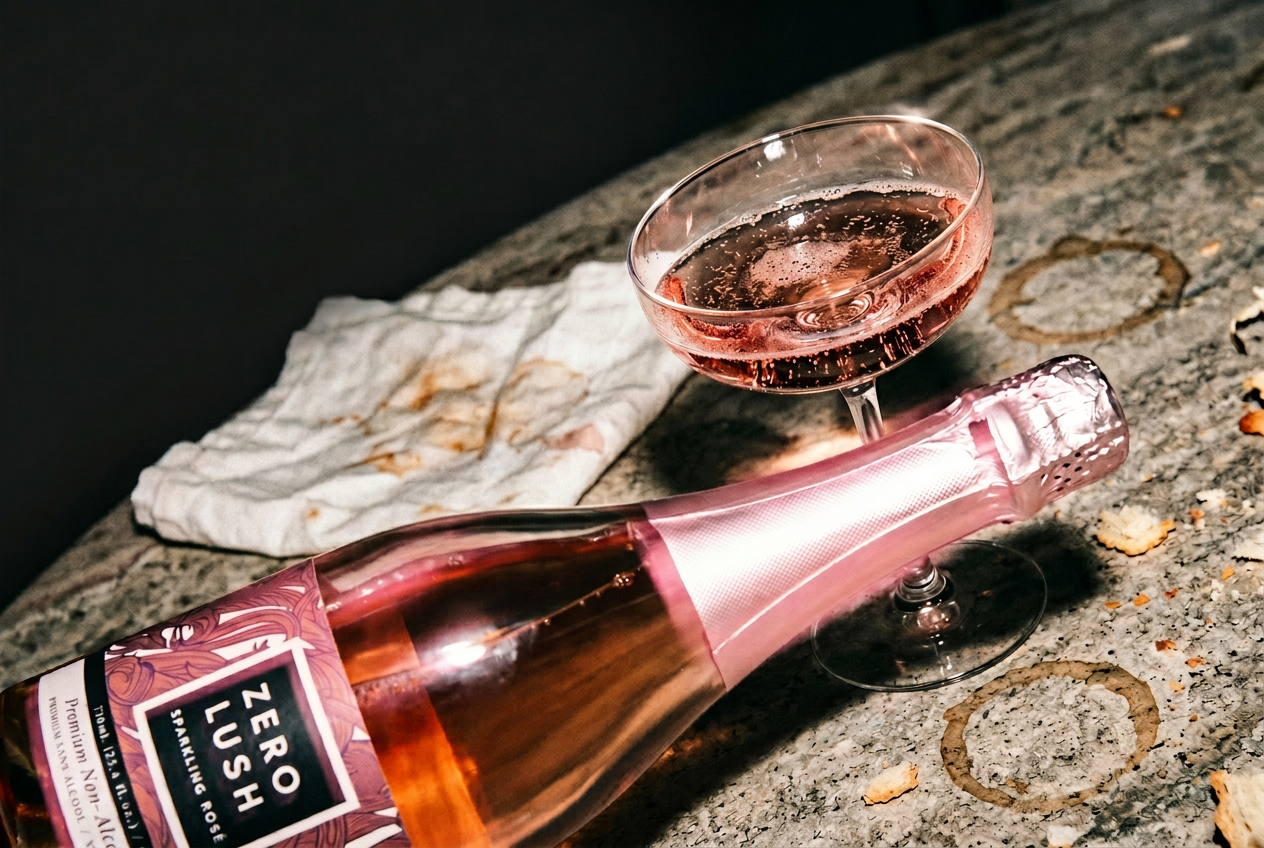
The non-alcoholic and low-ABV category has reshaped wine and spirits photography over the last three years. Zero-proof spirits brands like Seedlip, Ritual Zero, Lyre's, and our own work with Zero Lush sparkling sit beside traditional wine and spirits inside the same drinks aisle and the same gifting consideration set. The production discipline is largely shared — glass behavior, label registration, fill-line accuracy, foil reflectivity — but the regulatory and platform frame differs in meaningful ways.

Non-alcoholic beverages sit outside TTB's primary jurisdiction (TTB regulates alcoholic beverages above 0.5% ABV) but inside FTC truth-in-advertising rules. Meta and TikTok do not block non-alcoholic creative under their alcohol policy, but they do scrutinize claims around mocktail positioning. The practical translation is that a Zero Lush sparkling campaign can show consumption, can target broader demographics, and can run alongside an Athletic Brewing-style ramp without the same restrictions a Barefoot Wines campaign runs against.

Brands running both registers — a premium spirits flagship and a non-alc adjacent line in the same portfolio — increasingly want one production system that handles both. The brand spine differs by line; the production machinery does not. A March campaign window can ship a flagship spirits hero, a non-alc sparkling hero, and the Meta and DTC packs for both inside one fifteen-business-day sprint. The cohesion of running one production system is the unlock two vendors cannot deliver. The work we have done with Zero Lush on sparkling rose and white sits next to the wine work with Barefoot and the spirits work with Maker's Mark inside the same system — category adjacency is part of the system, not an exception to it.

Frequently asked
questions

What does it mean for wine and spirits photography to be TTB-compliant?

TTB compliance for wine and spirits photography means every shipped asset can sit underneath a label and a marketing claim without violating the Alcohol and Tobacco Tax and Trade Bureau rules at 27 CFR Parts 4, 5, and 7 — wine, distilled spirits, and malt beverages respectively. In practice that means no health or therapeutic claims, no curative language overlaid on the image, no false strength or origin implications, accurate product representation, and no imagery that targets or appeals to minors. We screen every asset against those rules before it leaves the production system. A wine or spirits photograph is not done when it looks beautiful; it is done when it has cleared the regulatory layer and the platform layer underneath it.

How is Meta's alcohol ad policy different from TTB?

TTB regulates the label and the marketing claims around the product. Meta regulates how alcohol is depicted inside the creative running through its ad auction. Meta's alcohol policy bans imagery that shows minors or anyone who could appear under twenty-five, depicts active consumption from the container, suggests alcohol enhances athletic performance or social status in specific ways, and targets users under the legal drinking age. Meta's policy operates on top of TTB's, not instead of it. A bottle shot can be TTB-clean and still get rejected by Meta if a hand is reaching for it in a way the classifier reads as consumption. We design wine and spirits photography against both gates from the first frame.

Can AI photography handle glass, liquid, condensation, and label registration on a wine bottle?

Yes, with production discipline. Glass refraction, the way light moves through a wine bottle, condensation beads on a chilled white, label registration against curved glass, foil capsule reflectivity — these are the variables AI photography either renders correctly or disastrously. We treat them as pass-fail. A wine or spirits photograph where the label is misregistered, the foil capsule reads as plastic, or condensation pools unnaturally does not ship. The reference package we build for each SKU locks the label artwork at high resolution, the glass color, the foil treatment, the fill line, and the cap or cork detail so renders inherit physical truth instead of guessing it.

How fast can a wine or spirits brand get a holiday campaign produced?

For a brand with an established reference package — meaning we have already shot or specified the SKU at production fidelity — a full holiday campaign of forty to seventy-five assets runs ten to fifteen business days from brief to delivered. For a brand we are onboarding fresh, the first run adds five to seven business days for SKU reference build and brand-spine sign-off. Holiday campaigns at premium wine and spirits brands typically include hero bottle work, gifting and editorial frames, Meta and TikTok paid pack across 1:1 and 9:16 ratios, DTC PDP refresh, and email creative. Compared to a traditional studio day window of four to eight weeks at $40k–$120k all-in for the same scope, the cadence and the cost both reshape what a $5M–$30M brand can ship in Q4.

What gets premium wine and spirits creative rejected by Meta the most?

Three patterns dominate. First, hands or mouths in contact with the bottle or glass in a way the auction classifier reads as active consumption — even editorial cocktail-pour frames trip this. Second, models who could appear under twenty-five regardless of actual age, because Meta enforces visual appearance, not credentials. Third, copy or visual overlay that implies social or romantic enhancement from drinking — for example a couple toasting in low light with a tagline about confidence. We design wine and spirits photography to sit just inside the policy line by holding the product as the protagonist, framing implied conviviality without depicting consumption, and using models who unambiguously read as the brand's adult premium drinker.

How do you handle DTC shipping compliance imagery — three-tier system and state-by-state DTC rules?

We do not handle the legal substance of three-tier compliance — that is your distributor counsel and your compliance team's work. What we do is build creative production around it. Photography that distinguishes which SKUs ship to which states gets visually flagged in the campaign brief and never appears in geo-targeted Meta sets where the SKU cannot legally ship. Photography for direct-to-consumer wine club campaigns is produced separately from photography for three-tier wholesale channel pitches because the audience, the call to action, and the regulatory frame are different. Every campaign brief has a one-line distribution scope, and the assets inherit it.

Why use AI photography for wine and spirits instead of a traditional studio shoot?

Three reasons specific to alcohol brands. First, traditional shoot economics ($4k–$12k per shoot day plus location, talent, and post-production) make holiday campaign throughput unaffordable for $5M–$30M brands shipping forty to seventy-five assets across DTC, Meta, TikTok, and gifting. Second, the same brand needs editorial brand work for the .com hero plus tightly TTB-and-platform-compliant cuts for paid — a single studio day rarely covers both registers cleanly. Third, the iteration loop on rejected platform creative is brutal when each rework is a half-day reshoot. AI photography runs the same compliance and editorial work through one production system, with rework on rejected variants returning in 48 hours instead of two weeks.

Do you produce non-alcoholic and adjacent-category beverage photography under the same system?

Yes. Non-alcoholic wine, sparkling alternatives, low-ABV ready-to-drink, functional zero-proof — these adjacent categories share most of the production discipline of premium wine and spirits photography (glass behavior, label registration, fill physics) but live outside TTB's primary jurisdiction and inside a different platform-policy frame, often more permissive on Meta and TikTok. Brands like Zero Lush running non-alcoholic sparkling sit beside the wine work we do for Barefoot Wines and Maker's Mark inside the same production system. The brand spine differs; the production machinery does not. We can run a premium spirits flagship and a non-alc adjacent line on the same campaign calendar without rebuilding the system per category.

Ready for wine and spirits photography that
clears TTB, Meta, and editorial in one system?

Holiday campaign window opens the third week of October. Forty to seventy-five assets across DTC, Meta, TikTok, and gifting — produced inside ten to fifteen business days at a $5M–$50M brand scope, with the regulatory and platform layers handled inside the brief instead of bolted on at delivery. Premium wine, premium spirits, ready-to-drink, and non-alc adjacent lines welcome.