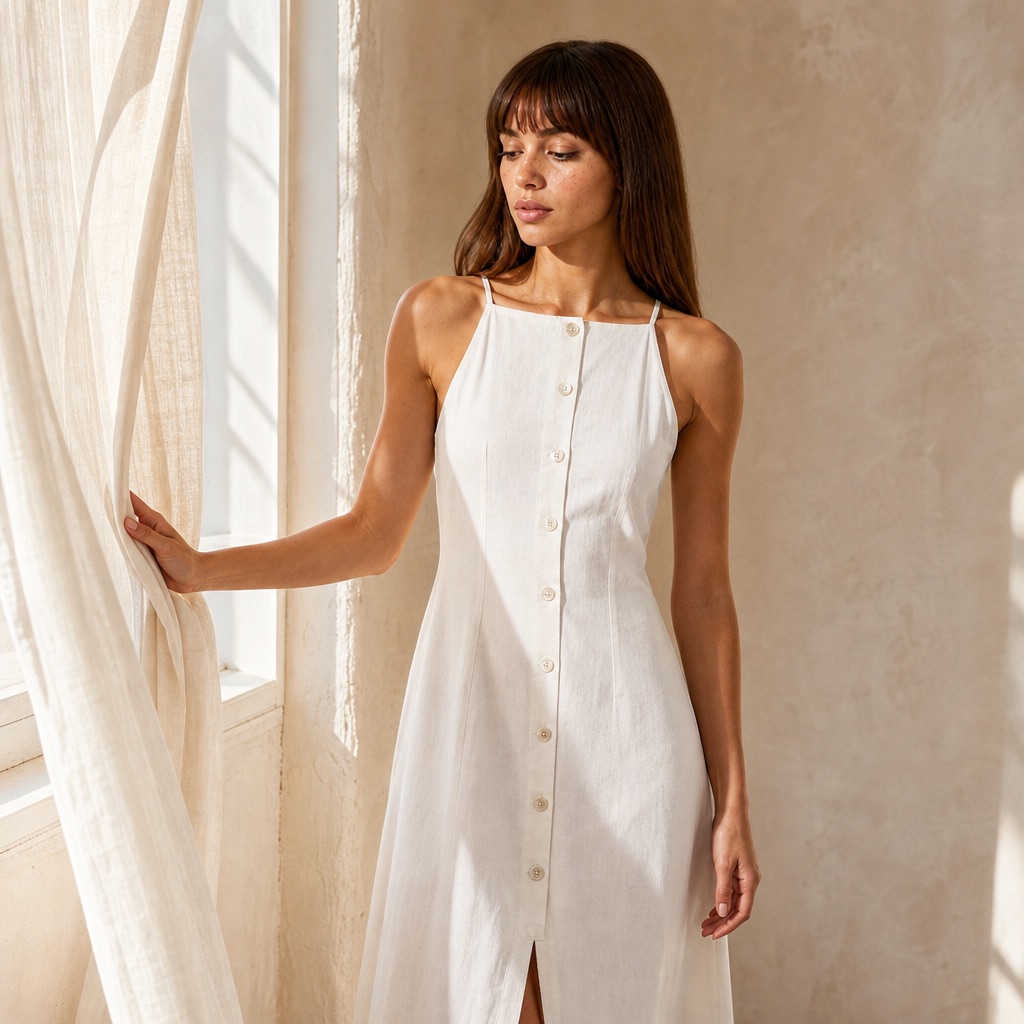
It is Thursday afternoon. The drop goes live at noon Friday — the third drop this quarter, on a calendar the founder set in January and the customer now expects to the hour. The product is in the warehouse, the PDPs are built out, the email is queued in Klaviyo, the launch ad set is staged in Meta. The one thing missing is the imagery. The garments arrived from the cut-and-sew partner nine days ago, too late to brief a studio shoot that could clear post before Friday. So at 9pm the founder and the social lead lay the pieces on a seamless backdrop in the office, shoot flatlays on an iPhone 15 Pro, and call it the announce. It works, in the sense that the drop launches. It also reads as a different brand than the last two drops, because it is.
This is the structural problem of running a drop brand. The release cadence is the entire growth engine — Aimé Leon Dore built a category on it, Corteiz built a movement on it, Kith built a retail empire on it — and the imagery cadence cannot keep up with the release cadence under any traditional production model. A half-day studio shoot quotes at four to nine thousand and books two to three weeks out. Post adds another two to three weeks. The drop that imagery was made for has sold through before the frames are colour-corrected. So the brand defaults to the night-before shoot, and the feed pays for it in coherence.
Drop campaign photography exists because the bottleneck is cadence, not craft. The founder does not need a better camera or a more talented night-before stylist. The founder needs a production model whose turnaround is indexed to the drop date instead of to a studio's open shoot slots — garment in hand to a full per-drop pack in three to five days, every drop, on the same brand spine. The drop calendar moves at drop speed. The imagery has to move with it.