


Miami · resort, swim & lifestyle campaigns

An apparel creative agency in Miami built for Swim Week and the sun-drenched drop.

An apparel creative agency in Miami has one job most agencies elsewhere never face: ship a brand world that holds across the resort and cruise calendar, lands buyer-ready before Miami Swim Week, and reads as the same label to a customer on Lincoln Road, a customer in Bogotá and a customer scrolling a Spanish-language ad in San Juan. We are a brand-world studio that produces the full campaign surface — the resort hero, the swimwear lookbook, the lifestyle feed layer and the paid cut — composed against one brand spine so the South Beach editorial frame, the e-commerce PDP and the bilingual paid ad never read as three different brands. For Miami and South Florida resort, swim and warm-weather lifestyle labels racing a Paraiso or Swim Week deadline on the November-through-summer selling window, the imagery is sequenced to the Miami clock, the color-and-sun aesthetic the city sells on, and the Latin-American market the feed actually reaches — shipped on a two-week sprint at one fifth the all-in cost of a Miami location shoot.

By Abhi Chawla, founder · Last updated: 2026-06-19

Campaign reference

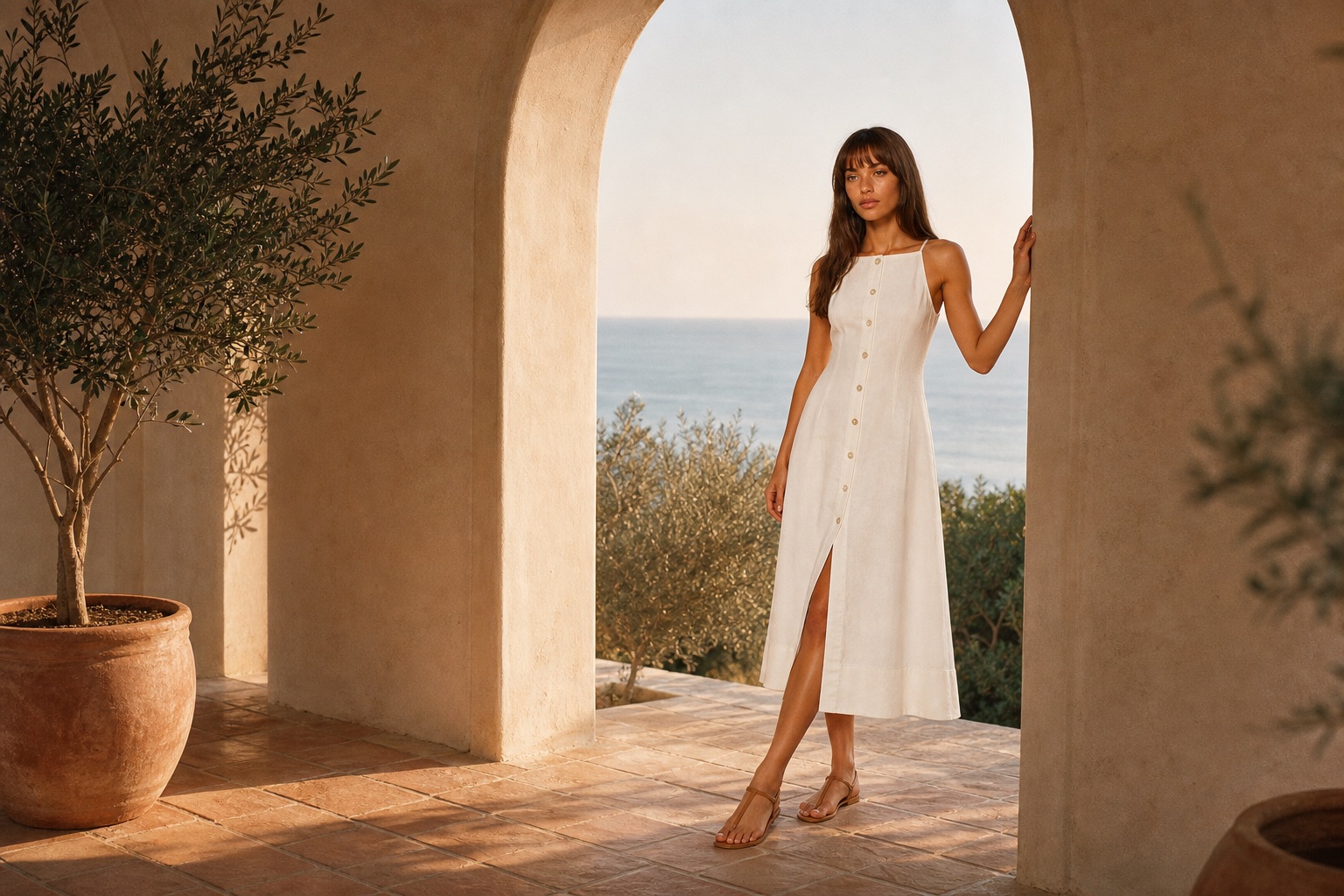
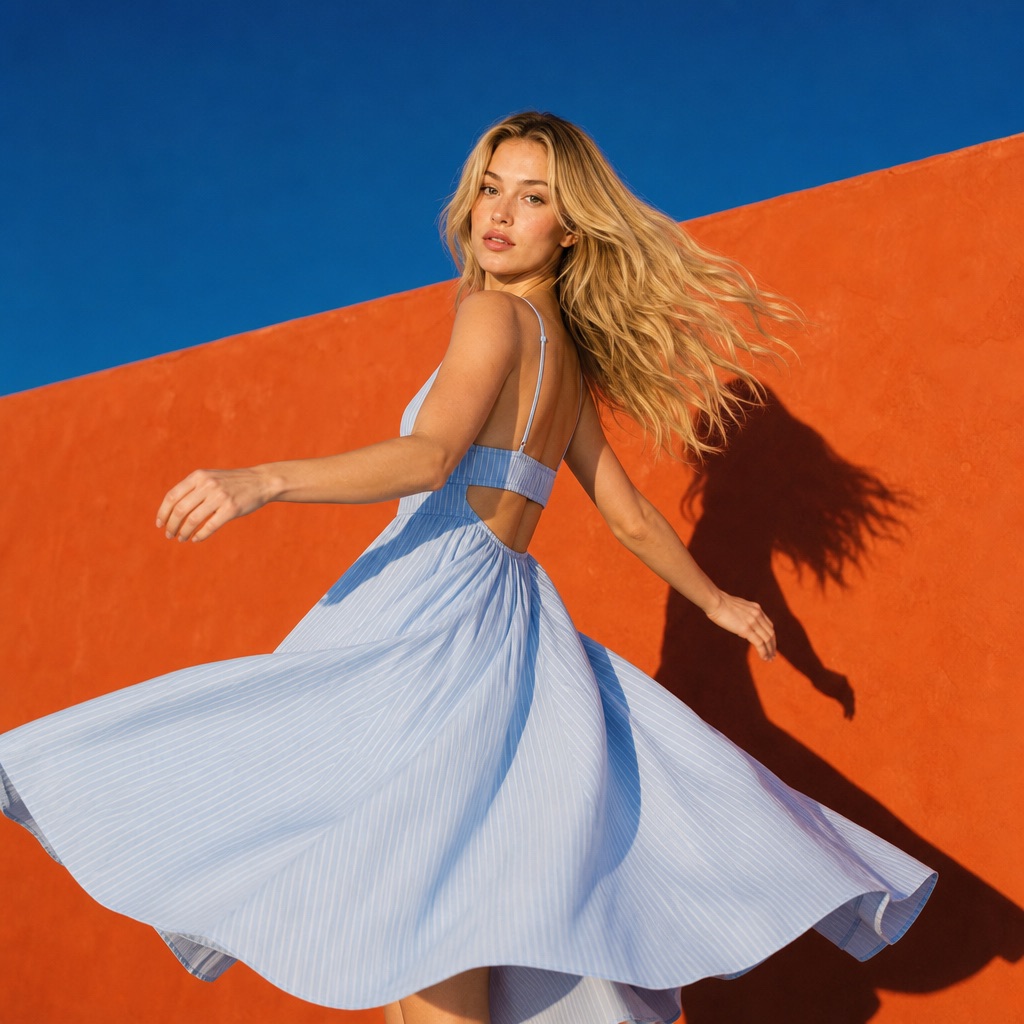
A sun-drenched resort world held inside one brand spine — produced as a Miami campaign.

It is six weeks to Swim Week and the lookbook still does not exist.

It is a Tuesday in March in a Wynwood studio space the brand is renting by the month. The resort drop is designed, the samples came back from the factory in Medellín, and Paraiso is six weeks out. The buyer appointments are booked. What does not exist yet is the lookbook — the artefact the Saks and Bloomingdale's resort buyer flips through, the deck the boutique buyers at the trade show take photos of, the PDP imagery that has to be live on the dot-com the day the drop sells. The founder has a quote from a South Beach photographer for two shoot days at thirty-eight thousand, before the stylist, before glam, before the location permit for the beach, before post. The line does not close. The drop is real and the imagery is a hole in the calendar.

This is the structural problem every Miami resort and swim brand faces, and it is not a creative problem dressed up as one — it is a calendar-and-cash problem. The Miami clock runs ahead of the selling season. Miami Swim Week and Paraiso land in late spring; the resort and cruise drop has to sell from November; the buyer cycle is locked months before either runway. A traditional location shoot needs eight to twelve weeks once you account for scouting, permits, casting, the shoot day and post — which means the brand is always one season behind its own buyer calendar. The founder who waits for the South Beach shoot to come together ships the lookbook late, the buyer appointment runs on phone photos, and the resort drop sells on a thin feed.

An apparel creative agency in Miami that actually solves this does not start with a shoot day. It starts with the brand spine and the calendar. We sequence the imagery to the Miami buyer cycle — lookbook in buyers' hands before market, campaign hero live for the drop, lifestyle layer carrying the feed through the long warm-weather window — and we ship the first wave inside two weeks instead of twelve. The work sits alongside our broader US apparel creative agency practice; the Miami difference is the clock, the color, and the Latin-American market the feed has to reach.

Why the South Beach shoot, the influencer trip and the “shoot it by the pool” ask all break before the drop.

The first instinct is the South Beach location shoot. Permits for Ocean Drive or a beach segment, a Miami photographer day rate, talent, a stylist, glam, assistants, post, contingency — twenty-five to ninety thousand for one to two days against forty to ninety usable frames. The frames are gorgeous. They also ship once, in late spring, against a resort window that runs to the following summer. By the time the November cruise drop is selling, the brand is six months past the shoot and the feed is back to behind-the-scenes phone clips by the pool. The shoot was right for the Swim Week hero moment and wrong as the brand's only imagery line for an eight-month selling season.

The second instinct is the influencer trip — fly four creators to a Tulum or Miami villa, hand them the resort drop, let the content roll in. The volume is real and it evaporates the structure. Four creators produce frames against four different phones, four color profiles, four framing instincts and four follower bases that overlap unpredictably with the actual buyer. The South Beach editorial frame, the influencer villa clip and the e-comm PDP land in the same grid reading as three unrelated brands. For a brand trying to sign Revolve or get a resort buyer at Neiman Marcus to take the line seriously, the inconsistency is the problem the buyer sees before she sees the garment.

The third instinct the founder hears most is "let's just shoot it by the pool this weekend." The designer and the social manager spend a Sunday at someone's building rooftop with the new drop and an iPhone. The frames are honest and they are lit by harsh midday Miami sun at a color temperature nothing else in the feed shares, framed Stories-first, dropped into a grid next to the one real campaign frame the brand paid for. The eye registers the temperature shift and the framing break before the customer reads the Spanish or English caption. The brand that needs to look like Revolve or Shopbop could carry it instead looks like it shot the resort drop on a phone — because it did.

All three failure modes share one cause: none are composed against a brand-spine document the whole season runs on. The shoot ships once. The influencer trip has four spines. The pool shoot has none. The fix is not a better photographer or a better villa — it is treating the entire Miami season as one production discipline composed against a single spine, sequenced to the buyer calendar, and shipped on a cadence that keeps the feed alive through the resort window.

The Miami brand spine — color, sun, and the bilingual reach the market requires.

The brand-spine document is the production contract every frame is composed against, and for a Miami brand it carries three things a generic apparel spine does not. First, the Miami palette in Pantone-locked sRGB — the specific cobalt, terracotta, ocean-blue, sun-bleached neutral and warm sand the city actually sells resort and swim on, held at under three Delta E drift across every frame so the campaign hero, the lookbook and the paid ad share one color world. Second, the warm directional light Miami buys: late-afternoon golden light and the high-key sun-washed coastal register, specified in physical units rather than left to a generic studio default. Third, the casting frame locked to the season so the same figure carries the resort hero, the swim lookbook and the lifestyle feed.

The spine then ties to the four production registers a Miami resort and swim season needs. The campaign hero register is the signature sun-washed coastal frame — the archway, the steps, the directional warm light — the one the brand leads the drop and the Swim Week deck with. The lookbook register reads the resort silhouette full-length against architectural color-blocking, the frame the buyer at Saks or Bloomingdale's evaluates the line through and the PDP runs on. The lifestyle register is the kinetic in-context summer feed frame that carries Instagram and TikTok between drops. The movement register is the aspirational motion frame the paid cut and the Swim Week reel both pull from.

The bilingual layer sits on top of the spine, not beside it. Because every frame is composed against one locked spine, the same campaign world holds across a Spanish-language and an English-language cut without a second shoot — the editorial register, casting frame, palette and negative-space ratio stay locked, only the on-frame copy and the paid caption change. The brand reads as one world to the customer in Miami, the customer in Bogotá and the customer in San Juan. The mechanic is the same one our apparel brand social campaign practice runs on; the Miami deployment adds the bilingual cut as a first-class output of the spine rather than a translation afterthought.

01

Sequence to the Miami clock, not the NYFW clock

Miami Swim Week and Paraiso land in late spring; resort sells from November; the buyer cycle locks months ahead. The imagery is indexed to the Miami buyer calendar — lookbook before market, hero for the drop, lifestyle through the warm-weather window. A New-York-Fashion-Week production rhythm ships against the wrong season for a resort brand.

02

Lock the Miami palette in Pantone sRGB

Cobalt, terracotta, ocean-blue, sun-bleached neutral and warm sand — the specific color world resort and swim sell on — held at under three Delta E drift across every frame. The campaign hero, the lookbook and the paid ad share one palette so the grid reads as one brand, not a beach with a logo on it.

03

Build the bilingual cut into the spine

Miami's market is Latin-American and US-Hispanic, and the tourism feed reaches across Latin America. Every campaign and lifestyle frame is composed so a Spanish-language and an English-language cut share one locked spine — same casting, palette and register, only the copy changes. The brand reads as one world from Miami to Bogotá to San Juan.

04

One spine across hero, lookbook, feed and paid

The South Beach editorial frame, the Swim Week lookbook page, the e-comm PDP and the Meta paid cut are all composed against the same brand-spine document. The buyer at Neiman Marcus and the customer on the dot-com see the same brand. The inconsistency that sinks an emerging resort line never enters the grid.

05

Ship buyer-ready before market

The first sprint delivers brand-spine ingestion plus the first twenty campaign and lookbook frames inside two weeks — a buyer-ready deck in two to four weeks against the eight-to-twelve a location shoot needs. The lookbook is in buyers' hands before Paraiso or Swim Week instead of arriving after the appointment.

06

Hold the feed across the resort window

The resort and cruise season sells from November through the following summer. The lifestyle register ships on a two-week sprint so the feed never goes back to harsh-midday phone shots by the pool. The brand stays warm, on-palette and consistent for the entire eight-month selling window, not just the four weeks after the shoot.

The three paths a Miami resort or swim brand has usually already tried.

Path 1

The South Beach location shoot

Twenty-five to ninety thousand for one to two days — Ocean Drive or beach permits, Miami photographer day rate, talent, stylist, glam, assistants, post, contingency — against forty to ninety usable frames. The hero frames are excellent and they ship once, in late spring, against a resort window that runs to the next summer. Carries four to six weeks of feed, then the brand is back to phone clips by the pool. Right for the Swim Week hero moment. Wrong as the only imagery line for an eight-month resort season the buyer calendar is already ahead of.

Path 2

The influencer trip and the UGC roll

Fifteen to fifty thousand to fly four creators to a Miami or Tulum villa, or a rolling UGC pack across the season. Volume is high and the brand spine is gone — four phones, four color profiles, four framing instincts in one grid. For a brand trying to land Revolve, Shopbop or a resort buyer at Neiman Marcus, the inconsistency is the first thing the buyer reads. The frames are real; the brand reads as three unrelated labels stitched together. Save-rate and buyer confidence drop on the same season the content volume goes up.

100 Creatives

The Miami brand-world contract (us)

Twelve to thirty-six thousand per month against a two-week sprint shipping the campaign hero, the swim and resort lookbook, the lifestyle feed layer and the bilingual paid cut — all composed against one brand spine, all cropped to every channel, the Miami palette locked in Pantone sRGB. Buyer-ready before market, feed held across the eight-month window, English and Spanish cuts from one spine. Eighty to one-hundred-eighty dollars per frame against four-hundred to twelve-hundred on the location model. Keep the South Beach shoot for the once-a-season hero. The contract holds the months around it.

The math against a Miami location season.

An emerging Miami resort or swim brand running the traditional model spends across three separate lines that never add up to a coherent season. The campaign hero shoot — one to two South Beach or resort days — runs twenty-five to ninety thousand all-in. A separate lookbook shoot to get the buyer-ready full-length frames adds fifteen to forty. Rolling content for the feed, whether an influencer trip or a UGC pack, adds another fifteen to fifty across the window. Loaded together, the brand is at sixty to two-hundred thousand for the resort season and the three lines still read as three different brands because they were shot by three different teams against no shared spine. The cash is spent and the brand world is not held.

The brand-world studio contract closes both the cash and the coherence. The cash line lands at twelve to thirty-six thousand per month against the full surface — campaign hero, swim and resort lookbook, lifestyle feed layer and bilingual paid cut — all composed against one brand spine and cropped to every channel aspect ratio the brand ships across: Instagram 1:1 and 4:5, TikTok and Reels 9:16, Pinterest 2:3, the email hero, the PDP and the dot-com module crops. On the per-frame math that is eighty to one-hundred-eighty dollars per frame versus four-hundred to twelve-hundred on the Miami location model. The brand recovers the lookbook and feed lines out of the location budget that was being half-spent and never delivering an eight-month season. This sits inside the seasonal fashion campaign economics the studio runs against; the Miami version is sequenced to the resort-and-cruise calendar specifically.

The second-order economics sit on the founder's calendar and the buyer relationship. The founder who was producing the Sunday pool shoot gets the weekends back. The buyer appointment at Saks, Bloomingdale's or a Paraiso showroom runs on a real lookbook instead of phone photos, which changes how the line is taken. And because the campaign, lookbook and paid layers are continuous from one spine, the next resort drop briefs against the same document — the brand compounds season over season instead of rebuilding its imagery from zero every November. The same continuity discipline runs through our drop campaign photography work; in Miami it is the difference between a brand that looks established to a national buyer and one that looks like it shot resort on a phone.

What the first three sprints look like for a Miami resort label.

The first sprint is brand-spine ingestion against the Miami calendar. We run a four-to-six-hour working session with the founder and whoever owns creative — walking the resort drop, the season's casting frame, the Miami palette in Pantone-locked sRGB, the warm light direction, the named environments the customer recognizes, the negative-space ratio, and the buyer-cycle deadline the lookbook is racing. The output is a brand-spine document that becomes the production contract for the entire resort season, and the first twenty campaign and lookbook frames ship against it inside the same two weeks. The founder sees the first sprint land buyer-ready and recognizes the brand on every frame.

The second sprint is the lookbook and the bilingual cut. The full-length resort silhouettes the Saks or Bloomingdale's buyer evaluates the line through ship against the spine, cropped to the deck and the PDP. The campaign hero locks. The first paid cut goes out in both an English and a Spanish version from the same locked frames, so the Meta test reaches the Miami, US-Hispanic and Latin-American feed without a second shoot. The founder walks into the Paraiso or Swim Week appointment with a real deck and a live campaign instead of a promise.

The third sprint is the feed and the next drop. The lifestyle register starts carrying Instagram and TikTok across the resort window on a fortnightly cadence, so the grid stays warm and on-palette through the eight-month season instead of going back to phone shots in January. The cruise or next-resort drop is briefed against the same brand-spine document, which means the next season is visually continuous from day one. By the third sprint the founder has stopped being the producer and the brand is operating as one world — across the hero, the lookbook, the bilingual feed and the buyer deck — for a fraction of what one South Beach location season used to cost.

Apparel creative agency Miami · frequent questions

What does an apparel creative agency in Miami actually produce for a resort or swim brand?

The full campaign surface for a resort, swim or lifestyle label working the Miami calendar: the seasonal resort and cruise campaign hero, the swimwear lookbook the Miami Swim Week buyer and the e-commerce PDP both pull from, the lifestyle layer that carries the Instagram and TikTok feed between drops, and the paid creative cut for Meta. Every frame is composed against one brand-spine document so the South Beach editorial shot, the e-comm PDP and the Spanish-language paid ad all read as the same brand. We ship it on a two-week sprint cadence rather than a single location shoot day, which is the difference between a feed that holds through the resort season and one that goes thin in March.

Why do Miami fashion brands need imagery built specifically for Miami Swim Week and the resort calendar?

Because the Miami calendar runs on a different clock than the rest of US apparel. Miami Swim Week lands in late spring or early summer, the resort and cruise drop sells from November, and the buyer cycle for Paraiso and Swim Week is locked months before the runway. A Miami swim or resort brand needs the lookbook in buyers' hands before market, the campaign hero live for the drop, and the lifestyle layer carrying the feed through the long warm-weather selling window. A generic apparel agency on a New York Fashion Week clock ships against the wrong calendar. The imagery has to be sequenced to the Miami buyer cycle, the color-and-sun aesthetic Miami sells on, and the bilingual reach the market requires.

How is this different from hiring a Miami photographer for a South Beach location shoot?

A South Beach location shoot is excellent and expensive and ships once. Permits for Ocean Drive or the beach, a photographer day rate, talent, a stylist, glam, assistants, post and contingency runs an emerging Miami swim brand twenty-five to ninety thousand for one to two shoot days against forty to ninety usable frames. It carries four to six weeks of feed and then the brand is back to phone shots by the pool. The brand-world studio contract ships the same season's campaign, lookbook, lifestyle and paid layers across the entire resort window — composed against one brand spine, cropped to every channel, on a sprint cadence — at one fifth the all-in cost of the location shoot. Keep the South Beach shoot for the once-a-season hero moment. The contract holds the months around it.

Can you produce bilingual creative for the Latin-American and US-Hispanic market?

Yes — and for a Miami brand it is not optional. Miami's customer base is heavily Latin-American and US-Hispanic, the tourism market runs on visitors from across Latin America, and the brand that ships English-only paid creative is leaving half its addressable feed on the table. Every campaign and lifestyle frame is composed so the same brand world holds across a Spanish-language and an English-language cut — the editorial register, the casting frame, the color palette and the negative-space ratio stay locked, only the on-frame copy and the paid caption change. The brand reads as one world to the customer in Miami, the customer in Bogotá and the customer in San Juan.

What does a season of Miami resort and swim campaign imagery cost?

A traditional Miami location season — one to two South Beach or resort shoot days for the campaign hero, plus a separate lookbook shoot, plus rolling content for the feed — runs an emerging Miami brand sixty to two-hundred thousand all-in across the resort window once you load permits, talent, stylist, glam, photographer, assistants, post and contingency. The brand-world studio contract ships the campaign hero, the swim and resort lookbook, the lifestyle feed layer and the paid cut across the same window for roughly twelve to thirty-six thousand per month, composed against one brand spine and cropped to every channel. The per-frame cost lands at eighty to one-hundred-eighty dollars against four-hundred to twelve-hundred on the traditional Miami model.

Will the imagery look like a real Miami brand or like generic AI fashion content?

Like your brand. The brand-spine ingestion in week one captures your color register in Pantone-locked sRGB — the specific Miami palette of cobalt, terracotta, sun-bleached neutral and the warm light that sells resort — the light direction in physical units, the named environments your customer recognizes, the casting frame locked to your season, and the negative-space ratio your campaign is built on. Every frame is composed against that spine. The failure mode of generic AI fashion content is that it has no spine to compose against and reads as a stock-model sweater on a beach. The test on every frame is whether your art director would have signed it off for the Swim Week deck without notes.

How fast can you ship before a Miami Swim Week or resort market deadline?

The first sprint — brand-spine ingestion plus the first twenty campaign and lookbook frames — ships inside two weeks. For a brand racing a Paraiso or Miami Swim Week market deadline, that means a buyer-ready lookbook and a campaign hero in two to four weeks rather than the eight-to-twelve-week lead a traditional location shoot needs once you account for scouting, permits, casting, the shoot day and post. From there the sprint runs fortnightly, shipping the lifestyle and paid layers across the resort selling window. The cadence is the reason brands move to the contract: the imagery arrives on the Miami calendar instead of fighting it.

What kind of Miami apparel brands is this built for?

Miami and South Florida resort, swimwear and warm-weather lifestyle labels — emerging swim brands working toward Paraiso or Miami Swim Week, resort and cruise labels selling the November-through-summer window, and lifestyle brands whose whole aesthetic is color, sun and the Latin-American market. The model fits a founder-led brand with one to four people on the creative side, a feed that has to carry between resort drops, and a buyer cycle that runs on the Miami clock. It sits alongside the broader US apparel creative agency practice and scales the same brand-spine discipline down to a single-founder swim label and up to a multi-line resort house.

Start the Miami season

Bring us the resort drop. The deck will be buyer-ready before market.

If you are a founder, brand director or head of social at a Miami or South Florida resort, swim or lifestyle label racing a Paraiso or Miami Swim Week deadline — send your resort drop and your casting direction. The brand spine, the Miami palette and the bilingual cut will be locked in the first week, and the campaign hero, lookbook, lifestyle feed and paid layers will ship on a two-week sprint sequenced to your buyer calendar. Send your brand and we'll reply with a plan — abhi@paperkites.co. The campaign signals the price point. The contract holds the season around it.

Book a Miami campaign call