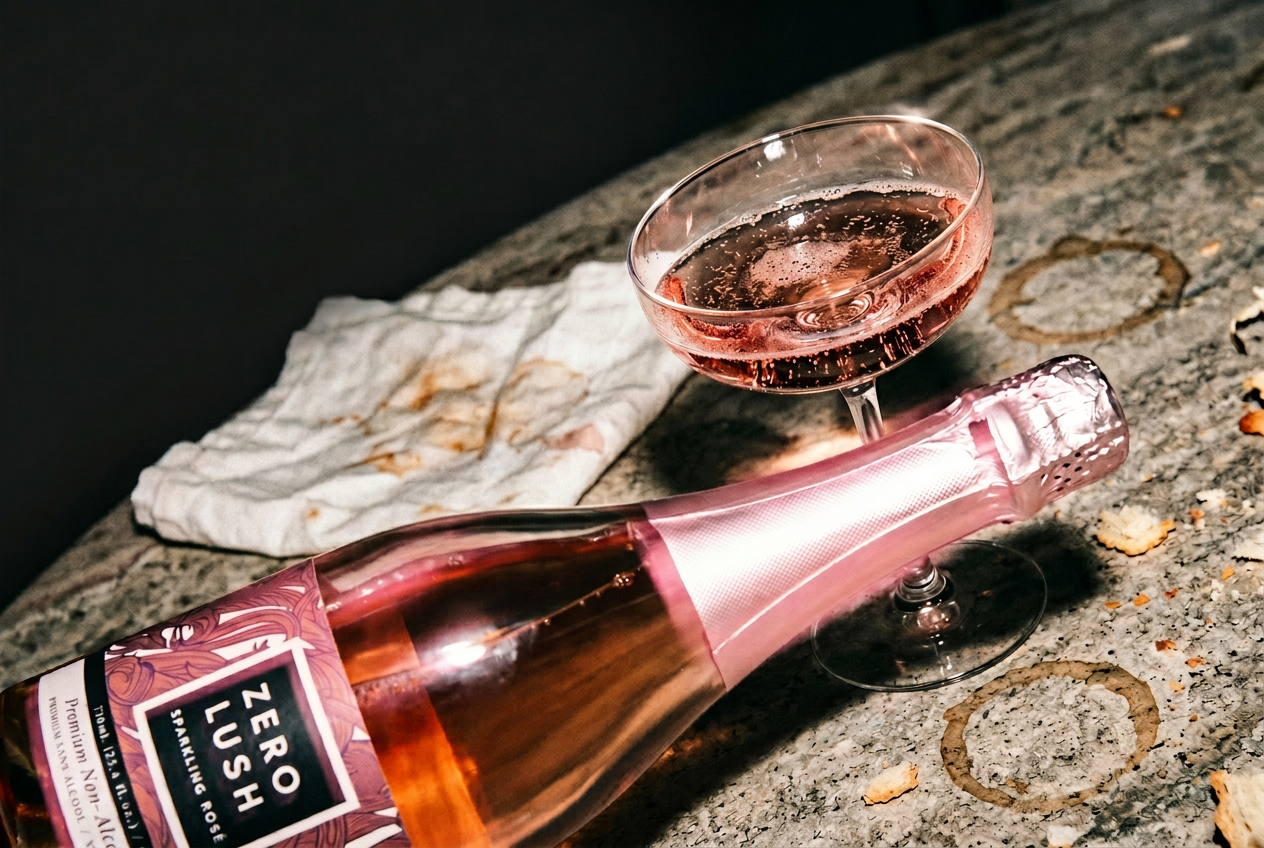
The single variable that determines the right stack faster than any other is the optical complexity of the packaging. Solid opaque packaging is one surface; transparent glass with liquid plus label-through-juice plus back-wall refraction is roughly five surfaces stacked. The two cases are not the same production problem and they should not be priced as if they were.
Solid opaque packaging covers the majority of the CPG catalog. Snack bags (Smackin', Siete, Magic Spoon, Olipop's now-discontinued bag SKUs, Hippeas), paperboard cartons (frozen meals, Mid-Day Squares, oat-milk cartons, supplement packs), tin cans (Olipop, Recess in their original-can configuration, Athletic Brewing, Liquid Death, Aha, Bubly), kraft pouches (coffee, tea, ground spices, Graza-adjacent oil pouches), aluminum bottles (Liquid Death sparkling water, Liquid IV adjacent), and supplement pouches (AG1, Athletic Greens, the Smackin'-adjacent stick packs). On any of these, AI photography on frame one clears the optical bar at $80-$300 per asset against the same brand spine that locks color and lighting. 3D renders fine on opaque packaging, but the math does not justify the master-rig cost because the surface is not the binding constraint. The CPG snack brand Whole Foods buyer meeting playbook covers the AI-primary production sequence that gets a snack brand from the Friday buyer email to placement-day Tuesday inside the two-week window most studios cannot ship against.
Transparent glass plus colored liquid is the case where 3D earns its keep. Sparkling-bottle brands (Zero Lush, Seedlip, Ghia, Curious Elixirs, Recess in glass, De Soi, Casa Lumbre adjacent), wine and spirits at the hero layer (Barefoot at the campaign moment, Maker's Mark at the bourbon hero, premium spirits across the category), functional drinks in glass (the Olipop original master frames, premium kombucha, Health-Ade's glass-bottle hero work), and any brand where the customer reads the liquid color through the front face after light has already refracted through the back face. The four-surface refraction stack — juice refractive index, surface reflection, label-through-juice ghost angle at 35-to-65 degrees off-axis, back-wall second-pass refraction returning light through the front face after it has already passed through the liquid once — is roughly five times the rendering surface area of an opaque carton. The TTB-compliant wine and spirits playbook covers the regulatory layer the optical layer sits inside; both layers run against the same production discipline.
Production-grade AI photography clears the four-surface stack with a glass-library reference per SKU, a calibrated physical capture against the 18 percent grey card under 5500K LED, and a brand spine that specifies refractive index against the actual juice color. Volume AI vendors without that discipline render glass that reads as plastic and labels that read as decals one frame in three or four. 3D guarantees the physics every frame; the cost is master-rig setup, slower per-frame production, and a fixed asset library that does not bend to lifestyle context cheaply. The right stack depends on which trade-off binds the brand harder this quarter.