


Apparel · the US launch playbook

Launching a fashion brand in the USA, from the first sample to the first sale.

Launching a fashion brand in the USA is a sequencing problem before it is a creative one. You have the collection in your head, a factory quote from a cut-and-sew contractor in the Los Angeles Fashion District or the New York Garment District, and a Shopify store half-built — and the question is what order to do everything in so that the day the goods land, the brand is live, the campaign is shot, and the first customer can actually buy. This is the ninety-day playbook for US labels: positioning and brand identity first, US manufacturing and the DTC stack in parallel, the first campaign composed against the brand world before production lands, then the wholesale push toward Nordstrom, Revolve and the specialty boutiques. The brands that survive the first year are not the ones with the best garment. They are the ones whose imagery signaled the price point before the customer read the tag.

By Abhi Chawla, founder · Last updated: 2026-06-19

Launch reference

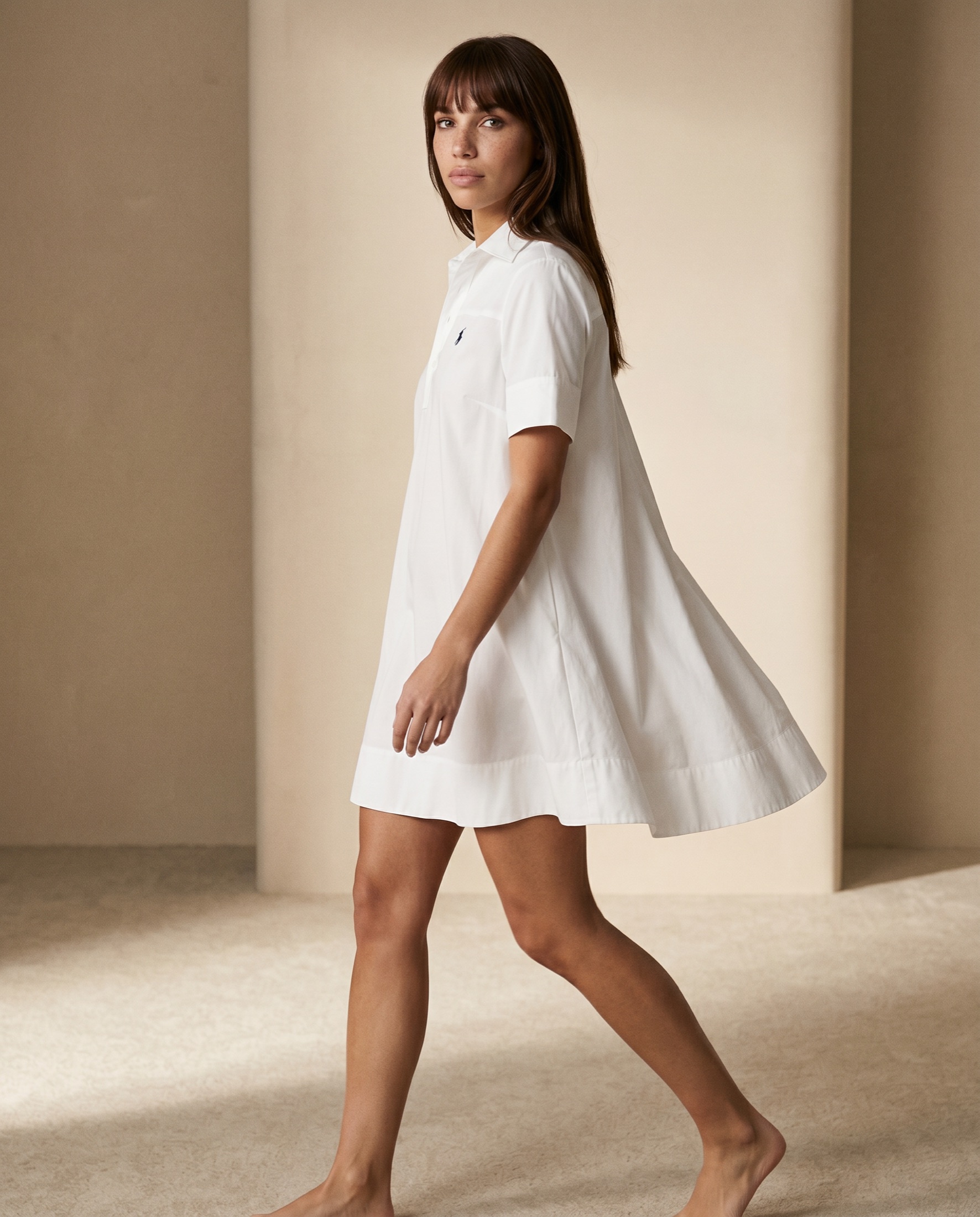
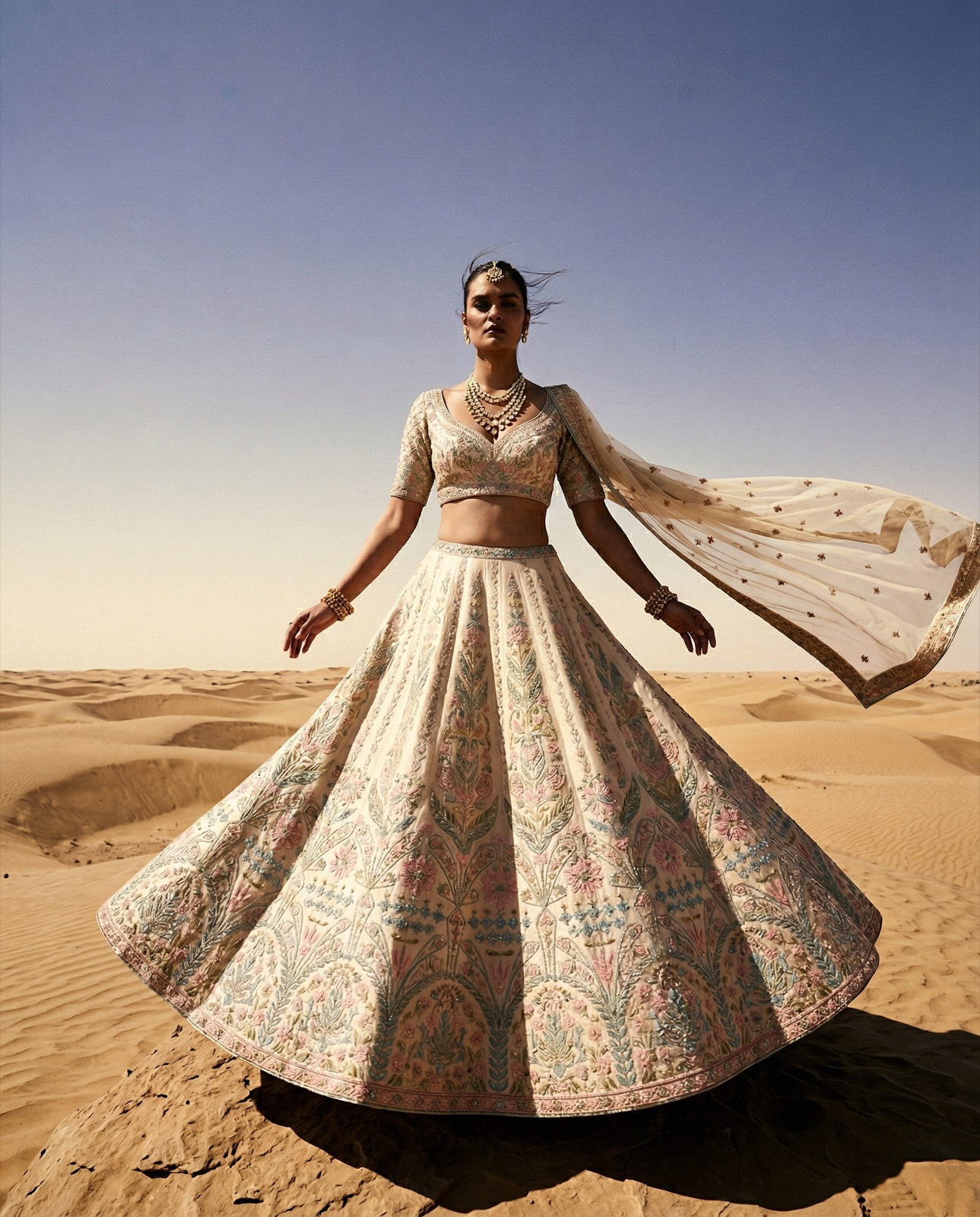
What a US brand world looks like the day it goes live — built for launching a fashion brand in the USA.

You have a factory, a Shopify store and nothing to launch with.

It is the Tuesday night three weeks before your first production run lands at the 3PL. You have spent eleven months getting here. The samples came back from the cut-and-sew contractor in the LA Fashion District on the third revision and they finally fit. The factory in Vernon is running three hundred units across four styles. The Shopify store is built, Klaviyo is wired, the ShipBob account is open, and the domain has been pointed for months. And the question that has been sitting in the back of your mind for weeks is suddenly the only question: what does the brand actually look like when it goes live? You have iPhone photos of the samples on a friend in your apartment. You do not have a campaign.

This is the moment most first-time US founders discover that launching a fashion brand in the USA is not a manufacturing problem. The hard part is not the garment — domestic factories solved that. The hard part is that the day the store opens, the first customer who lands on the Shopify product page or sees the first Meta ad decides in under a second whether this is a forty-dollar fast-fashion piece or a two-hundred-eighty-dollar contemporary one. She decides on the imagery. And the imagery is the line the founder underbudgeted, because a traditional New York or LA launch shoot quotes at twenty-five to ninety thousand dollars and the founder, eleven months and most of the runway into this, simply does not have it.

So the launch goes out on the apartment iPhone photos. The product is genuinely contemporary-tier. The pictures read fast-fashion. And the brand spends its first six months fighting its own imagery — running paid traffic to a PDP that undersells the garment, pitching boutiques with a linesheet that looks like a side project, watching the customer who would have paid two-eighty bounce because the pictures told her forty. The collection was never the problem. The launch system was. Building that system, on a budget that fits a first-year runway, is the launch-strategy work the rest of this playbook lays out.

Positioning and identity, before a single thread is cut.

Everything downstream — the factory you choose, the price on the tag, the buyer who takes the call, the customer who saves the post — is set by the positioning decision you make first. The US contemporary market is brutally segmented and the customer reads the tier instantly. Are you launching at the Reformation, DÔEN, Sézane and Frankie Shop contemporary-women's tier? The Buck Mason, Todd Snyder and Aimé Leon Dore men's tier? The Vuori and Alo activewear-crossover tier? The Cuyana and Quince elevated-essentials tier? Each tier has a different customer, a different price band, a different factory, a different wholesale path and a different visual language. Launching without choosing one is the most common first-year mistake, and it shows up first in the imagery, which has no register to compose against.

Positioning is the document, not the mood board. It names the customer in specifics — her age, her city, the three brands already in her closet, the price she last paid for a dress without thinking about it. It names the price point and the margin math that price has to clear at a keystone-plus US wholesale structure. It names the competitive set so the brand knows what it is standing next to on a Revolve grid or a Nordstrom floor. And it names the brand world — the color register, the light, the environments, the model identity — that every piece of imagery will be composed against. That document becomes the brand-spine, and the launch brand identity for the US market is built directly on top of it.

The identity layer is where the price-point signal gets locked. The wordmark, the type system, the color palette, the photographic register and the way the brand speaks all have to agree on the tier. A contemporary brand whose logo reads streetwear, whose palette reads fast-fashion, and whose photography reads catalog will lose the contemporary customer no matter how good the dress is. The identity is not decoration. It is the instruction set the campaign, the lookbook, the PDP and the paid creative all execute against — so that when a buyer at Saks Fifth Avenue or a customer on Shopbop sees one frame, the entire tier is communicated before a word is read.

US manufacturing, the DTC stack and the wholesale path.

With positioning locked, the operational build runs in three parallel tracks. The first is manufacturing. For a first US run, domestic cut-and-sew in Los Angeles or the New York Garment District usually wins on speed, minimum order quantity and control — a contractor will run one to three hundred units per style on an eight-to-twelve-week lead time and let you sit in the factory fixing fit in person. Unit cost is higher than Portugal, Turkey, India or China, where you cut thirty to sixty percent off the unit but commit to MOQs of three-to-five-hundred units per colorway and twelve-to-twenty-week lead times including freight. Most US labels start domestic for the first one or two seasons to learn fit and demand, then move overseas once volume justifies the minimums. Either way, the tech pack has to be tight enough that you are not on a 2am call over a misread spec.

The second track is the DTC stack, and here the truth is that everyone runs roughly the same one. Shopify for the storefront, Klaviyo for email and SMS, Meta and TikTok for paid acquisition, a 3PL like ShipBob or a regional fulfillment partner, Shop Pay and Affirm or Afterpay at checkout, Gorgias for support, Loop for returns, and Triple Whale or Northbeam for attribution once paid spend gets real. The stack is not the differentiator — it is table stakes. What separates the brands that compound from the ones that stall is whether the imagery feeding that stack reads as one coherent world or as a folder of disconnected shots. LA's content-and-DTC culture has made high-volume creative the price of entry on Meta and TikTok, and the brand that can ship campaign-grade volume is the one whose CAC holds.

The third track is wholesale, and it runs on the linesheet and the buyer relationship. Build a clean linesheet at keystone-plus pricing, get on Faire and NuORDER for discovery, and work the US trade shows — Coterie and Capsule in New York, MAGIC and Project in Las Vegas. The aspirational doors are Nordstrom, Saks Fifth Avenue, Bloomingdale's, Neiman Marcus, Revolve and Shopbop, but those buyers usually open after the specialty boutiques and a season of sell-through data. Every one of those conversations opens with imagery — the linesheet, the lookbook, the campaign. Buyers decide in seconds whether the brand reads at the price on the tag, which is exactly why the wholesale and linesheet imagery has to carry the same brand-spine the DTC campaign does.

The five phases of a US launch, indexed back from the day the store opens.

A focused US launch runs ninety to one-hundred-eighty days from locked concept to first sale. The single mistake that adds three months is sequencing the campaign after production instead of in parallel — the goods arrive and there is nothing to launch them with. Click through the five phases below; the campaign is built alongside production, not after it.

Phase 1 — Lock the positioning

Name the tier, the customer, the price point and the competitive set. Decide where on the US contemporary map you sit — Reformation, Buck Mason, Vuori, Cuyana — and write the positioning document that becomes the brand-spine everything downstream composes against. Two to four weeks, no thread cut yet.

01

Choose the tier before the fabric

The US contemporary market reads tier instantly. Decide whether you sit at the Reformation, Buck Mason, Vuori or Cuyana register before you choose a factory or a fabric, because the tier sets the price, the margin math, the wholesale door and the visual language. A brand with no chosen tier has no register to compose imagery against.

02

Start domestic, move overseas later

An LA Fashion District or NYC Garment District contractor runs one-to-three-hundred-unit MOQs on eight-to-twelve-week lead times and lets you fix fit in person. Learn fit and demand on the first one or two seasons domestically, then move to Portugal, Turkey or India once volume justifies the larger MOQ and the unit-cost saving is real.

03

Shoot the campaign in parallel, not after

The goods arriving with nothing to launch them is the three-month mistake. Build the launch campaign against the brand-spine while production is still on the floor so the store, the email flows and the imagery all go live the same week the units land at the 3PL.

04

Make the imagery signal the price

A US customer decides in under a second whether a dress is forty dollars or two-eighty, and she decides on light, styling, model register and environment — not the garment. A contemporary product photographed like fast-fashion fights its own pictures all year. Lock the price-point signal in the imagery.

05

Build the linesheet as the first impression

Every US wholesale conversation — Nordstrom, Revolve, the specialty boutiques on Faire — opens with the linesheet and lookbook. The buyer decides in seconds whether the brand reads at the price on the tag. The wholesale imagery has to carry the same brand-spine the DTC campaign does, or the two channels contradict each other.

06

Launch the world, not the product

Customers and buyers do not buy a single dress; they buy into a coherent world. Hero, lookbook, PDP, paid creative and feed depth all composed against one brand-spine, shipped from one DAM, reading as one brand. The launch is the moment the entire world becomes visible at once.

The three ways US founders shoot a first launch campaign.

Path A

The traditional NY or LA shoot

Photographer, studio, models, stylist, glam, location, post — a first US launch campaign quotes at twenty-five to ninety thousand dollars and ships once. The quality is excellent inside the shoot, and the cash is exactly the line a first-year runway cannot carry. Most founders price it last, discover the number, and fall back to the apartment iPhone. The math only works for a funded brand with a single tentpole season.

Path B

The iPhone-and-a-friend launch

The default fallback. Free, fast, and real — and it reads fast-fashion no matter how good the garment is. The product is contemporary-tier; the pictures tell the customer forty dollars; the brand fights its own imagery for six months while paid traffic bounces off an under-selling PDP and boutiques pass on a linesheet that looks like a side project. The cheapest path on day one is the most expensive path by month six.

100 Creatives

The brand-world launch system

The full launch system — hero, lookbook, PDP imagery, paid creative and feed depth — composed against a documented brand-spine: positioning, color register, model identity, named environments and the price-point signal the campaign must carry. A fraction of the traditional cash, a two-to-three-week timeline that fits inside the production calendar, and one coherent world feeding the Shopify store, the Meta and TikTok ads and the Nordstrom linesheet from a single DAM.

Why the launch campaign is the line that cannot be cut.

Everything in the ninety-day playbook converges on a single moment: the customer's first second with the brand. She meets it on a Shopify product page, in a Meta or TikTok ad, on a Revolve grid next to four established labels, or in a Nordstrom buyer's inbox alongside a hundred other linesheets. In that second she assigns a price tier, a level of seriousness and a yes-or-no. Nothing upstream — not the factory, not the fabric, not the fit you spent eleven months getting right — survives a first frame that reads at the wrong tier. The launch campaign is the line that cannot be cut, and yet it is the line first-time US founders cut first, because it is the one that arrives with the biggest number and the least obvious return.

The brand-world studio model exists to make that line affordable without making it cheap. The launch campaign studio for US brands composes the full launch system against the brand-spine the positioning and identity work produced — so the hero that runs on the homepage, the lookbook that goes to the boutiques, the PDP imagery that converts the DTC traffic and the paid creative that feeds Meta and TikTok are all the same brand, shot to the same register, signaling the same price. One world, one DAM, one coherent first second, at a fraction of the traditional NY or LA shoot and on a timeline that runs alongside production rather than blocking it.

For the US founder three weeks out from the goods landing with nothing to launch them, this is the difference between a launch that signals the price point and a launch that argues with it. The positioning told the brand what tier it sits at. The identity locked the signal. The manufacturing and the DTC stack make the brand real and sellable. The campaign is what makes the customer believe the price on the tag in the one second she gives the brand before she scrolls. Launching a fashion brand in the USA comes down to that second — and the brands that win it are the ones that built the world before they opened the store.

Launching a fashion brand in the USA · frequent questions

How much does launching a fashion brand in the USA actually cost?

A first US apparel launch done seriously lands between forty and one-hundred-fifty thousand dollars across the first year, depending on tier. The line items: sample development and grading (eight to thirty thousand at a domestic factory in LA's Fashion District or NYC's Garment District, less if you cut-and-sew through a Los Angeles contractor on a small minimum), first production run (fifteen to sixty thousand at a US MOQ of one to three hundred units per style), the Shopify or Shopify Plus stack plus Klaviyo, ShipBob or a 3PL, and the launch campaign imagery. The single line most first-time founders underprice is the campaign. A traditional New York or LA launch shoot quotes at twenty-five to ninety thousand. That is the line a brand-world studio compresses.

Should I manufacture in the USA or overseas for a US launch?

For a first run, domestic cut-and-sew in Los Angeles or the New York Garment District usually wins on speed, MOQ and control even though the unit cost is higher. A US contractor will run one to three hundred units per style against an eight to twelve week lead time and let you sit in the factory fixing fit. Overseas manufacturing in Portugal, Turkey, India or China cuts unit cost thirty to sixty percent but demands MOQs of three to five hundred units per colorway, twelve to twenty week lead times including freight, and a tech pack tight enough that you are not on a 2am call over a misread spec. Most US labels start domestic for the first one or two seasons to learn fit and demand, then move overseas once volume justifies the MOQ.

What does the DTC tech stack look like for a US apparel launch?

The default US DTC stack in 2026 is Shopify for storefront, Klaviyo for email and SMS, Meta and TikTok for paid acquisition, a 3PL like ShipBob or a regional fulfillment partner for shipping, and Shopify Payments plus Shop Pay and Affirm or Afterpay for checkout. Add Gorgias for support, a returns tool like Loop, and Triple Whale or Northbeam for attribution once you are spending real money on paid. The stack is not the differentiator. Every US label runs roughly the same one. What separates the brands that compound is whether the campaign imagery feeding that stack reads as one coherent world or as a folder of disconnected product shots.

How do I get my new brand into US wholesale and retail?

US wholesale runs on the linesheet and the buyer relationship. The path: build a clean linesheet with wholesale and MSRP pricing at a keystone-plus margin, get on Faire and NuORDER for discovery, and work the trade shows — Coterie and Capsule in New York, MAGIC and Project in Las Vegas. The aspirational targets are Nordstrom, Saks Fifth Avenue, Bloomingdale's, Neiman Marcus, Revolve and Shopbop, but those buyers open with the smaller specialty boutiques and the brand's own sell-through data. Every buyer conversation opens with imagery. The linesheet, the lookbook and the campaign are the first thing a Nordstrom or Revolve buyer sees, and they decide in seconds whether the brand reads at the price point on the tag.

How long does it take to launch a fashion brand in the USA?

From locked concept to first sale, a focused US launch runs roughly ninety to one-hundred-eighty days. Positioning and brand identity take two to four weeks. Sample development and fit runs six to twelve weeks against a domestic factory. The first production run adds eight to twelve weeks. In parallel, the brand identity, the launch campaign and the DTC stack get built so that the day production lands, the store, the email flows and the campaign go live together. The mistake that adds three months is sequencing the campaign after production instead of in parallel — the goods arrive and there is nothing to launch them with.

Do I need a New York or LA studio shoot to launch a US fashion brand?

No. The launch campaign is non-negotiable but the traditional NYFW-adjacent studio shoot is not. A first US campaign shot the traditional way — photographer, studio, models, stylist, glam, location, post — quotes at twenty-five to ninety thousand and ships once. A brand-world studio composes the same launch campaign against a documented brand-spine: positioning, color register, model identity, named environments and the price-point signal the campaign has to carry. The output is a full launch system — hero, lookbook, PDP imagery, paid creative and feed depth — at a fraction of the cash and on a two-to-three-week timeline that fits inside the production calendar rather than blocking it.

How do I make sure my brand reads at the right price point in the US market?

Price-point perception is set by the imagery before the customer reads the tag. A US customer scrolling Instagram or landing on a Shopify PDP decides in under a second whether a dress is a forty-dollar fast-fashion piece or a two-hundred-eighty-dollar contemporary one — and she decides on light, styling, model register, negative space and environment, not on the garment alone. This is the failure mode that sinks well-made first collections: the product is contemporary-tier, the imagery reads fast-fashion, and the brand is fighting its own pictures. The brand-spine the launch campaign is composed against locks the price-point signal so the imagery and the tag agree.

What city should I base a US fashion brand in?

It depends on the model. New York concentrates the wholesale and editorial machine — Garment District manufacturing, the trade shows, the press, the buyers at Saks and Bloomingdale's, NYFW adjacency. Los Angeles concentrates the DTC and content machine — the cut-and-sew factories of the Fashion District, the influencer and content-creator economy, the casual-contemporary and activewear register. Miami owns swim and resort through Miami Swim Week. The Midwest and Chicago retail base rewards brands built for real wardrobes over feed spectacle. But the launch does not require a city. The brand world is portable, and the campaign that signals the price point can be composed against the brand-spine wherever the founder sits.

Get the US launch checklist

Launch the world, not the store. We'll build it with you.

If you are launching a fashion brand in the USA — positioning locked or still being decided, factory chosen or still being sourced — send us where you are and we will reply with a plan for the launch campaign system that fits your tier and your runway. Want the full ninety-day launch checklist first? Email abhi@paperkites.co and we'll send the US launch checklist — the sequence, the line items and the imagery system that makes the goods land with a world ready to launch them.

Plan your US launch campaign