
Apparel · Los Angeles creative agency

An apparel creative agency in Los Angeles built for content velocity, not the quarterly shoot.

An apparel creative agency in Los Angeles solves one problem before any other: velocity. The LA growth model runs on paid social, paid social runs on creative volume, and the drop cadence moves faster than any once-a-quarter shoot can feed. A DTC, streetwear, lifestyle or activewear brand at the Reformation, Cuyana, Vuori or Cuts tier needs twenty to sixty fresh ad variations a month just to hold CAC flat, plus a campaign hero per drop, PDP imagery for Shopify, and a lookbook for Revolve and Shopbop merchandising. We produce that whole layer — campaign, paid, PDP, lookbook and feed-depth lifestyle — on a two-week sprint cadence, composed against the brand-spine document the campaign hero is built on, in the sun-drenched California register your customer already recognises. The destination shoot stays for the tentpole. The agency holds the drop calendar and the ad account around it.

By Abhi Chawla, founder · Last updated: 2026-06-19

Campaign reference

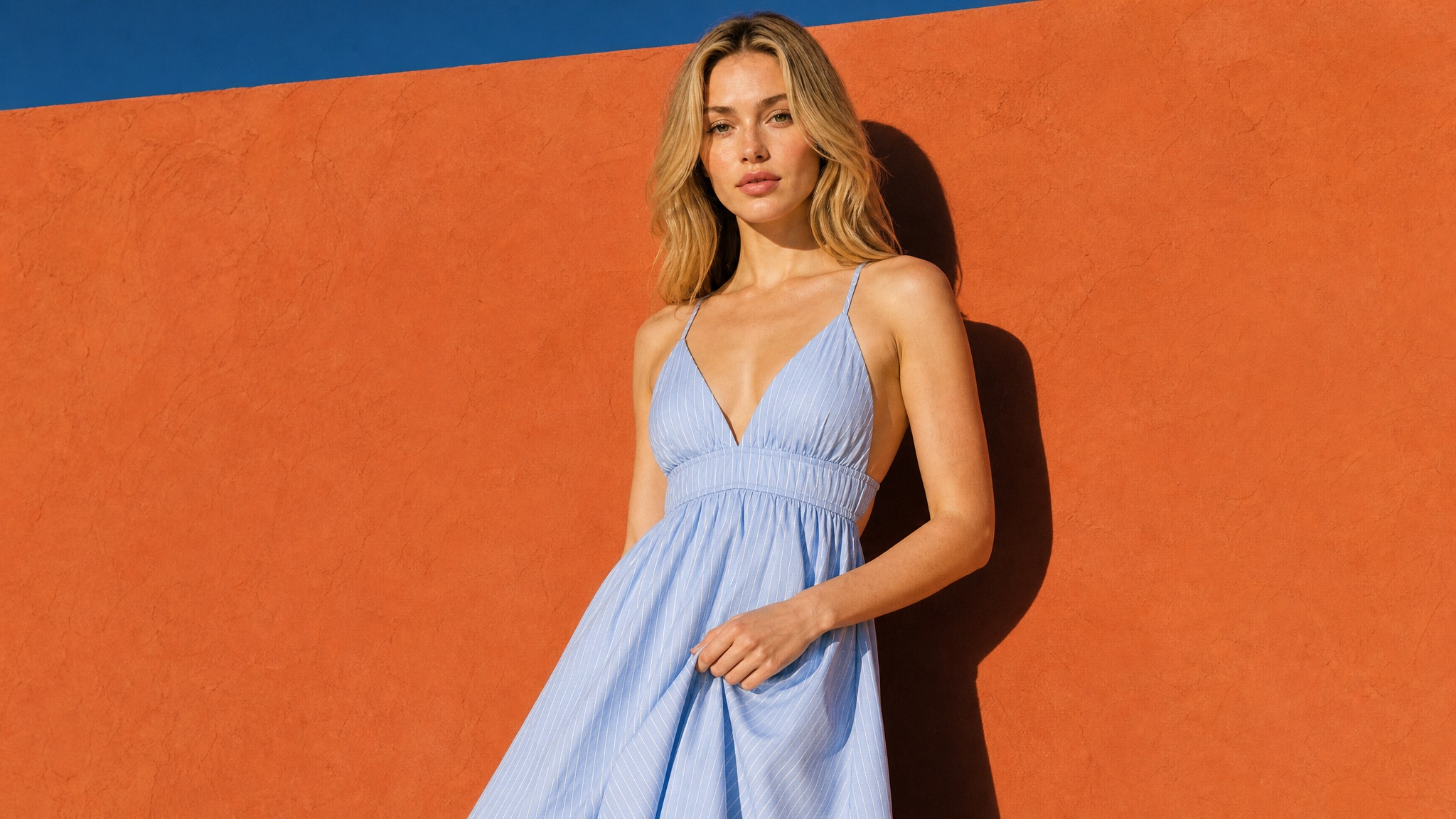
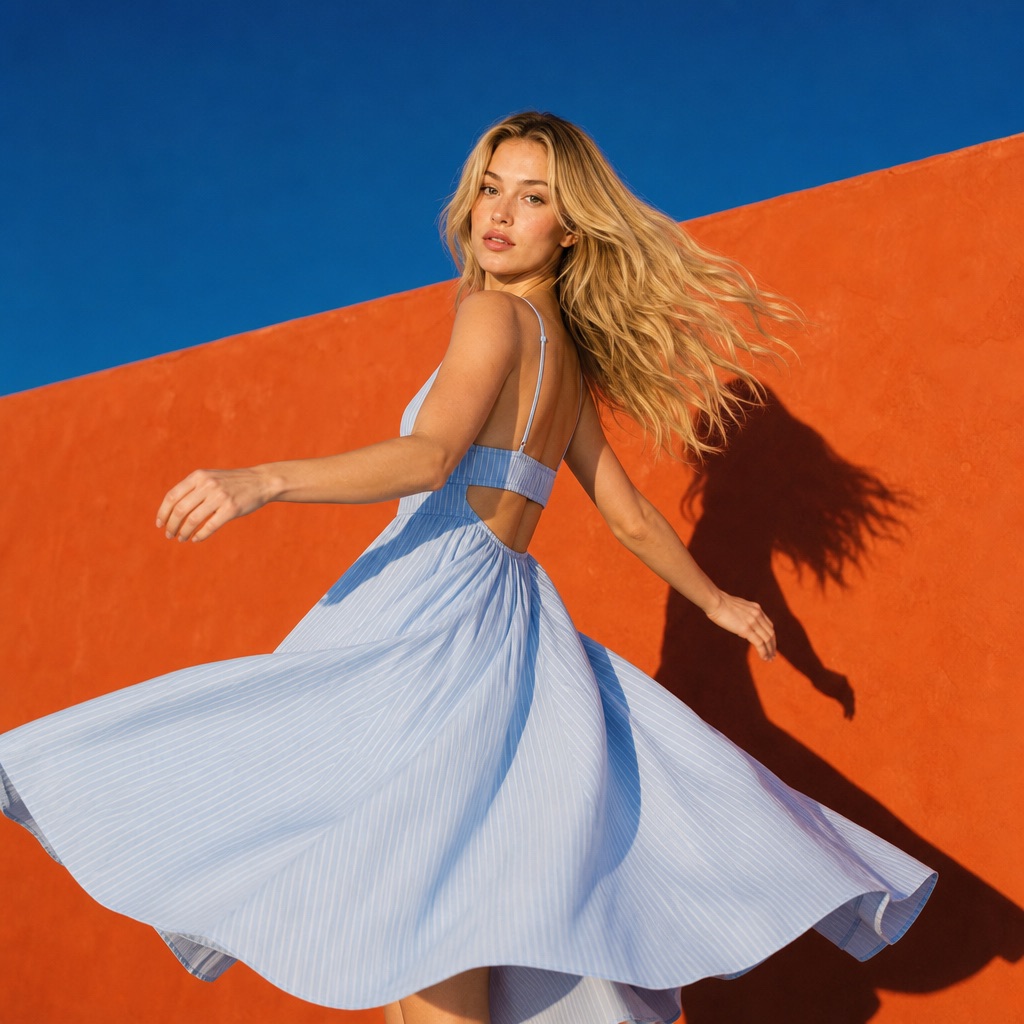
The LA brand world — warm light, named environments, one locked customer — produced as an apparel creative agency at velocity.

The drop shipped, the paid engine ate the creative in three weeks, and the founder is shooting on a phone again.

It is a Monday in an open-plan office somewhere off Beverly or in the Arts District. The founder of an LA activewear label — Cuts tier, doing eight figures, growing on Meta and TikTok — opens the ad account and sees what every LA DTC operator sees by week three of a drop: the winning creative has fatigued. Frequency is up, CTR is down, CPA has crept eleven percent in nine days. The paid lead is asking for fresh variations by Thursday. The last real shoot was the quarterly in Malibu, eight weeks ago, and the team burned through the usable frames in the first three weeks. So the founder does what LA founders do at this point — pulls the new styles onto a rail, books a friend with a Sony, and shoots something in the canyon at the weekend to keep the account fed.

This is not a creative-talent problem. It is a velocity problem wearing a creative problem's clothes. The LA growth model is paid-social-first, and paid social is the most creative-hungry channel in commerce. According to the creative-fatigue economics every performance team in the city is living inside, an apparel ad set fatigues in seven to fourteen days at spend, which means a brand running real budget needs twenty to sixty fresh, on-brand variations every month, every month, forever. The quarterly shoot — even an excellent one — ships forty to ninety frames once. The math between what the ad account consumes and what a shoot day produces does not close at any traditional production model. The gap is exactly where CAC creeps and the founder ends up back on a phone.

An apparel creative agency built for Los Angeles exists to close that specific gap. Not by replacing the tentpole shoot the brand keeps for its signature moment, but by shipping the volume the paid engine and the drop cadence actually need — on a two-week cadence instead of a quarterly one, composed against the brand spine so the canyon weekend never has to happen again. The detail of how that conversion layer is structured sits in the DTC fashion brand content practice; the velocity problem above is the reason it exists.

An apparel creative agency in Los Angeles is not a New York agency with better weather.

The two American apparel capitals run on different physics. New York is calendar-driven — NYFW, the wholesale market, the editorial machine, the show. A campaign there is built to be seen by buyers and editors first and the customer second. Los Angeles is platform-driven. The LA apparel brand is born on Instagram and TikTok, sells direct on Shopify, and treats the feed as the storefront. Reformation, Cuyana, Vuori, Cuts, Alo Yoga, Set Active, Madhappy, Fear of God Essentials — these are not runway brands that happen to post. They are content businesses that happen to make clothes, and the content is the product the customer actually consumes before she buys.

That difference rewrites what a creative agency has to do. A New York apparel agency optimises for the campaign moment. An LA apparel agency optimises for sustained creative throughput at a coherent brand level — because the LA brand does not have one campaign moment a season, it has a feed that never stops and a paid account that never stops eating. The aesthetic is its own dialect too: the warm, sun-drenched California register, golden-hour coastal light, the terracotta-and-stucco palette, the canyon trail, the studio-loft interior, the effortless lifestyle ease that reads as Venice and Silver Lake and Malibu rather than SoHo. Get the dialect wrong and an LA customer clocks it in a quarter-second of scroll.

The local register matters enough that it is worth treating separately from the national service. The broader US apparel creative agency practice frames the whole market — the NYFW campaign tier, Miami Swim Week, Midwest and Chicago retail. The Los Angeles version is the one built for content velocity, paid-social throughput and the fast-drop, sun-drenched reality specific to brands operating out of this city. Same studio, same spine mechanic, a register tuned to the place.

How the brand spine keeps the California look coherent at volume.

The reason most LA brands cannot get to velocity is that volume and coherence usually trade against each other. Shoot more and the look drifts; lock the look and the volume dies on a quarterly cadence. The brand-spine document is how an apparel creative agency in Los Angeles breaks that trade-off. The spine is a single production contract that encodes the brand at the level of physics rather than vibe — the colour register in Pantone-locked sRGB at under three Delta E drift, the light direction in physical units, the named environments the customer recognises, the on-figure styling logic, the negative-space ratio of the campaign hero, and the model identity locked to the season's casting frame.

Once that contract exists, volume stops threatening coherence. Every frame — campaign hero, paid variation, PDP shot, lookbook spread, feed-depth lifestyle — is composed against the same spine, so the sixtieth ad variation of the month reads as the same brand as the campaign hero it sits next to in the feed. This is the difference between an agency and a stock library or a generic AI tool. Stock gives you a model in a dress in the sun. A generic prompt gives you a different model in a different dress in a different sun every time. The spine gives you your customer, your light, your terracotta wall, your canyon trail, fifty times a month, indistinguishable from the named-photographer hero.

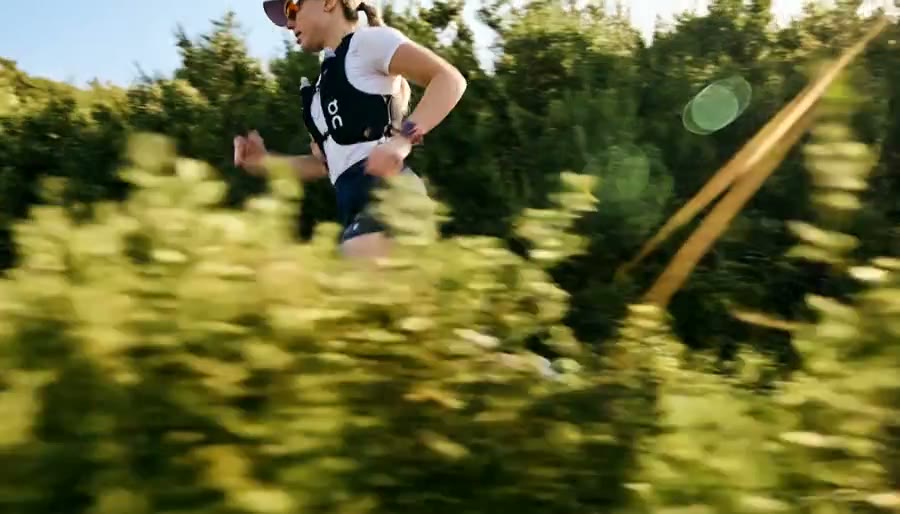
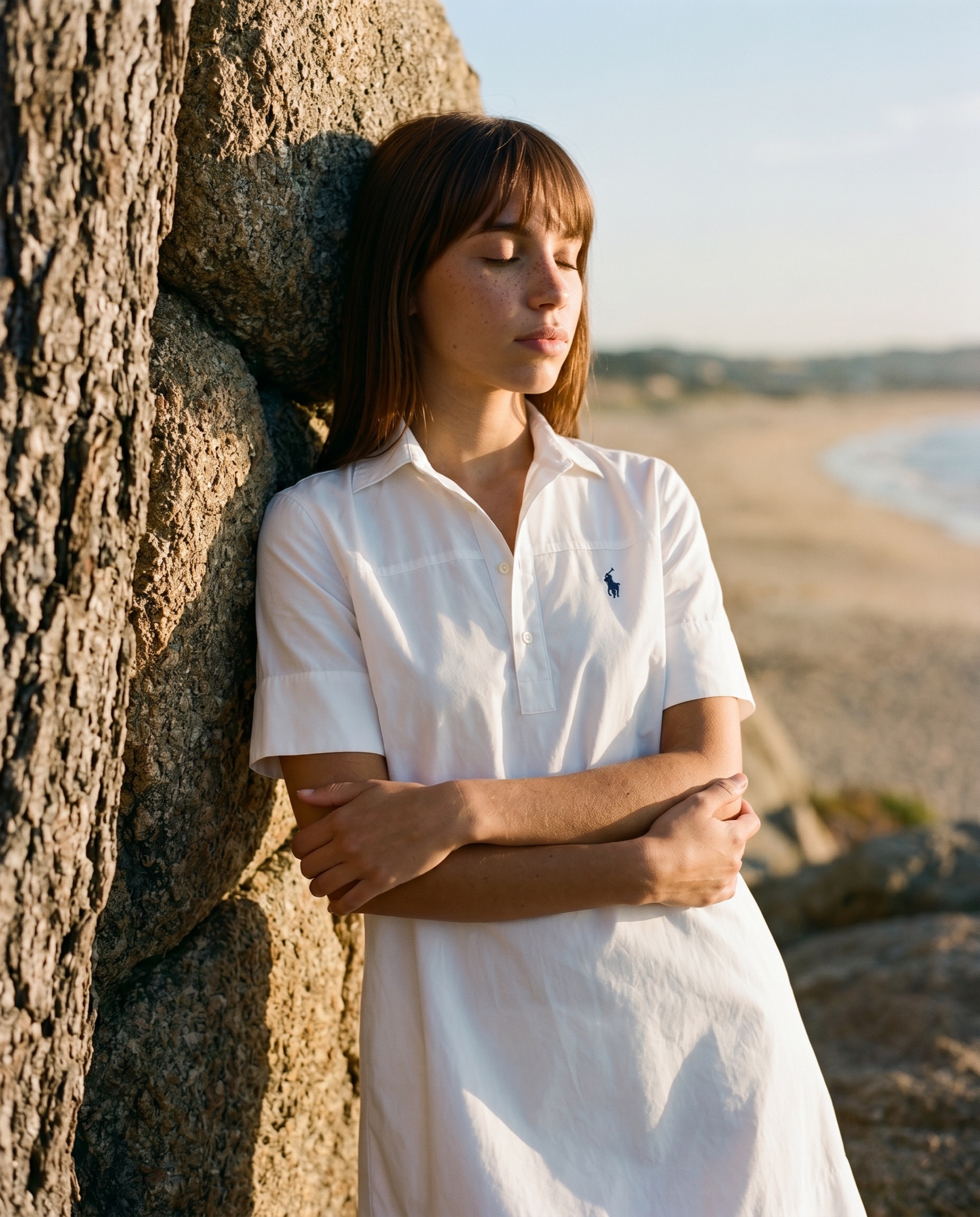
The named environments are where the LA dialect lives inside the spine. For a contemporary womenswear label it is the warm stucco courtyard, the olive tree, the coastal rock face in golden hour. For streetwear it is the harder midday light of the Arts District and the concrete. For activewear it is the canyon trail, the motion, the momentum. The spine names each one, ties it to a time of day and a light direction, and the studio composes against it. The same identity-locking mechanic — one customer across every frame — is documented in depth as part of the apparel brand social campaign engine that the spine feeds.

01

Index the cadence to the ad account, not the calendar

The LA paid engine consumes twenty to sixty fresh variations a month. The sprint ships against that consumption rate, not against a quarterly shoot date. Fresh, on-brand creative lands before the current set fatigues, so CAC holds flat instead of creeping every third week of a drop.

02

Lock the casting frame for the season

One season, one customer. The model identity captured against the spine in week one carries through every frame — hero, paid, PDP, lifestyle — for the duration of the season. The LA customer recognises the face before the wordmark loads, across hundreds of frames.

03

Encode the California light as physics

Golden-hour coastal, warm Mediterranean stucco, hard Arts-District midday — each named environment is tied to a light direction in physical units. The sun-drenched register stays consistent across sprints instead of drifting with whoever held the camera that week.

04

Produce the whole stack, not just the hero

Campaign hero, paid-social variations, Shopify PDP, wholesale lookbook for Revolve and Shopbop, and feed-depth lifestyle — all from one spine in one sprint. The brand stops stitching five vendors into one look and stops paying the coherence tax that comes with it.

05

Make UGC and influencer the texture, not the backbone

The agency layer is the coherent spine the feed is built on; creator and UGC content sits alongside it as authentic reach. With thirty creators in rotation the feed still reads as one brand, because the eye keeps returning to the spine-composed frames between them.

06

Ship cropped to every channel automatically

Every frame lands in the DAM cropped to Meta 1:1 and 4:5, TikTok and Reels 9:16, Pinterest 2:3, email hero 600px and the Shopify PDP module. The paid team and the social manager pull finished assets instead of re-cropping a hero shot at 9pm.

The math

What an LA brand spends to keep the ad account fed — traditional studio versus the agency sprint.

12 drops
30 variations
Traditional LA studio
$0
100 Creatives
$0
You save
$0
per year, same drop + paid coverage

The three ways LA apparel brands try to keep the feed and the ad account fed.

Option A

The quarterly LA production shoot

Forty to one-hundred-eighty thousand all-in per season — Malibu or desert location and permits, talent and SAG considerations, stylist, glam, photographer, assistants, post and contingency, across two to four shoot days and forty to ninety usable frames. The quality is excellent inside the shoot window. The frames are gone in three weeks of paid spend and the next shoot is eight weeks out. The model works for a brand with one campaign a year and a flat feed. It does not work for a paid-social-first brand burning sixty variations a month.

Option B

The in-house phone-and-rail scramble

Effectively free on the invoice, expensive everywhere else. The founder, the designer and a friend with a camera shoot the new drop in a canyon on Sunday to keep the ad account alive. The frames are real and they are off-spec — wrong colour temperature, Stories-first framing, lit by ambient light that does not match the campaign hero two rows up the grid. The LA customer registers the drift before she reads the caption. It buys a week of runway and costs the brand coherence and the founder's weekends, every drop.

100 Creatives

The brand-world agency sprint

Twelve to thirty-four thousand per month against a two-week cadence shipping eighty to one-hundred-sixty frames — campaign hero, paid variations, Shopify PDP, wholesale lookbook and feed-depth lifestyle, all composed against the brand-spine document, all cropped to every channel in the DAM. The casting frame and the California light stay locked across the season. The ad account gets fresh on-brand creative before it fatigues. The destination shoot stays for the tentpole. The agency holds the drop cadence and the paid engine around it.

The two-week sprint, indexed back from the drop calendar and the ad account.

The sprint is the operating system. Week one runs on the brand side: Monday the founder or in-house creative lead sends a one-page brief — the next drop's hero, the paid variations the account needs, the PDP shots for the new styles, the lifestyle frames for the feed — indexed to the drop date and the paid calendar. The brief cites the brand-spine document by section, names the environments per frame, and locks to the season's casting. Wednesday the studio confirms the composition plan. Friday the in-house team signs off. Four touchpoints, roughly six hours of producer time.

Week two runs on the studio side. Monday through Wednesday every frame is composed against the spine — colour register, light direction, named environment, casting identity, negative-space ratio. Thursday first pass lands in the DAM. Friday the in-house lead reviews against the contract and flags anything off-spec; the studio finishes the same afternoon. Friday evening the final wave lands cropped to every channel — Meta 1:1 and 4:5, TikTok and Reels 9:16, Pinterest 2:3, email hero, Shopify PDP module. The paid team has fresh creative for the next fortnight before the weekend, which is the entire point in a city where the ad account never sleeps.

The second-order effect is the one that changes how the team works. The founder stops being the producer and the canyon-on-Sunday photographer. The designer goes back to designing. The growth lead gets the next two weeks of creative visible at the start of every sprint instead of begging for variations on Thursday. That rhythm is the same one we run at the per-drop level in the drop campaign photography practice — the sprint is just the version that never stops, tuned to the LA cadence where the next drop is always two weeks out.

What the first three sprints look like for an LA brand moving onto the agency.

The first sprint is brand-spine ingestion. A four-to-six-hour working session with the founder, the in-house creative lead and the growth lead — walking the existing campaign hero, the season's casting frame, the colour register in Pantone-locked sRGB, the California light direction, the named environments the customer recognises, the styling logic per register. The output is the production contract for the season, signed off by whoever owns the brand. We ship the first wave of frames against it inside the same two weeks, and the founder sees the brand — the real brand, not a stock approximation — land on every frame.

The second sprint is rhythm. The Monday-Wednesday-Friday touchpoints become routine. The growth lead loads the next fortnight of paid against the variations that landed Friday evening. The PDP module on Shopify refreshes against the new shots mid-week. The founder stops scrambling for creative on Thursday because the inventory is finally ahead of the burn rate. For a paid-social-first brand, this is the sprint where the eleven-percent-per-drop CAC creep flattens, because the account is no longer running fatigued creative into week four.

The third sprint is integration. The next drop is briefed against the same spine the current one is running on, so the new campaign and the lifestyle layer that follows it are visually continuous from day one. The wholesale lookbook for Revolve or Shopbop pulls from the same DAM with the spine intact. The influencer and UGC program runs alongside the spine-composed backbone rather than fragmenting the feed. The brand is operating as one coherent world at LA velocity — fast drops, a hungry ad account, a sun-drenched register, all coherent. That is the whole job of an apparel creative agency in Los Angeles.

Apparel creative agency los angeles · frequent questions

What does an apparel creative agency in Los Angeles actually do for a DTC brand?

An apparel creative agency in Los Angeles produces the visual layer a DTC, streetwear, lifestyle or activewear brand runs its whole engine on — the campaign hero per drop, the paid-social creative Meta and TikTok burn through every week, the PDP imagery for Shopify, the lookbook for wholesale and Revolve or Shopbop merchandising, and the feed-depth content that holds the brand world between drops. For an LA brand the defining constraint is velocity: the drop cadence is fast, the paid engine eats creative faster than any quarterly shoot can feed it, and the look has to read as sun-drenched California lifestyle without reading as stock. We ship that volume on a two-week sprint cadence composed against the brand-spine document, not on a once-a-season shoot day.

Why is content velocity the real problem for LA apparel brands?

Because the LA growth model runs on paid social, and paid social runs on creative volume. A DTC or activewear brand at the Vuori, Cuts, Cuyana or Reformation tier needs twenty to sixty fresh ad variations a month to keep CAC flat — Meta and TikTok creative fatigues in seven to fourteen days at spend. A traditional LA production studio shoots once a quarter against forty to ninety frames, which the paid team exhausts in three weeks. The gap between what the ad account needs and what a quarterly shoot delivers is the velocity problem. An apparel creative agency built for LA closes it by shipping fresh, on-brand frames every two weeks instead of every quarter.

How do you keep the sun-drenched LA lifestyle look without it reading as generic stock?

By composing every frame against a brand-spine document rather than a prompt or a stock library. The spine locks the colour register in Pantone-locked sRGB, the light direction in physical units, the named environments — the terracotta stucco wall, the coastal rock face, the canyon trail, the studio-loft interior — the on-figure styling logic, and the model identity locked to the season's casting. Generic stock and generic AI both produce a model in a dress in the sun. The spine produces your brand in the sun, with the same warm Mediterranean light and the same customer the campaign hero was built on. The test on every frame is whether your art director signs it off without notes.

What does an apparel creative agency in Los Angeles cost versus a traditional LA production studio?

A traditional LA campaign shoot for a DTC apparel brand runs forty to one-hundred-eighty thousand all-in per season — location and permits across Malibu, the Arts District or the desert, talent and SAG considerations, stylist, glam, photographer, assistants, post and contingency, against two to four shoot days and forty to ninety usable frames. An apparel creative agency shipping the same coverage as a brand-world studio runs twelve to thirty-four thousand per month against a two-week sprint, producing eighty to one-hundred-sixty frames per month across campaign, paid, PDP and feed, all cropped to every channel. The destination shoot stays for the once-a-year tentpole. The agency holds the drop cadence and the paid engine around it.

Do you work with streetwear and activewear, not just contemporary womenswear?

Yes. The LA apparel landscape spans contemporary women's at the Reformation, Cuyana, DÔEN and Faithfull tier; streetwear and elevated basics at the Fear of God Essentials, Madhappy, Born X Raised and Bricks & Wood tier; and activewear at the Vuori, Cuts, Alo Yoga and Set Active tier. The brand-spine mechanic is identical across all three — what changes is the register: the named environments, the styling logic, the casting frame and the light direction. A streetwear drop wants harder light and an Arts District backdrop; an activewear brand wants a canyon trail and motion; a contemporary label wants warm coastal lifestyle ease. The spine encodes whichever one is yours.

How fast can you turn around a drop campaign?

On the two-week sprint, a full drop campaign — hero, paid-social variations, PDP imagery and feed-depth lifestyle — ships inside one cadence once the brand-spine document is locked. The first sprint includes spine ingestion, a four-to-six-hour working session that produces the production contract for the season. From the second sprint on, the brand briefs on Monday, the studio composes by Wednesday, the in-house team reviews Friday, and the finished frames land in the DAM cropped to every channel by Friday evening. For an LA brand running a monthly or fortnightly drop cadence, this means the creative is ready before the drop date instead of three weeks after it.

Can the imagery feed our influencer and UGC program instead of replacing it?

Yes — and that is usually the right structure for an LA brand. UGC and influencer content carry authenticity and reach; they do not carry the brand spine. The agency-produced layer is the coherent backbone the feed is built on — campaign hero, paid creative, PDP, lookbook, named-environment lifestyle — and the influencer and UGC content sits alongside it as the authentic texture. When the backbone is composed against the spine, the feed reads as one brand even with thirty creators in rotation, because the customer's eye keeps returning to the coherent frames between the UGC. The two layers are complementary, not a choice.

Where does an LA apparel creative agency sit alongside the national and DTC services?

The Los Angeles practice is the local register of a national apparel creative agency service. The national service frames the full US market — NYFW campaigns, Miami Swim Week, Midwest retail. The Los Angeles version is built specifically for the LA content-velocity, paid-social and fast-drop reality. Alongside it sit the DTC fashion content service for the conversion layer, the apparel brand social campaign service for the paid and organic feed engine, and the drop campaign photography service for the per-drop hero and launch layer. The brand-spine document is the shared parent across all of them.

Keep the ad account fed

Bring us the drop calendar. The creative will be ahead of the burn rate.

If you are a founder, brand director or head of growth at an LA DTC, streetwear, lifestyle or activewear label and the ad account is running fatigued creative into week four of every drop — send your brand and we will reply with a plan. The brand-spine document will be locked in the first sprint, the casting frame and the California light will stay locked across the season, and the campaign, paid, PDP and feed layers will ship on a two-week cadence ahead of your drop calendar. Send your brand and we will reply with a plan — abhi@paperkites.co.

Book a content-velocity call