Canada · independent apparel campaigns

Apparel campaign photography in Canada, built like a national brand on an indie budget.

Apparel campaign photography in Canada usually means one of two things: a twenty-eight-to-seventy-thousand-dollar studio shoot in Toronto or Vancouver that ships once a year, or a Sunday iPhone session that never looks like the Aritzia frame sitting next to it on the feed. There is a third path. We produce campaign-grade imagery for independent Canadian fashion labels — the hero that sets the price point, the lookbook that carries the season, the PDP frames that convert, the paid cuts that run the feed — all composed against one locked brand spine so the collection reads as a single brand. Studio quality, a fraction of the cost, shipped in days, not the six-week cycle. Registered in Calgary, working with labels in Toronto, Vancouver, Montreal and everywhere a Canadian brand is trying to look bigger than its production budget.

By Abhi Chawla, founder · Last updated: 2026-06-19

Campaign reference

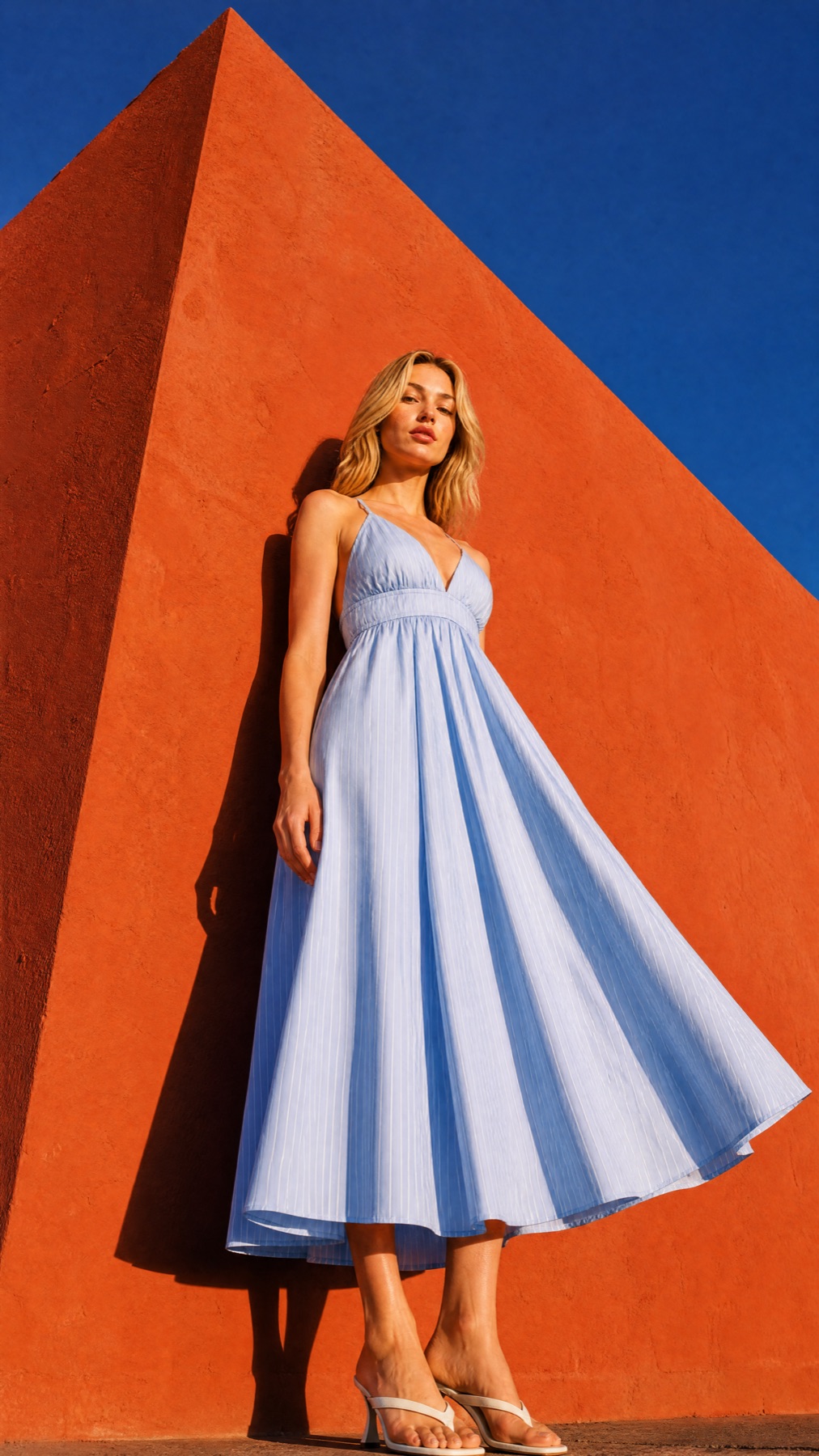
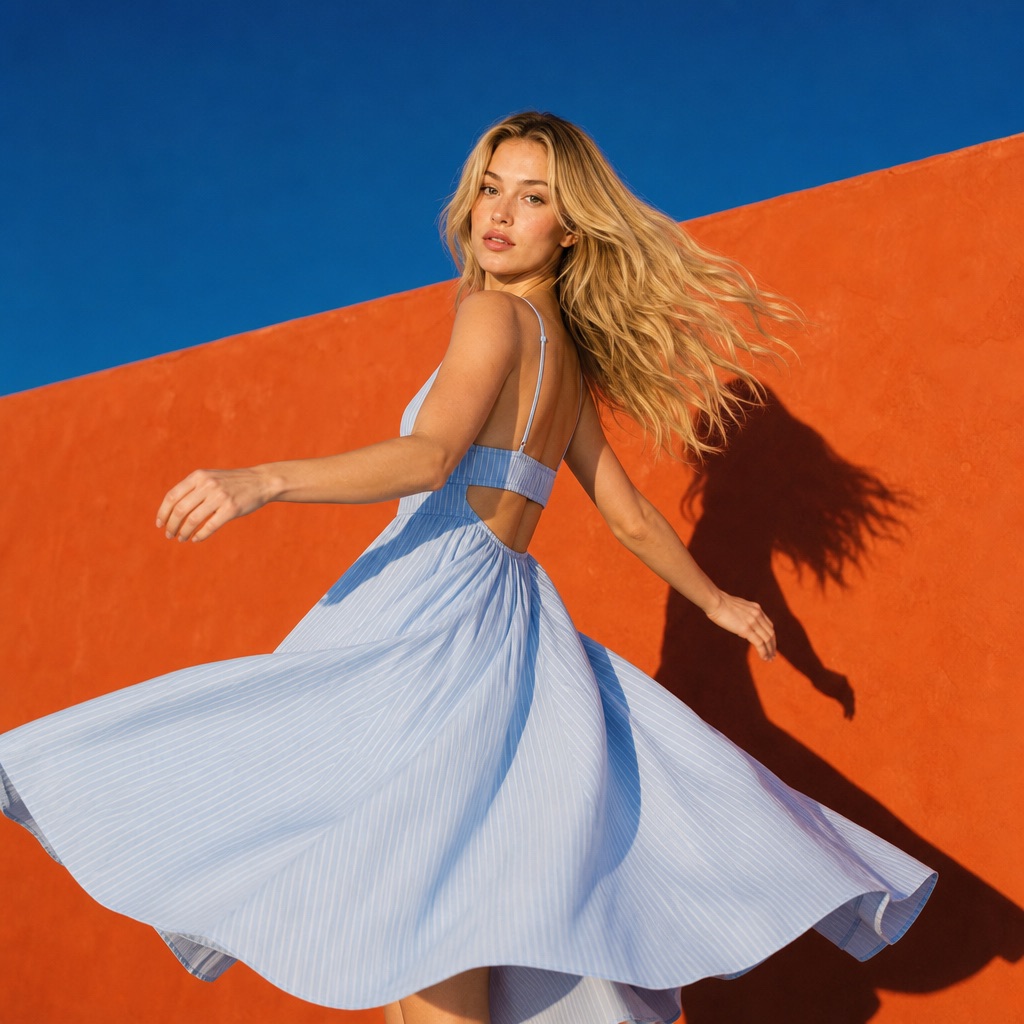
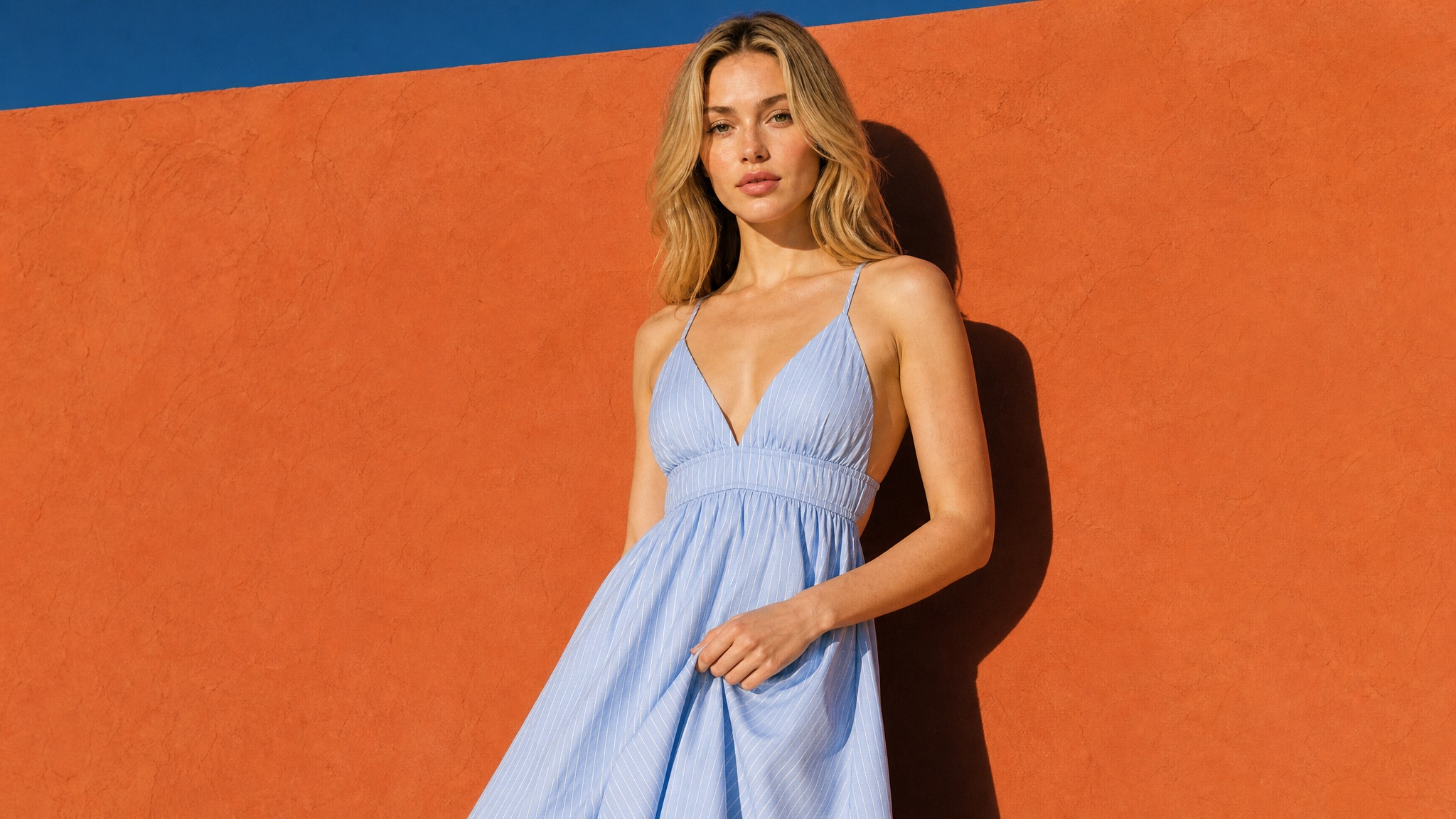
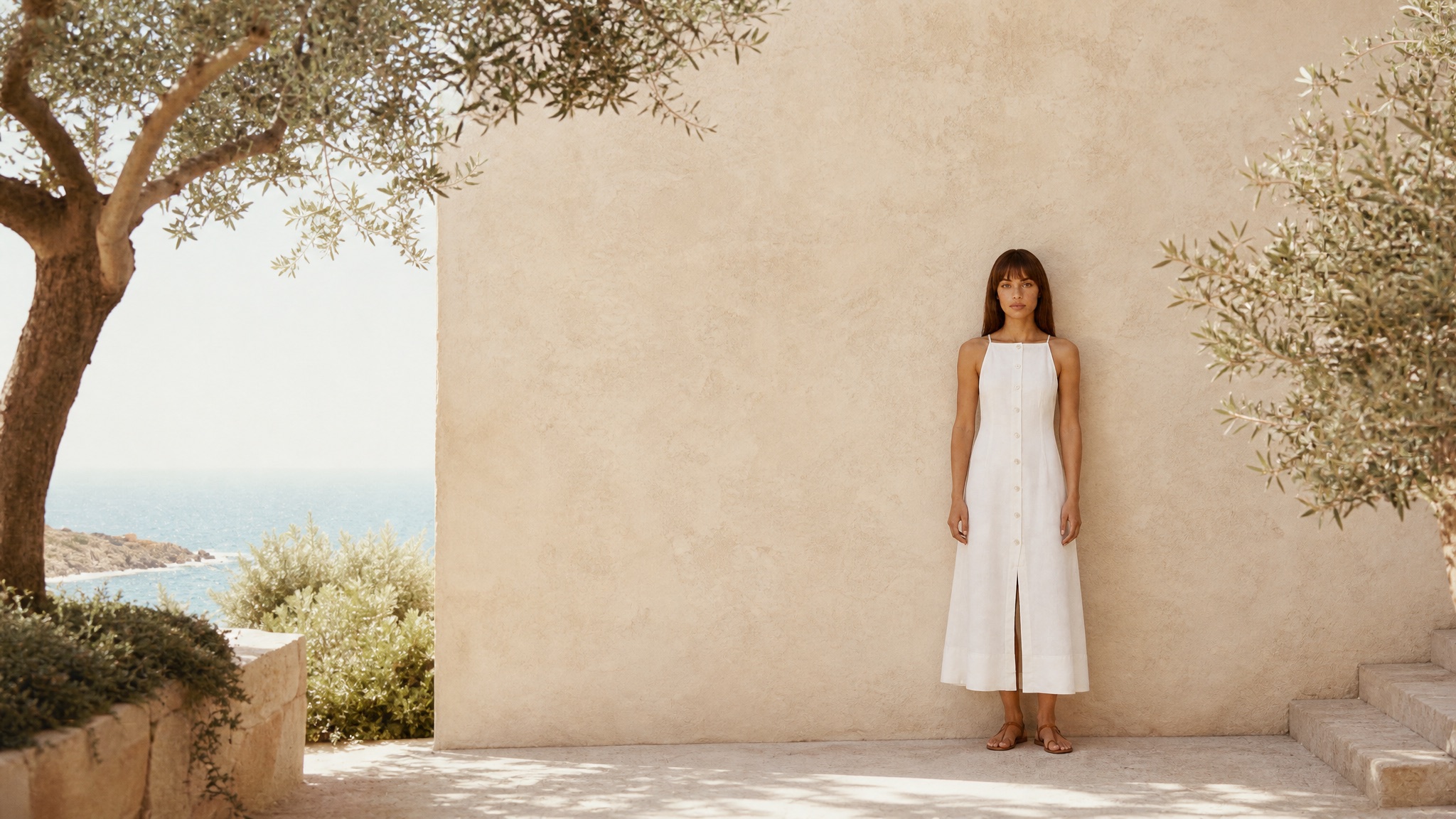
A Canadian contemporary campaign held inside one brand spine — produced as apparel campaign photography in Canada.

The Toronto studio came back at forty-two thousand.

It is a Tuesday in February and the founder of a four-year-old contemporary label out of Toronto is reading a production quote. Spring-summer is the collection she has bet the year on — twenty-two SKUs, a new linen program, the first proper outerwear piece. She briefed three studios. The good one in the east end came back at forty-two thousand for a two-day shoot: photographer day-rate, a studio at twenty-two-hundred a day, a stylist, glam, three models, two assistants, retouching at ninety a frame, and a contingency line because it always rains in May. Forty-two thousand for roughly sixty usable frames. She has eleven thousand dollars budgeted for imagery this season.

This is the structural problem with apparel campaign photography in Canada. The market is thin, the senior photographers price against the US studios they also shoot for, and the fixed costs of a real campaign day — crew, studio, models, retouch, GST — do not scale down for an indie label. A national name like Aritzia or Sentaler absorbs a seventy-thousand-dollar campaign across a quarter of national revenue and never feels it. The four-year-old label feels every dollar, and the math punishes exactly the brands that most need to look established. So the founder does what most founders do: she cuts the line, the team shoots something on a phone the weekend before the drop, and the spring campaign goes live looking like a different brand than the fall one did.

The work itself is not the problem. The Toronto studio would have shot a beautiful campaign. The problem is that the price of campaign-grade imagery in Canada is structured for brands that run one tentpole a year, and a growing independent label runs two to four. The fix is not a worse shoot. It is a different production model — one that moves the expensive, repeatable parts of a campaign off the shoot day and onto a brand spine the brand owns, so the second campaign costs a fraction of the first and still reads as the same brand.

What you are actually paying for in a Canadian campaign shoot.

Break a forty-thousand-dollar Toronto campaign into its parts and almost none of it is the photograph. The photographer's creative day-rate is six to twelve thousand across two days. The studio rental is four to six. Two to four models through a Canadian agency, with usage rights for paid social, runs eight to sixteen. Stylist, glam and assistants add six to ten. Retouching sixty frames at ninety to one-fifty each is another five to nine. Add producer time, equipment, catering, the contingency day for the May rain, and the agency's twenty-percent markup, and the campaign is forty thousand before a single frame is delivered. The image is maybe fifteen percent of the invoice. The other eighty-five percent is the logistics of getting human beings into a room on a specific day.

The thinness of the Canadian market makes every line worse. There are fewer studios in Calgary or Montreal than in New York, so studio rental holds firm. There are fewer working fashion photographers, so the good ones are booked and priced accordingly. Model agency rosters are smaller, so the rate for the right face is higher and the usage negotiation is stiffer. A brand in Vancouver shooting resort imagery often flies the production somewhere with the right light, which adds travel, per-diems and a lost day each way. None of this is anyone gouging — it is a small market doing expensive, physical, weather-dependent work. It is simply structured against the independent label.

The brands that escape the math are the ones that stop paying for the logistics and start paying for the imagery. Once the colour register, light direction, casting identity and environment language are locked into a brand spine, the per-campaign cost collapses to composition and finishing — there is no second studio booking, no second model usage negotiation, no second weather day. This is the same logic a brand director uses when choosing a campaign studio for an independent label over a freelance crew: pay once for the system, then ship every season against it.

How a campaign ships in days instead of six weeks.

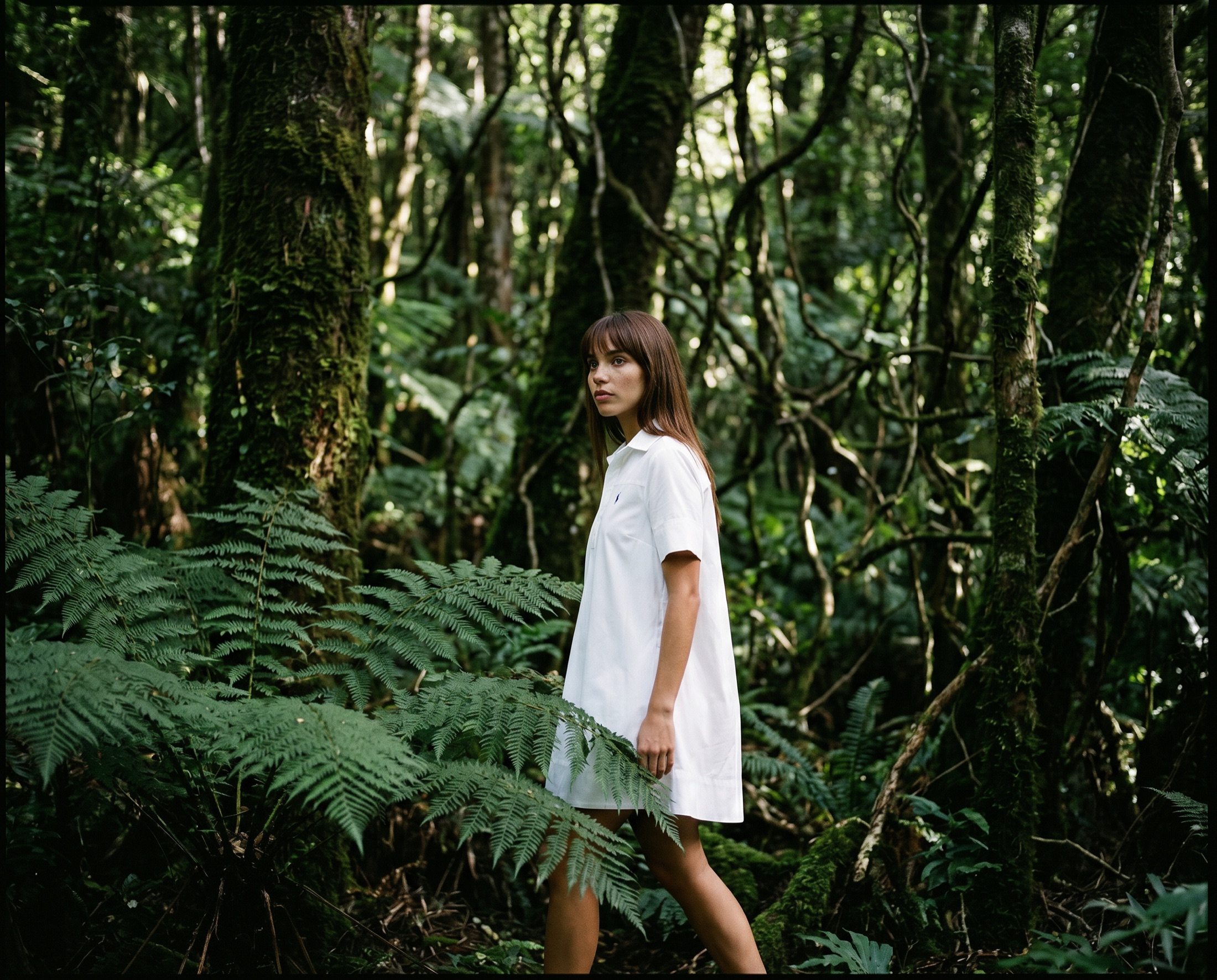
The production model is brand-spine-first. Before any frame is composed, the season is locked to a one-page production contract: the colour register in Pantone-locked sRGB at under three Delta E drift, the light direction in physical units, the casting identity that carries across every frame, the negative-space ratio the brand reads premium against, and the named environments the Canadian customer recognises — the contemporary terracotta-and-cobalt summer register, the moss-and-fern Pacific Northwest editorial, the sand-plaster coastal calm. The spine is the expensive part, and it is built once. Every frame in the season is then composed against it, which is why the second campaign costs a fraction of the first.

That spine is what makes the campaign read as one brand rather than a folder of nice photos. A label without it ends up with a spring campaign at one colour temperature and a fall campaign at another, a summer casting that looks nothing like the resort casting, and a feed that reads as three brands. The spine fixes the registers so the customer scrolling in October recognises the same brand she saved in April. It is the difference between an apparel campaign and an apparel photoshoot — the photoshoot produces images, the campaign produces a season that compounds.

On the calendar, that means a two-week sprint instead of a six-to-eight-week studio cycle. Week one is brand-spine lock and composition planning against the brief. Week two is first-pass composition, a brand-director review against the spine — same review an art director runs in a Toronto studio, just against a document instead of a contact sheet — finishing, and delivery into the brand's DAM cropped to every channel the season needs. A founder who comes to us a month out from a launch still makes the drop date. The studio shoot that needs the room booked, the photographer's calendar, four models' availability and a clear-weather window simply cannot move that fast, which is why so many Canadian campaigns ship late or ship thin.

One production, four outputs the season actually needs.

A campaign is not one image — it is a funnel of frames doing different jobs, from the hero that sets the price point down to the paid cut that runs the feed. The traditional model shoots these as separate days; the brand-spine model produces all four from one production, composed against the same spine so they read as one season. Click through the stages to see what each frame is for and what it replaces in a traditional Canadian shoot.

The hero — the frame that sets the price point

The signature campaign image: the look, the light and the environment that tell a customer in two seconds what the season costs and who it is for. In a Toronto studio this is the frame the whole forty-thousand-dollar day is built around. On the brand-spine model it is composed first, against the locked colour register and casting identity, and becomes the reference every other frame in the season is matched to. One hero, one price-point signal, the anchor for the world.

The three ways a Canadian label gets a campaign shot today.

Tier 1

The Toronto / Vancouver studio shoot

Twenty-eight to seventy thousand dollars for a two-day campaign — photographer, studio at fifteen-hundred to three-thousand a day, three to four models with paid-usage rights, stylist, glam, assistants, retouch at ninety to one-fifty a frame, GST and agency markup. The output is genuinely excellent. It ships once, six to eight weeks out, and the math only closes for a brand running a single tentpole a year. The independent label books it once, loves it, and then cannot afford the second one.

Tier 2

The freelancer and the weekend phone shoot

Eight hundred to four thousand for a half-day with a freelance photographer, or free with an iPhone the weekend before the drop. Fast and cheap. But there is no brand spine, so the colour temperature drifts from the last campaign, the casting changes every season, and the frames sit next to the Aritzia post on the same feed looking like a different category of brand. The customer reads the inconsistency before she reads the caption. The brand stays looking small precisely when it is trying to look established.

100 Creatives

The brand-spine campaign studio (us)

Campaign-grade imagery at eighty to one-hundred-eighty dollars per frame against the four-hundred to twelve-hundred a traditional Canadian shoot runs — hero, lookbook, PDP and paid cuts produced from one brand spine, shipped on a two-week sprint into your DAM cropped to every channel. Registered in Calgary, working across Canada. The first campaign locks the spine; every campaign after costs a fraction and reads as the same brand. The studio shoot stays for the once-a-year tentpole the brand chooses to keep.

The math an independent Canadian founder can actually model.

Run the numbers a founder actually faces. An independent Canadian label running three campaigns a year on the traditional model is looking at eighty-four to two-hundred-ten thousand dollars in production — three studio days at twenty-eight to seventy thousand each. Almost no label between half a million and twenty million in revenue can carry that, so the real-world behaviour is one paid campaign and two improvised ones, which means one season that looks like a national brand and two that look like a side project. The brand the customer sees is the average of the three, and the average is dragged down by the two that were never properly shot.

On the brand-spine model the first campaign carries the spine-build cost and lands meaningfully below a single studio day; every campaign after is composition and finishing only, at eighty to one-hundred-eighty dollars per frame. Three full campaigns a year — hero, lookbook, PDP and paid cuts for each — come in under what a single traditional studio shoot costs, and all three read as the same brand because all three were composed against the same spine. The founder stops choosing which season gets to look good. Every season gets to look like the national name the brand is competing against on the feed.

There is a second-order economic the invoice never shows. The founder gets the production weekends back — no Sunday phone shoots, no chasing a freelancer's calendar, no weather-day anxiety. The drop dates stop slipping because the campaign no longer depends on a studio booking and four models being free on the same Tuesday. For a label deciding whether to keep production in-house or hand it to an apparel creative agency in Canada that runs the full funnel, the recovered founder time is often worth more than the cash saving. The cash saving is just what makes the decision easy.

The campaign is one layer of a Canadian brand world.

Apparel campaign photography in Canada is the seasonal output of a larger system. Upstream sits the fashion brand identity the campaign is composed against — the positioning, palette and visual logic that becomes the brand spine. Around it sits the question of which partner runs the work: a freelance crew per shoot, or a campaign studio built for independent labels that locks the spine once and ships every season against it. And when a brand wants the full funnel run end to end — identity through campaign through lookbook through feed — that is the apparel creative agency model the campaign sits inside. This page is the campaign layer specifically: the seasonal imagery, the per-frame economics, the two-week sprint that gets a Canadian drop shot on time and on budget.

For the founder reading a forty-two-thousand-dollar quote on a Tuesday with eleven thousand in the imagery line, the answer is not a worse shoot. It is a production model where the expensive part is built once and owned, the per-frame cost is one a CFO can model, and the brand finally looks the size it is trying to become — across every season, not just the one the budget allowed. Studio quality. A fraction of the cost. Shipped before the drop date, from a studio that knows the Canadian register because it was built for it.

Apparel campaign photography canada · frequent questions

What is apparel campaign photography in Canada?

Apparel campaign photography in Canada is the campaign-grade imagery a Canadian fashion label commissions to launch a season — the hero frame that sets the price point, the lookbook that carries the collection, the PDP frames that convert and the paid-ready cuts that run the feed. The difference from a generic product shoot is that every frame is composed against a locked brand spine — colour register, light direction, casting identity, named environments — so the season reads as one brand. For an independent label in Toronto, Vancouver, Calgary or Montreal, it is the difference between looking like a national brand and looking like a Shopify store with good clothes.

Why do Canadian apparel brands pay so much for campaign photography?

Because the Canadian production market is thin and priced against the US studios most senior fashion photographers also work for. A two-day campaign shoot in Toronto or Vancouver — photographer day-rate, studio rental at fifteen-hundred to three-thousand a day, stylist, glam, two to four models, assistants, retouching at sixty to one-hundred-fifty per frame, plus the GST and the agency markup — lands a contemporary label between twenty-eight and seventy thousand dollars for forty to ninety usable frames. The work is excellent. The math only closes for a brand running one tentpole campaign a year, which is not how a growing Canadian label actually operates.

How does 100 Creatives ship campaign photography cheaper without it looking cheaper?

By moving the expensive parts of the shoot into a brand-spine document instead of a shoot day. The colour register in Pantone-locked sRGB, the light direction in physical units, the casting identity and the named environments are locked once, then every frame is composed against that spine. There is no location scout, no weather day, no four-person crew on a clock, no model travel. The brand director reviews against the same spine an art director would sign off in a Toronto studio. The output is campaign-grade at eighty to one-hundred-eighty dollars per frame against the four-hundred to twelve-hundred a traditional Canadian shoot runs, shipped in days rather than the six-week studio cycle.

Do you only work with Calgary brands, or all of Canada?

All of Canada, and beyond. The studio is registered in Calgary, Alberta, but the production is remote-first by design — there is no physical shoot day to travel to. We work with labels in Toronto, Vancouver, Montreal, Calgary and the smaller markets in between, plus international brands. The Canadian context matters for the work itself: we shoot against the light, environments and customer register a Canadian apparel customer actually recognises — the Aritzia-tier contemporary register, not a generic agency house style imported from elsewhere.

What does a Canadian apparel campaign actually include?

A full season pack moves through four stages of one funnel. The hero frame — the signature campaign image that sets the price point. The lookbook — the eighteen to thirty-frame seasonal artefact the customer scrolls and the wholesale buyer flips. The PDP and ecommerce frames — on-figure and detail frames cut to the dot-com grid that do the converting. The paid and feed frames — every campaign look cropped to Instagram one-to-one, four-by-five, nine-by-sixteen, TikTok and Pinterest so the season runs paid without a second shoot. One brand spine. One casting identity. Four outputs from one production.

How fast can you turn a campaign around for a drop date?

On a two-week sprint indexed back from the drop date, versus the six-to-eight-week cycle a traditional Canadian campaign shoot books. Week one is brand-spine lock and composition. Week two is first pass, brand-director review against the spine, finishing and DAM ingestion cropped to every channel. A label that comes to us four weeks out from a launch still makes the date. The shoot that needs the studio booked, the photographer's calendar, the model availability and a weather window does not have that flexibility.

Will the imagery match the rest of our brand if we already have a campaign look?

Yes — that is the entire point of composing against a brand spine. If you already have a campaign hero, a lookbook or an identity system, the first sprint ingests it: we lock the colour register, light direction, casting frame and negative-space ratio off your existing work so the new frames read as the same season, not a different studio. The test on every frame is whether your existing art director would sign it off without notes. If you are building the identity at the same time, that upstream work is the spine the campaign is composed against.

What size of Canadian apparel brand is this for?

Independent Canadian labels roughly between half a million and twenty million in revenue, running two to four seasonal campaigns a year, with a small in-house team and a brand the founder takes seriously. Contemporary womenswear at the Aritzia, Frank And Oak, Smythe, Sentaler register; menswear and crossover labels; activewear at the Lululemon-adjacent indie tier. The brand that wants to look like a national name on a feed that runs against national names, without paying the national-name production rate.

Book a campaign call

Bring us the next season. It will ship on time and on budget.

If you are a founder or brand director at an independent Canadian apparel label — Toronto, Vancouver, Calgary, Montreal or anywhere in between — staring at a studio quote you cannot justify with a drop date you cannot move, send us the collection and your existing campaign look. We will lock the brand spine in the first week, ship the hero, lookbook, PDP and paid cuts on a two-week sprint, and deliver into your DAM cropped to every channel. Studio quality, a fraction of the cost. Send your brand and we'll reply with a plan — abhi@paperkites.co.

Book a campaign call