For performance marketers staring at the Q-end review slide

Ad creative volume for Meta when CAC is rising.

The Q-end review was Friday afternoon. The CAC slide showed it up thirty percent against plan, with cold prospecting frequency at 3.4, CTR-link below 0.9 percent, and CPM twenty-eight percent above the trailing thirty-day median. The diagnosis column had two words. Creative fatigue. Your team ships ten to twelve finished concepts a week and the auction wants thirty to eighty.

Ad creative volume for Meta when CAC is rising is a specific production discipline — thirty to one hundred and twenty net-new statics and motion variants per week, organized by hook, format, and angle on a 7-2-1 weekly rotation, briefed Monday and live in the ad account by Friday, composed against a single locked brand spine so the volume does not fragment the brand. We produce that volume on a performance creative retainer for DTC brands between ten million and one hundred million ARR who have run out of room inside the in-house creative pod, with a 48-hour revision SLA and the auction-level frequency, CTR, and CPM thresholds the system is scoped against.

Last updated: 2026-05-11

Reference frame

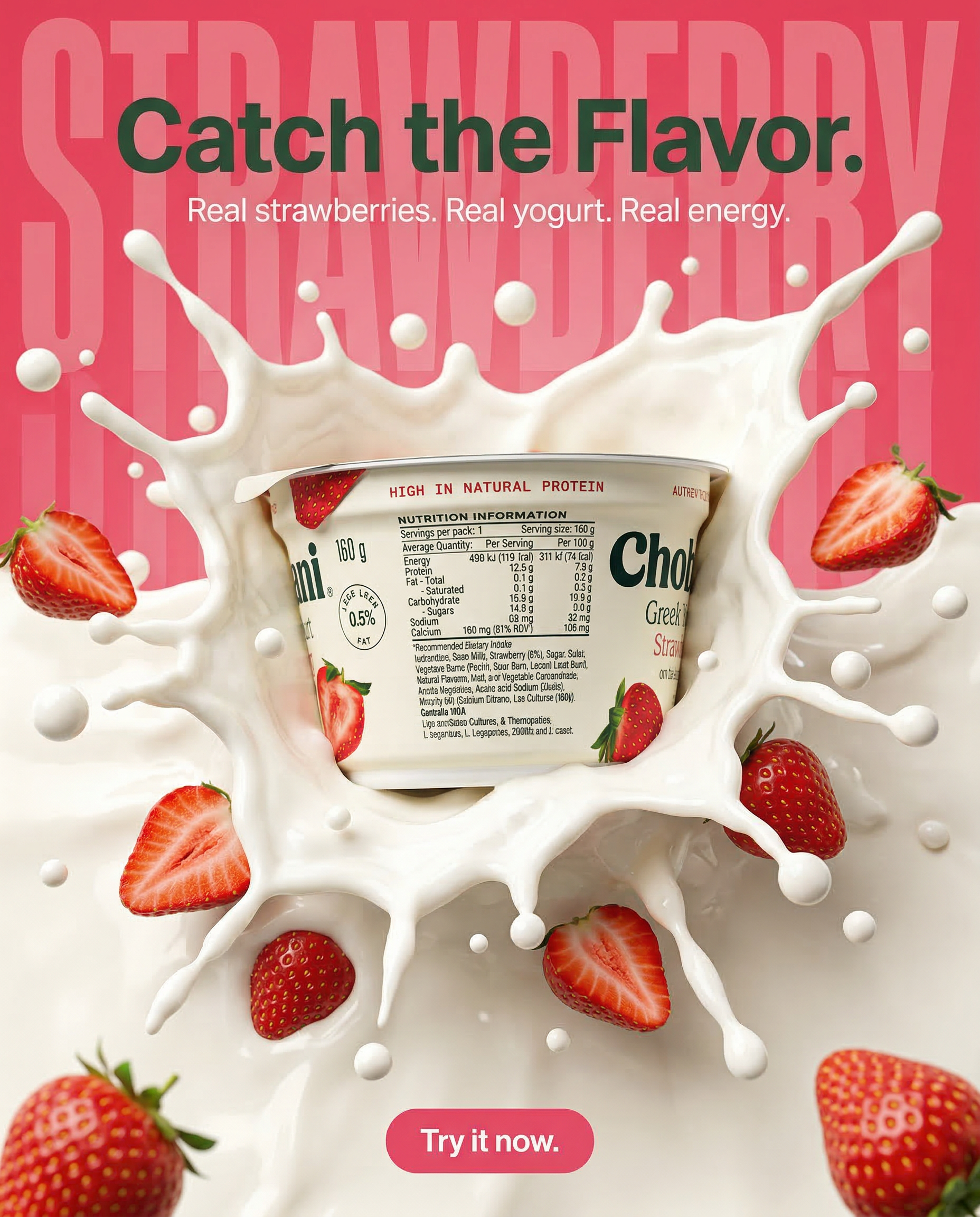
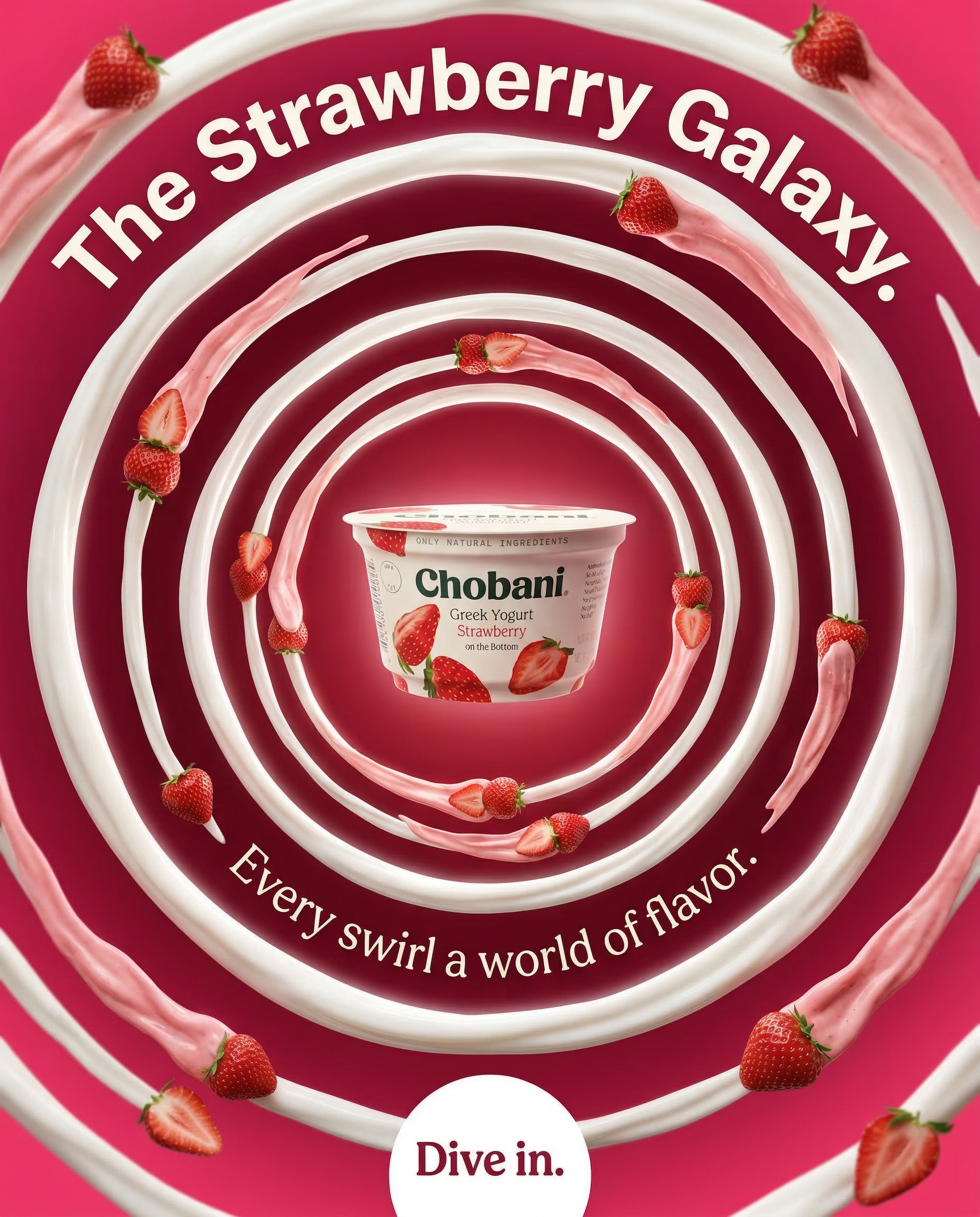
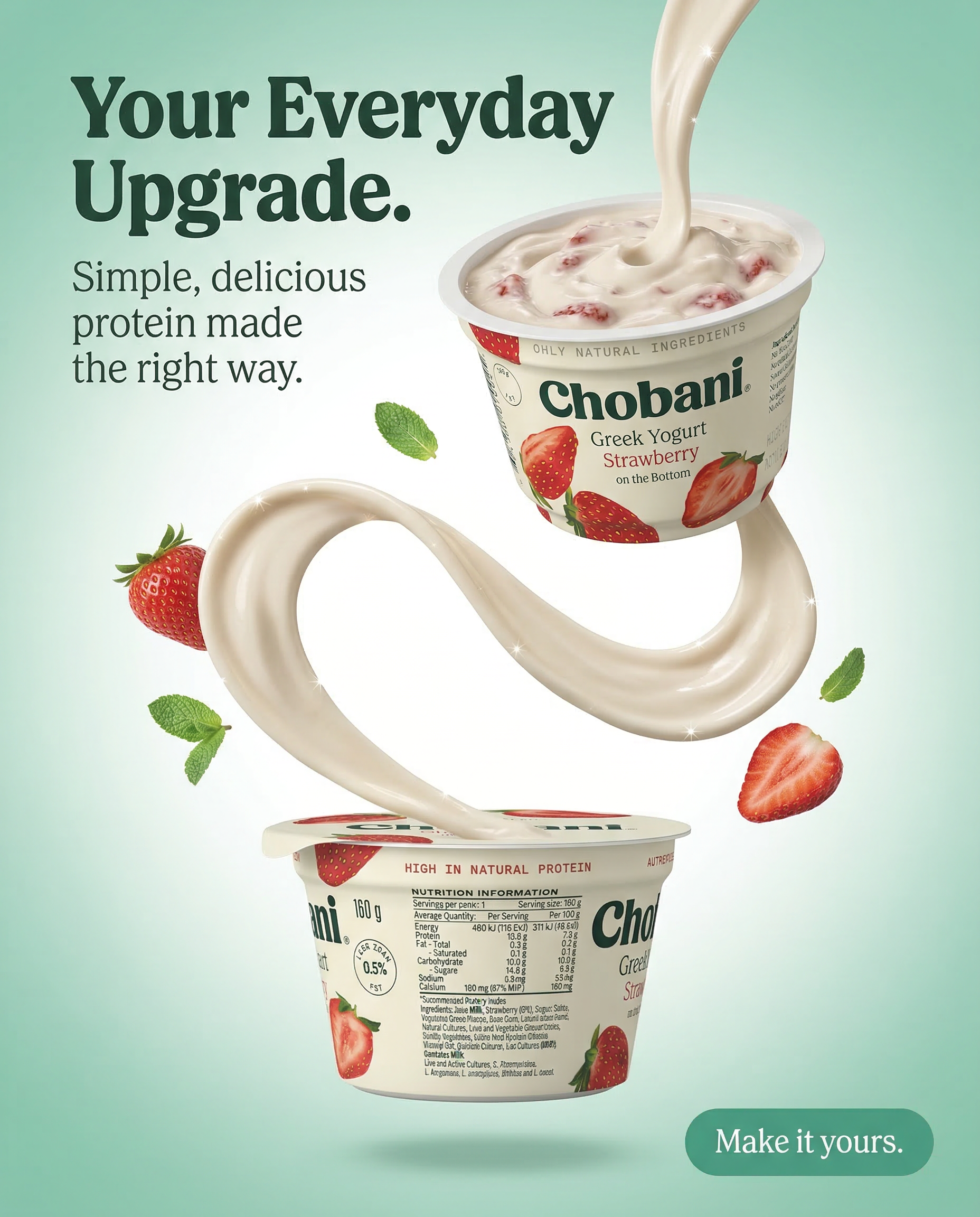
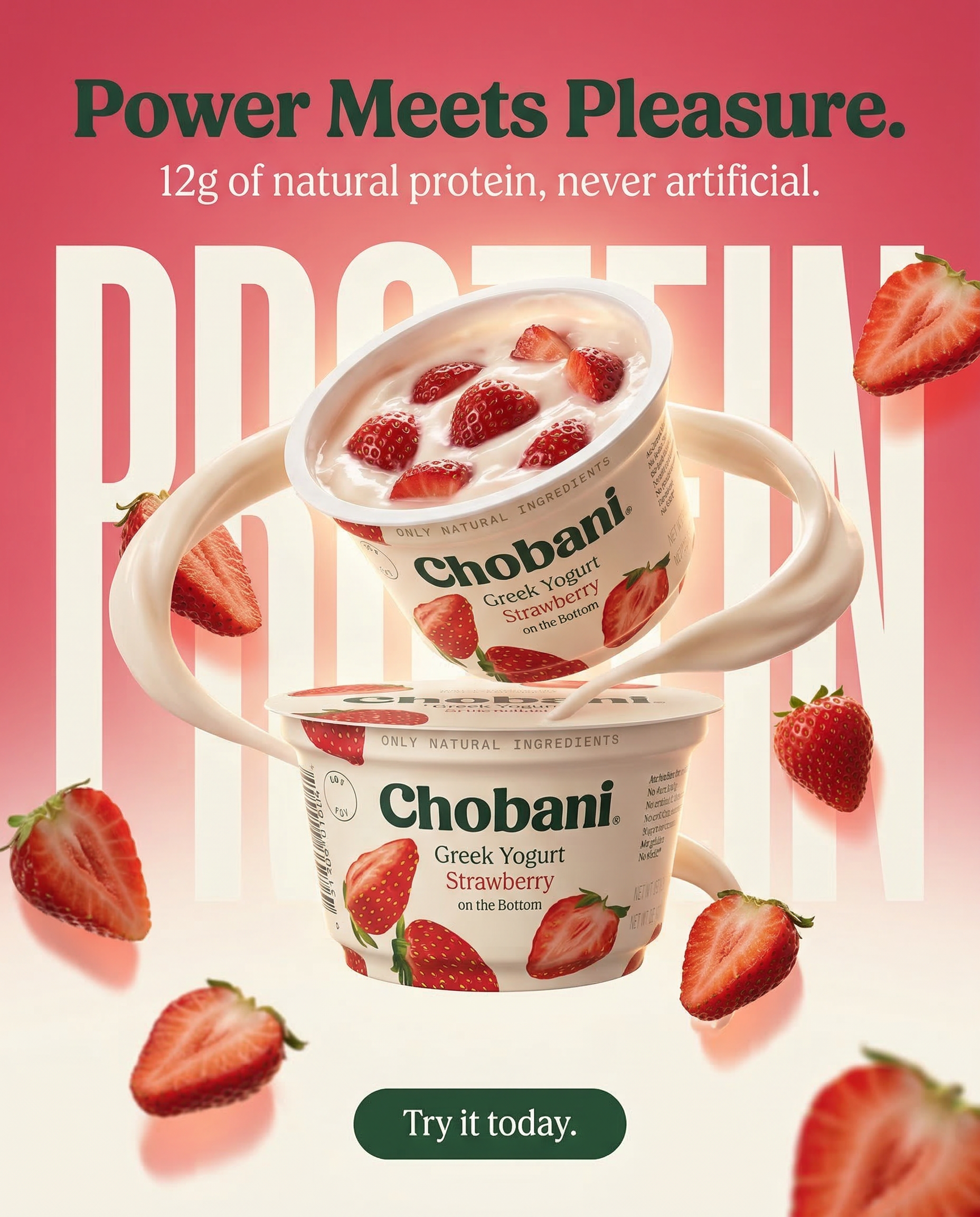
Brand-spine still from a flagship CPG account on retainer — produced as ad creative volume for Meta when CAC is rising, one of forty-two variants shipped that week.

Ad creative volume for Meta when CAC is rising — Chobani flagship brand-spine still composed as one of forty-two performance creative variants shipped on a weekly retainer drop

Single concept · 6 hooks · 3 aspect ratios · 2 persona cuts · 1 Friday drop

"CAC is up thirty percent. Creative is the diagnosis. What is the plan?"

Every performance marketer we have produced for in the last two years has sat through the same meeting. The Q-end Zoom with the CFO and the CEO on the call, your slide on screen, the CAC line marching up and to the right, and the diagnosis column on the right side of the slide reduced to a phrase the finance team can paste into the board update. The phrase is some flavor of creative fatigue. Sometimes it is "creative refresh needed." Sometimes it is "incrementality eroding." The underlying problem is the same one. The Meta auction wants more variants than the in-house pod can ship.

The maths of the situation is unforgiving. A DTC brand spending three hundred thousand to one million dollars a month on Meta is buying enough impressions that every active creative is hitting the same warm-audience cohort two to three times inside ten days. By week three, the cold prospecting frequency has crossed 2.5. By week five, it is at 3.4 and the CTR-link on the highest-performing creative has dropped below 0.9 percent. Advantage Plus Shopping has lost the conversion signal it learned in week one and the algorithm is now spending against impressions that look like the impressions that worked last month, against an audience that has already converted or already ignored.

Inside the in-house creative pod, the situation is the inverse of the auction. The Creative Director is shipping the same eight to twelve finished concepts a week the team was shipping in Q1, with the same review cycles, the same legal-and-brand sign-off lag, the same designer-and-motion-artist headcount, and the same revision-round overhead. The pod is not slowing down. The auction's appetite is accelerating against it. The gap between what the pod ships and what the auction wants is the gap that shows up as the CAC rise on the slide, and the gap the rest of this page is built to close.


Advantage Plus, Andromeda, and the death of the levers we used to pull.

The reason creative volume is the bottleneck in 2026 — and not targeting, bid strategy, or audience segmentation — is that Meta has spent the last four years systematically removing the levers performance marketers used to pull. Detailed targeting is mostly gone. Lookalike audiences still exist but the conversion-signal density they used to deliver has been absorbed into Advantage Plus Shopping. Custom audiences are CAPI-dependent and most accounts already run CAPI cleanly. Andromeda — Meta's new generative-AI matching layer rolled out across major ad markets in 2025 — handles broad-audience optimization at a level no manual segmentation can beat.

What that leaves under operator control is the creative input. Andrew Foxwell has been pounding the drum on this since 2023 — the creative diversification index is now the single most predictive account-level lever for incremental return on ad spend. Common Thread Collective's media-mix audit data, published quarterly across their portfolio, consistently shows that two to three percent of creatives win roughly seventy percent of spend across the median DTC account, with a long tail of underperforming variants soaking up impressions before they get retired. The implication is brutal but simple. A brand shipping ten creatives a week is statistically gambling on hitting that two-percent winner inside ten attempts. A brand shipping eighty creatives a week is running a real experiment.

This is the math that has rebuilt the performance creative agency category from the ground up. Tubescience, Hydroshapes, Pilothouse, Common Thread Collective, Trend, and a handful of others have built their entire offering around weekly net-new creative volume in the thirty-to-one-hundred-and-twenty band, because that is the volume floor below which Advantage Plus Shopping and Andromeda cannot find the next winner inside a reasonable spend window. Below that floor, the auction premium for fatigued creative becomes the brand's CAC problem. Above it, the algorithm gets the signal density it needs to keep the cold-to-warm-to-converted path flowing at the CAC the finance team planned around.

What ships from a real weekly creative drop.

A working performance creative system hits all six of these pillars every week. A freelance carousel hits two. An in-house pod typically hits four but at a fraction of the volume the auction wants. This is the bar a retainer is scoped against.

01

Hook variance

Four to six hook variants per concept — typography-led, face-led, voice-led, product-led, problem-led, and offer-led. The first second of the creative is where the auction prices fatigue, so hook permutation is the highest-leverage variable in the weekly matrix.

02

Format coverage

1:1 or 4:5 for feed, 9:16 for Stories and Reels, plus a 16:9 cut for the brands running Performance Max or YouTube. Native-format creative outperforms cropped creative by 30 to 40 percent on CTR-link. Cropping is not coverage.

03

Angle rotation

Problem-solution, social proof, founder POV, before-and-after, demo, UGC-style testimonial, comparison, and offer-led. Eight angle archetypes carried across the weekly drop. The audience reads angle the way the auction reads hook — both must rotate every cycle.

04

Mobile-first design

Captions baked into the asset for sound-off feed scrolling, type set at minimum 32 pt for thumbnail legibility, brand mark in the first two seconds of motion, hook line set in the safe zone clear of the Stories and Reels UI chrome. Performance creative is mobile creative.

05

7-2-1 weekly rotation

Seven winners maintained, two new variants that share DNA with the current winners, one wildcard outside the current pattern. The rotation discipline that keeps the auction efficient on the existing winners while continuously feeding fresh signal into Advantage Plus Shopping.

06

Briefed Monday, live Friday

Brief lands Monday with the prior week's performance attached. Concepts and references to brand by Wednesday. Final assets named, tagged, and shipped Friday. The five-day cadence is the cadence the auction needs and the cadence an in-house pod cannot match alongside its other workload.

Pillar examples

Six frames from a single weekly drop — hook, format, angle, mobile-first, rotation, cadence — composed as ad creative volume for Meta when CAC is rising.

Brief Monday 9am. Concepts Wednesday 5pm. Assets Friday noon.

Monday morning, the brief lands in the brand's shared workspace with the prior week's performance attached — top seven evergreen creatives by spend and ROAS, the two prior-week tests that converted or failed, and the wildcard that ran for the seventy-two hours the rotation discipline allows. The brand-side performance marketer reviews against the account's frequency and CTR thresholds, flags any creative outside the band, and approves the concept directions for the week by Monday end of day. The brief is not a fresh-thinking exercise — it is an exception report against the rotation. Most weeks the changes are small.

Tuesday is concept day on our side. Six to eight new concepts get sketched against the brand spine, each with the hook variants, angle variants, and persona cuts mapped against the asset matrix that defines the week's drop. Wednesday end of day the concepts ship to the brand for review — references, copy variants, hook lines, the rough motion treatment for any video concepts. The brand approves directionally rather than line-by-line, because the spine has already been locked and the variation is permutation inside it rather than improvisation outside it. Approvals close inside Wednesday night.

Thursday is production. Statics, motion cuts, captions, sound design, brand-mark placement, format cuts at 1:1, 4:5, 9:16, and 16:9. Friday morning is the final pass — color check against the brand spine, hook duration check against the three-second auction premium window, brand-mark check inside the safe zone for Stories and Reels. By noon Friday the assets are named, tagged with concept-hook-format-persona, and dropped into the brand's shared workspace ready for the performance marketer to upload into Ads Manager and Advantage Plus Shopping the same afternoon. The cadence is documented end to end inside our fast ad creative turnaround page.

In-house only, hybrid, full retainer — and the auction maths each model returns.

IN-HOUSE

Eight to twelve a week

One creative director, two to three designers, one motion artist, one copywriter. Six hundred thousand to nine hundred thousand a year fully loaded. Eight to twelve finished concepts per week, often four after revision and brand-team review. Cold prospecting frequency at 3.4 by week five. CAC drifts 20 to 40 percent above plan inside the quarter. The pod is excellent at the work it ships — there is just not enough of it for the auction.

HYBRID

The freelance carousel

In-house pod plus a rotating bench of two to four freelance designers and motion artists. Twenty to thirty assets per week on a good week, six on a bad one. Volume bursts when the freelancers are available. Brand-spine drift across surfaces because each freelancer interprets the spine slightly differently. The brand-side performance marketer becomes the de facto creative producer, which is not the job they were hired to do.

RETAINER

Sixty to one hundred and twenty a week

Performance creative retainer with named senior creative leadership, weekly drop, 48-hour revision SLA, brand spine locked, 7-2-1 rotation, performance reporting against the auction's frequency and CTR thresholds. CAC returns to plan inside the first 45 days on most engagements. The in-house pod gets pulled off ad creative and back onto brand campaigns, landing pages, and lifecycle creative — the work the team was actually hired to do.

Volume without a spine fragments the brand. The spine is the work.

The reason most brands resist outsourcing ad creative volume is not the price. It is the spine. Performance marketers who have lived through a freelance carousel know exactly how thirty assets a week can fragment a brand into thirty visual dialects, each technically on-brief but collectively pulling the brand's recognition signal apart frame by frame. The brands winning at volume — Liquid Death, Olipop, Magic Spoon, Vuori, Ridge, Athletic Greens, Hexclad, Bombas, Better Help, Squarespace — are not winning because their freelance bench is bigger. They are winning because the brand spine is locked, documented, and enforced before the volume layer turns on.

The spine is one document, usually fifteen to twenty pages, that captures the brand's visual language at the granularity the production team needs to compose against. Typography hierarchy with hook-line, body-copy, and CTA settings. Color system with primary, secondary, accent, and the specific hex values the brand uses for sale callouts. On-brand photography style — model casting, location grammar, prop discipline, lighting reference frames. Motion grammar — cut cadence, transitions allowed and disallowed, sound design palette, voice-over style. Caption-on-asset typography, brand-mark placement rules, safe-zone definitions for every aspect ratio. Once the spine is locked, the production team composes the weekly drop as permutation inside it. The brand reads as one brand across one hundred and twenty variants because the variant axis is hook, angle, and format, not visual identity.

The brands that bring us in usually arrive with a brand book that is half the document the spine needs to be. The first two weeks of the retainer are spent finishing the spine alongside the brand team — pulling references from the existing creative library that worked, retiring references that drift, capturing the rules the in-house Creative Director carried in their head that nobody had ever written down. That step is the difference between a retainer that holds at volume and a retainer that fragments the brand. The version of this work we run on apparel and CPG accounts is documented across our best AI product photography agency for DTC brands anchor and our DTC creative agency page.

$700,000 in-house pod, $1,200-per-asset freelance carousel, $28,000 monthly retainer that fits.

A fully loaded in-house performance creative pod at a $20M to $100M DTC brand runs between six hundred thousand and nine hundred thousand dollars a year. One creative director at one hundred and seventy to two hundred and ten thousand, two senior designers at one hundred and twenty to one hundred and forty each, one motion artist at one hundred and ten to one hundred and forty, one copywriter at ninety to one hundred and twenty, plus benefits, equipment, software stack (Figma, Adobe Creative Cloud, After Effects, Frame.io, Motion App, Foreplay, Atria), and the recruitment overhead to keep the seats filled. The pod ships eight to twelve concepts a week, which is good work and not enough work for the auction.

The freelance carousel — the path most brands try second — quotes between eight hundred and sixteen hundred dollars per finished asset on a senior freelance designer or motion artist day rate. At thirty assets a week, that is twenty-four to forty-eight thousand dollars a week in freelance spend, before the project-management overhead, the asset-review-and-revision cycles, and the brand-spine drift. The math hits the same line as the retainer fast, except the freelance carousel ships an unstable volume against an unmanaged spine while the retainer ships a stable volume against a locked spine.

A performance creative retainer for thirty to one hundred and twenty net-new variants a week, named senior creative leadership, weekly drop, 48-hour revision SLA, and weekly performance reporting against the 7-2-1 rotation lands at twenty to forty-five thousand dollars a month depending on volume tier and platform coverage. For brands running Meta plus TikTok, the per-platform marginal cost is incremental rather than additive because the brand spine carries across both. The detailed comparison of the retainer model against in-house and freelance sits inside our creative agency vs freelancer page, and the per-asset cost comparison against traditional studio production sits inside our AI photoshoot vs studio cost page.

Athletic Greens, Liquid Death, Olipop, Vuori, Ridge — what volume looks like at scale.

The brands operating at the volume floor — sixty to one hundred and twenty net-new ad creatives a week on Meta — are visible to any performance marketer running Meta auction insights or scrolling Foreplay's competitive feed. Athletic Greens runs four to six concepts in cold prospecting at any given week, each with eight to twelve hook variants, refreshing the matrix every Friday. Liquid Death has built an entire brand on weekly creative novelty, with motion cuts that read as one continuous brand argument across hundreds of variants. Olipop runs problem-solution and social-proof angle rotation tighter than almost anyone in functional beverage, with TikTok-native cuts shipping alongside Meta cuts every week. Vuori has scaled lifestyle and product-led concepts across men's and women's persona cuts at a volume that would break a traditional studio pipeline.

Ridge, Hexclad, and Bombas run product-demo-led creative at the volume Meta rewards, with UGC-style and founder-POV variants in the same weekly drop. Better Help and Squarespace operate the same discipline in services rather than physical product, with concept variation driven by the customer-anxiety angle the audience is most responsive to that week. Magic Spoon and Mid-Day Squares — both brands we have produced for inside the CPG snack category — operate the same model on a smaller spend base but with the same weekly cadence and the same rotation discipline. The Chobani campaign work documented on our case study page shows the brand-spine discipline applied at flagship scale, and the weekly-drop framing documented inside our ad creative testing framework page is the same framework these accounts run against.

The pattern across these brands is consistent. The in-house Creative Director and the brand team own the spine. A performance creative production partner — agency, in-house plus retainer, or full-stack agency replacement of the pod — ships the weekly volume against that spine. The performance marketer runs the auction. The split is durable because each layer is doing the work the layer is best at. The brands that try to do all three layers inside the in-house pod tend to be the brands sitting in front of the Q-end CAC slide a quarter later, looking at the same diagnosis word that started this page.

Frequently asked
questions

What does creative fatigue actually mean on Meta in 2026?

Creative fatigue is the point at which the same audience has seen the same creative often enough that incremental impressions stop returning incremental conversions. The proxies the Meta auction surfaces first are account-level frequency above 3.0 on cold prospecting, CTR-link drifting below 0.9 percent, CPM rising 20 to 40 percent above the trailing 30-day median, and a widening gap between Advantage Plus Shopping ROAS and traditional ABO ROAS. None of those metrics moves because the targeting changed. They move because the auction is recycling the same five or six creatives against an audience that has already responded or already ignored, and the algorithm has nowhere to learn from.

How many new ad creatives does a $20M to $100M DTC brand need per week?

Thirty to one hundred and twenty net-new variants per week, depending on spend level and audience size. The math is not arbitrary. A brand spending three hundred thousand to one million dollars per month on Meta is buying enough impressions that the same audience sees a single creative two to three times inside the first ten days. To keep cold prospecting frequency below 2.5 and warm retargeting frequency below 4.0, the account needs four to six fresh hooks per week across three to four formats with three persona cuts each. That is the volume floor. Below it, frequency creeps up, CTR collapses, and CAC follows the next billing cycle.

Is creative volume really the bottleneck, or is it targeting and bid strategy?

In 2026 the bottleneck is almost always creative. Meta deprecated most of the targeting levers performance marketers used to pull pre-iOS 14. Advantage Plus Shopping, Andromeda, and the broad-audience defaults handle targeting algorithmically against the conversion signal. CAPI handles the signal loss from iOS opt-outs. What remains under operator control is the creative input. Common Thread Collective's audit data shows that two to three percent of creatives win seventy percent of spend across the median DTC account, which means a brand shipping ten creatives a week is statistically gambling on hitting that two-percent winner inside ten attempts. Thirty to eighty creatives a week is what makes the math work.

How do you produce thirty to eighty new ad creatives per week without breaking the brand?

By organizing the production system around a brand spine rather than a brief queue. The spine is the brand's visual language locked in a single document — typography, color, hierarchy, on-brand stock photography style, motion grammar, sound design, captioning style, and tone. Every weekly drop is composed against that spine. New hooks, new angles, new persona cuts, new copy variants, new aspect ratios, new motion treatments — but all of them visibly built from the same brand foundation. The volume comes from permutation inside the spine, not from improvisation outside it. That is the discipline most freelance carousels miss and the reason brands end up with thirty creatives a week that look like thirty different brands.

What does a weekly ad creative drop actually look like?

A weekly creative drop is sixty to one hundred and twenty assets organized as a matrix. Six to eight new concepts, each with four to six hook variants, each cut at three aspect ratios (1:1 or 4:5 for feed, 9:16 for Stories and Reels, plus a 16:9 cut when the brand runs YouTube or Performance Max). The matrix expands by three persona cuts per concept where the brand sells across distinct buyer segments. Briefs land Monday morning with the prior week's performance attached. Concepts and references go to the brand by Wednesday end of day. Final assets ship Friday by noon, named and tagged, ready to upload into Ads Manager and Advantage Plus Shopping the same afternoon.

How is the 7-2-1 framework different from just testing more creative?

The 7-2-1 framework is a weekly rotation discipline that prevents the account from cannibalizing its own winners. Each week the account maintains the top seven evergreen creatives that are still inside their performance band, retires anything that has dropped below the band, introduces two new variants that share DNA with the current winners, and adds one wildcard — a concept deliberately outside the current pattern, designed to find the next angle the audience has not seen. Testing more creative without rotation discipline just floods the account with variants that compete for the same impressions. 7-2-1 preserves auction efficiency on the winners while continuously feeding the algorithm fresh signal.

How much does retainer-based ad creative production cost vs in-house only?

An in-house creative pod of one creative director, two designers, one motion artist, and one copywriter fully loaded is six hundred thousand to nine hundred thousand dollars a year and produces eight to twelve finished concepts a week, often closer to four after revisions and brand-team review cycles. A performance creative production retainer for thirty to one hundred and twenty net-new variants a week, named senior creative leadership, 48-hour revision SLA, and weekly performance reporting against the 7-2-1 rotation lands at twenty to forty-five thousand dollars a month depending on volume. The retainer compounds across formats and platforms — TikTok and Meta off the same spine — which is where the per-asset economics outperform the in-house build.

Can you handle TikTok creative as well as Meta in the same weekly drop?

Yes, and the production system is built for it. TikTok-native creative is not Meta creative cropped to 9:16. The hook conventions are different — TikTok rewards a face on screen inside the first second, a voice-led opening, and a problem statement that lands before the brand mark appears. Meta Reels tolerates the same conventions but also rewards typography-led hooks and product-led openings. The weekly drop produces TikTok-native cuts and Meta Reels cuts as parallel variants off the same concept, so the brand spine holds across platforms while the format-specific grammar shifts where the algorithm rewards it.

What KPIs should we expect to see move once volume comes back?

On the right cadence the leading indicators move first. Cold prospecting frequency drops back below 2.5 inside three to four weeks as the new variants pull impressions off the saturated winners. CTR-link recovers above 1.2 percent on the highest-performing concepts. CPM relaxes 10 to 20 percent against the trailing 30-day median as the auction stops paying a fatigue premium. The lagging KPIs follow on a one-to-two-week delay — CAC returns to plan, CPA stabilizes against the conversion event, and ROAS on Advantage Plus Shopping climbs back inside the band the brand was hitting before the fatigue cycle started. Most retainers see CAC reset inside the first 45 days.

What happens to ad creative volume during peak season like Q4 or BFCM?

Volume doubles and the cadence tightens. Most retainers shift from one weekly drop to two between mid-October and the second week of January — Monday brief, Wednesday concepts, Friday in-account, then Monday refresh, Wednesday concepts, Friday in-account, with the BFCM-specific offer language and gift-guide angles layered on top of the evergreen brand spine. The 7-2-1 rotation expands to a 14-4-2 to absorb the higher impression volume against a more saturated auction. The brands that hold CAC during peak season are the ones that pre-staged six to eight weeks of seasonal concepts inside the September-October ramp, not the ones that started writing Q4 hooks the Monday after Thanksgiving.

Q-end review Friday.
Brief Monday.
CAC back inside 45 days.

Stop running ten creatives a week into an auction that wants eighty. Ad creative volume for Meta and TikTok — hook variance, format coverage, angle rotation, 7-2-1 weekly drop, brand spine locked — produced on a retainer scoped against your account's frequency and CTR thresholds, with named senior creative leadership and a 48-hour revision SLA on every round.